Will end of Korea’s aesthetics VAT refund drive medical tourists away?
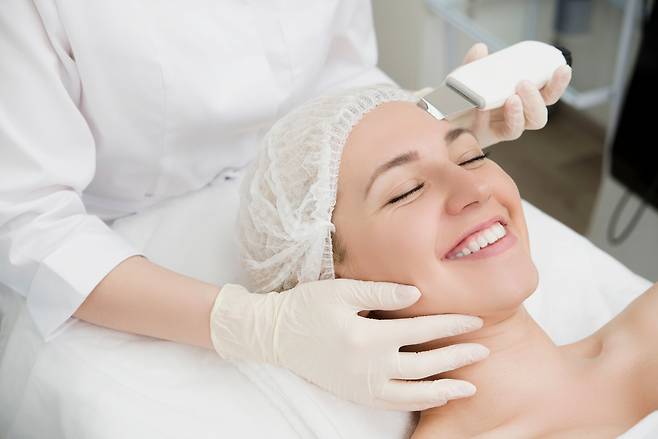
A decade-old tax break that drew foreign patients to Korea’s cosmetic surgery clinics ends this month, and the industry is bracing for the economic consequences.
The termination of VAT refunds for foreign visitors undergoing cosmetic and plastic surgery procedures on Dec. 31 has triggered mounting concern across Korea’s aesthetic medical tourism sector.
Long supported by Korea’s price competitiveness, the industry warns that losing the tax incentive will not only raise costs for patients but also weaken pricing transparency, a key factor behind its global appeal.
The change is expected to ripple across clinics, brokers and the broader tourism market.
The tax refund’s expiration was finalized after the National Assembly omitted related clauses from the latest revision of the Act on Restriction on Special Cases Concerning Taxation, which passed earlier this month.
Introduced in 2016, the program allowed foreign patients to reclaim the 10 percent VAT charged on a wide range of cosmetic and dermatological procedures, including skin rejuvenation, wrinkle-reduction treatments, double-eyelid surgery, fat-dissolving injections and breast augmentation.
Plastic surgeons and industry groups began voicing strong opposition in July, when the Ministry of Economy and Finance removed the provision from the government’s 2025 tax plan.
“The tax refund system, created to attract foreign patients, has served as a significant incentive for those sensitive to price,” an official at the Korean Association of Plastic Surgeons said. “Ending it removes a key factor behind Korea’s influx of foreign patients. As other countries offer aggressive incentives, more people could shift to competing medical tourism destinations.”
The aesthetic medicine sector has become one of Korea’s biggest tourist draws over the past decade. According to government data, total medical spending by foreign patients rose to 1.24 trillion won ($840 million) in 2024 from about 400 billion won in 2019.
Spending on plastic surgery and dermatology climbed more than fourfold during the same period and now accounts for 77.3 percent of the total.
Related tax refunds reached a record 95.5 billion won in 2024, and are expected to rise further this year, with 82.6 billion won issued in just the first half of 2025.
Industry analysts say the immediate impact of the refund’s removal will be limited. Korea still benefits from strong international demand for its medical services, a weak won, strained Japan-China relations, and Seoul’s visa-free entry program for Chinese visitors.
A report by Kiwoom Securities found that foreign dermatology and plastic surgery patients typically receive around 150,000 won in VAT refunds per person, while Chinese visitors receive an average of 293,000 won — amounts that may not be large enough to alter short-term travel decisions. The report added that Korea continues to offer superior quality relative to price.
Travel platform Yanolja shared similar findings, noting that “quality and trust in Korea’s medical services are creating a loyal demand base,” with 38.6 percent of foreign medical tourists having visited Korea more than four times.
But industry officials argue that Korea’s competitive edge may weaken as rival destinations upgrade their medical tourism strategies. Singapore and Thailand have decades of experience and sophisticated tourism infrastructure, while China is accelerating its effort to build a medical tourism hub in Hainan Province to retain domestic demand.
Korea currently captures 62 percent of China’s outbound medical and beauty tourism market.
“Many Chinese consumers are extremely price-sensitive,” said a management official at a beauty clinic in southern Seoul’s Gangnam district. “If Korea is perceived as becoming more expensive, more patients may stay in China or turn to Southeast Asian destinations.”
Some experts warn that abolishing the system could worsen transparency in pricing — a problem Korea has struggled with in the past due to illegal brokers and inflated billing.
A report by the Korea Institute of Public Finance noted that the VAT refund program helped curb excessive brokerage fees and overcharging by allowing foreign patients to verify treatment costs through the refund process.
“The system showed clear effectiveness compared with post-treatment receipts,” the report said, adding that the incentive encouraged patients to cross-check prices and reduced opportunities for intermediaries to manipulate bills.
With the refund program unlikely to be revived in the short term, medical tourism operators say they will continue lobbying for its reinstatement, citing cases in which similar tax incentives — such as those for foreign tourist accommodations — were restored after industry pushback.
“Considering the potential negative impacts of the program’s abolition, we plan to keep urging the government to reconsider the issue and reinstate the refund system,” an official at Global Tax Free, a VAT refund operator, said.
Copyright © 코리아헤럴드. 무단전재 및 재배포 금지.