Memory supercycle builds as HBM demand lifts Samsung, SK hynix earnings
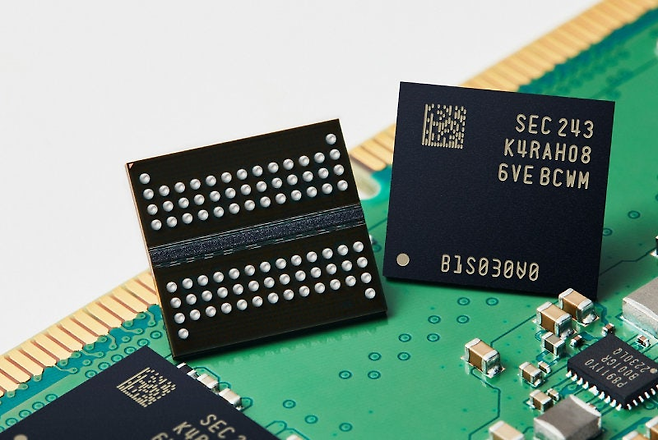
High Bandwidth Memory — the high-performance memory powering AI processors — is rapidly siphoning wafer capacity away from traditional DRAM and NAND, triggering steep price increases and positioning Samsung Electronics and SK hynix for a powerful earnings rebound as a global supply crunch intensifies.
Contract prices for DRAM have surged about 420 percent this year, jumping from $3.75 in January to $19.50 in November, according to TrendForce. PC and server-grade DDR5 modules alone gained more than 30 percent in the past month, marking 10 straight months of increases.
The squeeze is expanding to NAND flash as well. Wafer contract prices climbed at least 20 percent from October to November, with certain TLC and QLC products spiking as much as 60 percent, the tracker said. Notably, the profitability of commodity NAND now exceeds 40 percent, approaching the level typically associated with high-margin HBM sales — a dramatic reversal from the industry’s downturn just a year ago.
“As limited DRAM wafers are increasingly allocated to high-demand HBM and server DRAM, shortages are emerging across mobile and PC DRAM, pushing prices for those products up more than 40 percent in the fourth quarter,” said Roh Geun-chang, head of research at Hyundai Motor Securities.
“Server DRAM contract prices surged around 25 percent last month, and major customers have begun a full-scale race to secure products.”
Inventories tell the story: DRAM suppliers are reportedly holding only two to three weeks of stock, leaving little buffer to meet mounting demand. Roh expects the supply shortage to persist at least through the first half of 2026, even if wafer capacity additions begin later in the year.
With commodity DRAM now firmly on the rebound, global market share rankings are set to shift again. Samsung — which temporarily ceded leadership earlier this year as demand swung toward HBM, a segment where SK hynix leads — is projected to retake the No. 1 position in the fourth quarter thanks to its broader production base.
In the latest results, SK hynix held the top spot in the third quarter with 33.2 percent of the global DRAM market, followed closely by Samsung at 32.6 percent. TrendForce noted Samsung’s DRAM revenue jumped 30.4 percent on-quarter to $13.5 billion, nearly matching SK hynix, which saw revenue rise 12.4 percent to $13.75 billion.
Micron Technology also posted a stronger performance, with its quarterly revenue surging 53.2 percent from the previous quarter to $10.65 billion.
The pricing momentum is unlikely to cool anytime soon. TrendForce forecasts a further 45–50 percent increase in commodity DRAM and a 50–55 percent rise across all DRAM products — including HBM — through the fourth quarter, driven by depleted supplier inventories and aggressive procurement from AI infrastructure buyers.
That backdrop has dramatically upgraded earnings forecasts. Samsung is projected to post over 18 trillion won ($12.3 billion) in operating profit for the fourth quarter — well above market expectations — with its semiconductor division contributing around 15.1 trillion won, up 166 percent on-quarter and 422 percent on-year.
SK hynix is also expected to deliver stronger-than-expected results. Kiwoom Securities estimates the chipmaker’s fourth-quarter revenue at 30.3 trillion won, and operating profit at 16.2 trillion won, far exceeding the market consensus of 14.6 trillion won.
Roh emphasized that global tech giants are rushing to lock down supply before prices climb further.
“Major US cloud service providers, OEMs and even Chinese CSPs are offering competitive long-term agreements to secure inventory,” he said. “We have entered a seller’s market again — and the shift is only accelerating.”
Copyright © 코리아헤럴드. 무단전재 및 재배포 금지.