Why burgers became a safe bet in Korea
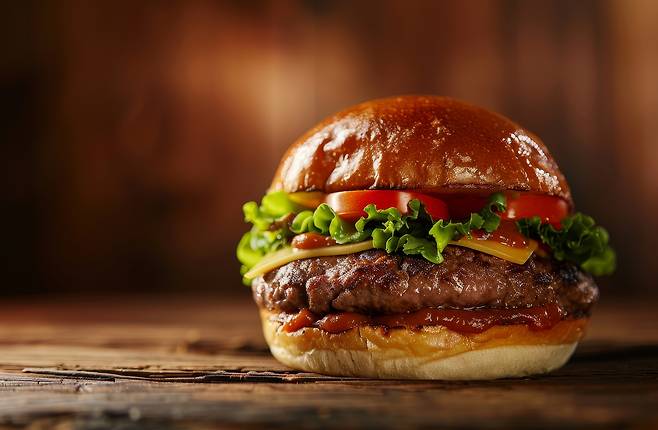
Hamburgers have long served as an informal gauge of inflation across countries. Now, in Korea, they have taken on a new role as a go-to budget meal.
As dining costs continue to rise, an increase in the revenue of major fast food franchises here indicates that more consumers are turning to burgers.
According to DART, the Financial Supervisory Service’s electronic disclosure system, burger chain Lotteria operator Lotte GRS recorded 995.4 billion won ($678.24 million) in revenue and 39.1 billion won in operating profit last year, up 7.7 percent and 88 percent, respectively.
Also, in the first three quarters of this year, Lotte GRS posted 822.1 billion won in revenue and 53.6 billion won in operating profit, marking on-year increases of 10.5 percent and 49 percent.
Mom’s Touch also reported solid results. Revenue rose 14.7 percent to 417.9 billion won last year, while operating profit climbed 21.8 percent to 73.4 billion won.
McDonald’s Korea surpassed the 1 trillion won revenue mark for the first time, posting 1.25 trillion won last year, an 11.8 percent increase. Operating profit reached 11.7 billion won, signaling its first return to the black in eight years.
"While it remains difficult to project this year’s exact figures, value-focused menus such as the Happy Snack, McMorning and McLunch have been selling particularly well, raising expectations for another strong year," a McDonald’s official said.
Burger King operator BKR also saw growth, logging 792.7 billion won in revenue and 38.4 billion won in operating profit last year, up 6.3 percent and 60.7 percent, respectively.
Industry insiders say that keeping prices relatively low, even as restaurant prices climb nationwide, has been crucial to the sector’s momentum. According to the Korea Consumer Agency, the average price of samgyetang, a chicken soup with ginseng, in Seoul last month was in the 18,000 won range. Naengmyeon (cold buckwheat noodles) averaged about 12,000 won, bibimbap (rice mixed with vegetables and meat) around 11,000 won, and kalguksu (knife-cut noodle soup) roughly 9,800 won.
In comparison, most burger combos at major chains remain under 10,000 won, with additional savings available through coupons and promotions.
Copyright © 코리아헤럴드. 무단전재 및 재배포 금지.