Seoul's last red-light district fades into history as demolition begins
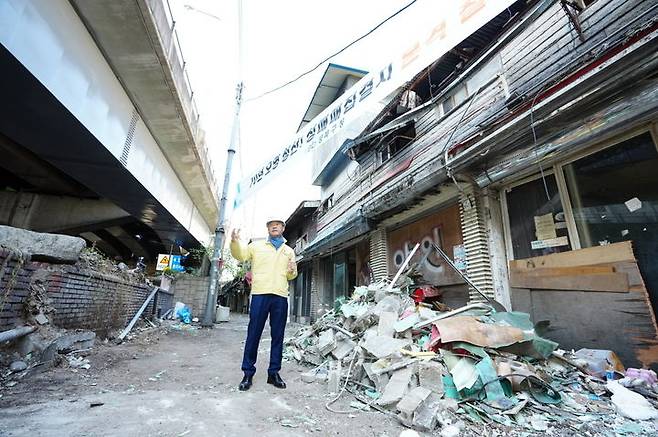
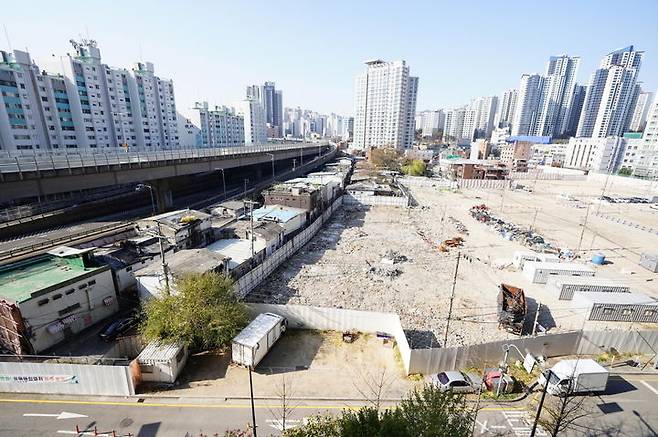
Full-scale demolition is underway at Seoul’s last remaining red-light district in Hawolgok-dong, northern Seoul, better known as "Miari Texas," to make way for a massive redevelopment project.
The Seongbuk-gu Office announced Monday it has begun tearing down buildings as part of the project led by Lotte Engineering and Construction, which envisions the construction of 11 residential-commercial complexes reaching up to 46 stories above ground and six below, with a total of 2,201 units.
Lee Seung-ro, mayor of Seongbuk-gu, said in a statement that it is more than just an urban revamp. "It marks an important moment for reshaping the district’s history and identity," he stressed.
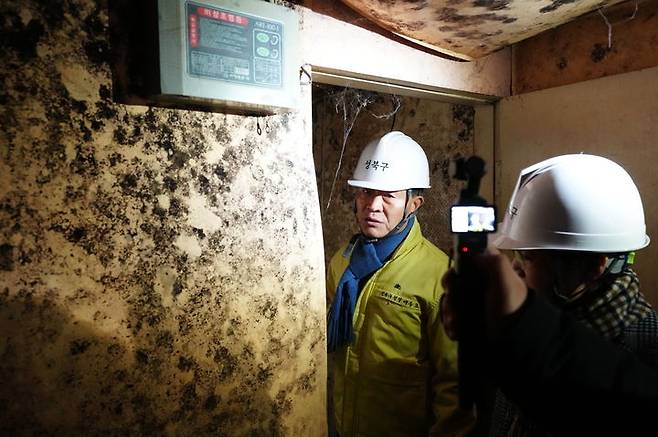
Monday’s commencement of the destruction came after a series of forced evictions in the district.
After many sex workers in Miari Texas refused to leave voluntarily when relocation began in September 2023, the district office sought court eviction orders, leading to three rounds of enforcement actions in April, July and September.
Out of the 115 brothels previously operating in the district, four remain, though three plan to shut down by the end of the year. One business continues to resist relocation. The district office said demolition will continue regardless.
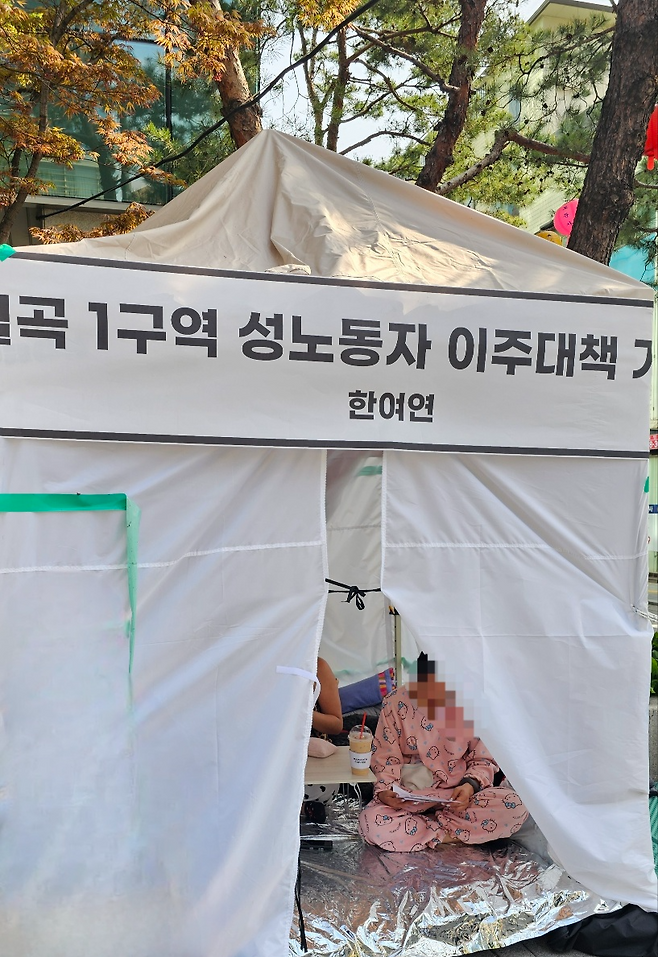
Some of the evicted sex workers have been staging a tent sit-in outside the district office since April, demanding alternative housing options and continued financial support from local authorities.
According to the district office, the displaced individuals were offered up to 2.1 million won ($1,422) each in support during the relocation process. However, the protesters argue that they need stable housing, such as group homes or welfare centers, not one-off financial assistance.
The authorities said that providing such housing options is beyond the district office’s authority and would require coordination with the city government and national ministries.
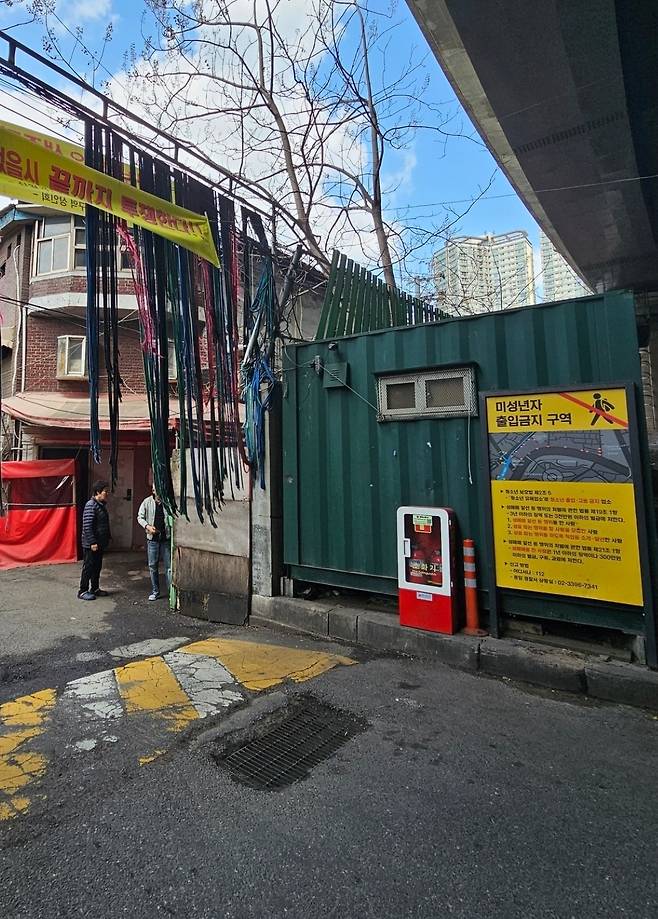
Miari Texas developed in the late 1960s as sex workers forced out of red-light areas near Seoul Station and Jongno 3-ga moved into the neighborhood, eventually becoming one of Seoul’s busiest prostitution hubs.
Back then, “Texas” became a popular nickname for Korean red-light districts, borrowed from Western films that depicted the state as wild and lawless.
During its peak in the 1980s and early 2000s, the area was home to roughly 360 brothels and as many as 3,000 sex workers, according to figures from the Korean Women Workers Association.
The district entered a downturn following the 2004 passage of a special law targeting prostitution and the heavy crackdowns that came in its wake.
Copyright © 코리아헤럴드. 무단전재 및 재배포 금지.