Korean lenders eye expat residents for growth
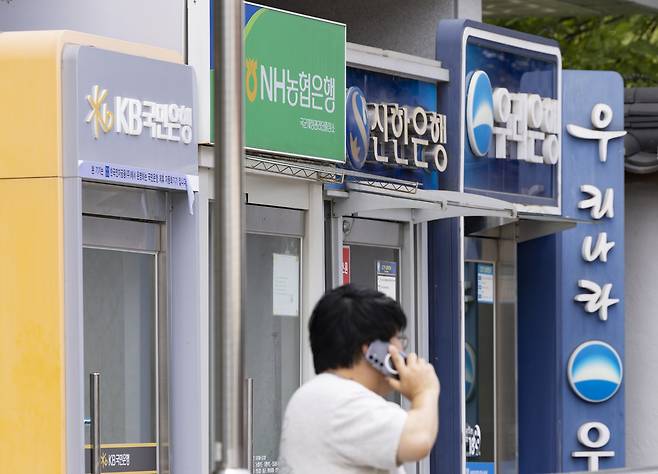
Korean banks are intensifying efforts to attract the country’s more than 2 million foreign residents, expanding both financial and non-financial services as they look beyond a saturated domestic market.
One emerging area of focus is credit lending, a largely untapped segment that some banks are only beginning to enter, launching exclusive loans for foreign workers.
Shinhan Bank’s Sol Global Loan, its first credit product exclusively for foreign borrowers, targets residents who have received salaries in Korea for at least three consecutive months. The product offers loans of up to 20 million won ($14,000) with repayment terms from six to 60 months.
NongHyup Bank offers loans of up to 30 million won to F6 visa holders and allows those who have worked in Korea for over six months to borrow up to 30 million won.
Hana Bank, which had exited this segment in 2022, re-entered the market in August with its Hana Foreigner EZ Loan for E7 and E9 visa holders, providing up to 10 million won for up to 30 months.
Regional lenders have been in the segment longer. Jeonbuk Bank launched foreign-worker credit loans in 2023, followed by BNK Kyongnam Bank in 2024 and iM Bank just last week.
The wave of new products underscores the growing importance of foreign customers in Korea’s retail banking sector. The number of foreign residents reached a record 2.1 million in June, up from 2 million a year earlier.
Yet growth remains slow. Limited credit histories and residency status pose major hurdles for lenders, and the interest rates they charge foreign customers are much higher — averaging over 6 percent compared with 3-4 percent for Korean nationals — discourage many potential borrowers.
“It’s difficult for banks to manage delinquency or post-loan follow-ups. If foreigners leave the country without repaying, there’s really nothing we can do,” one banking official said.
To mitigate risks, credit evaluations now incorporate alternative data, such as health-insurance enrollment, salary transfers, and utility or telecom payment records. Loan terms are capped by visa validity, and maximum amounts remain relatively small to contain initial exposure.
Some major lenders, including KB Kookmin Bank and Woori Bank, remain cautious, offering only jeonse mortgage-backed loans rather than unsecured credit products.
Still, officials acknowledge that expanding lending to foreign customers is inevitable.
“From a bank’s perspective, there’s no stronger tool for attracting customers than loans,” one said. “With household lending in a slump, banks are seeking new growth through fresh products — and the demand is there.”
According to data from the five major commercial banks — KB, Shinhan, Hana, Woori and NongHyup — the number of foreign customers rose 3 percent this year, adding about 200,000 to reach 6.85 million as of September.
Recognizing the segment’s long-term potential, lenders are expanding lifestyle and community-based services as well.
Hana Bank operates 16 branches dedicated to foreign customers — the largest network in the industry — in areas with sizable migrant populations such as Gimhae and Pyeongtaek. It also runs cultural and language programs with local institutions and provides real-time interpretation in nine languages, positioning itself as a bridge between foreign residents and Korean society.
Woori Bank is bolstering its mobile platform Woori Won Global, now available in 17 languages. Beyond financial tools, the app supports job searches, insurance applications, and language learning. Last month, it added an online community for foreign students, offering information on life, education, and internships in Korea.
KB Kookmin Bank, meanwhile, has partnered with Samsung Fire & Marine Insurance to integrate insurance services such as departure maturity and repatriation-cost claims directly into its app. The bank has also expanded its overseas-remittance network to 47 countries.
Copyright © 코리아헤럴드. 무단전재 및 재배포 금지.