Hangeul Day draws 15,000 to Sejong for symbolic run and festivities
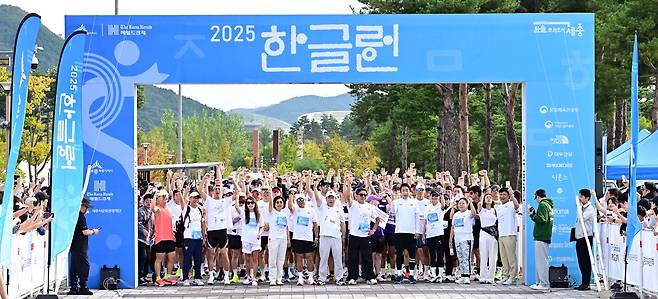
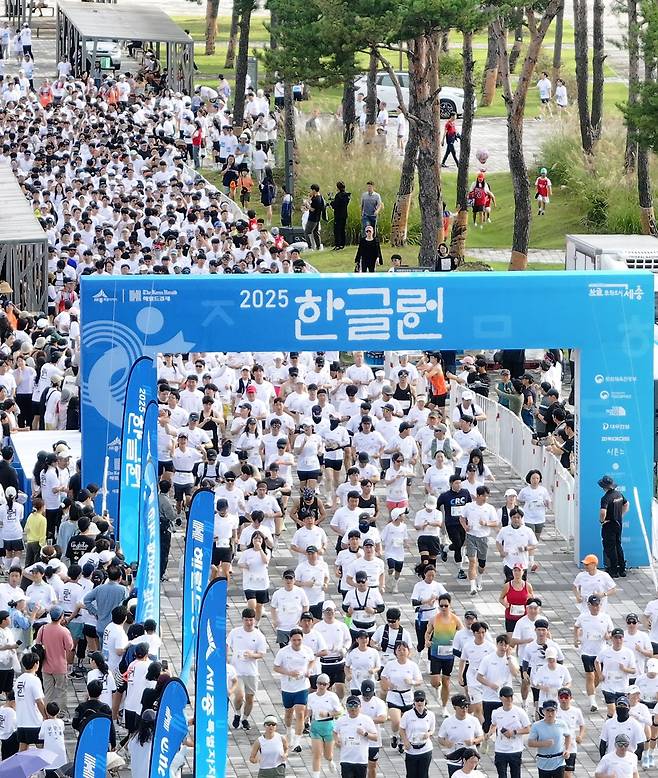
SEJONG -- On Thursday, the streets and parks of Sejong City filled with runners, festivalgoers and cultural performers as more than 15,000 people took part in the 2025 Hangeul Run, an event commemorating the creation of the Korean writing system.
Now in its second year as a major civic festival, Hangeul Run has become the centerpiece of Korea’s Hangeul Day celebrations. The event was co-organized by Sejong City, the Sejong Culture and Tourism Foundation, the National Hangeul Museum, and Herald Media Group, publisher of The Korea Herald.
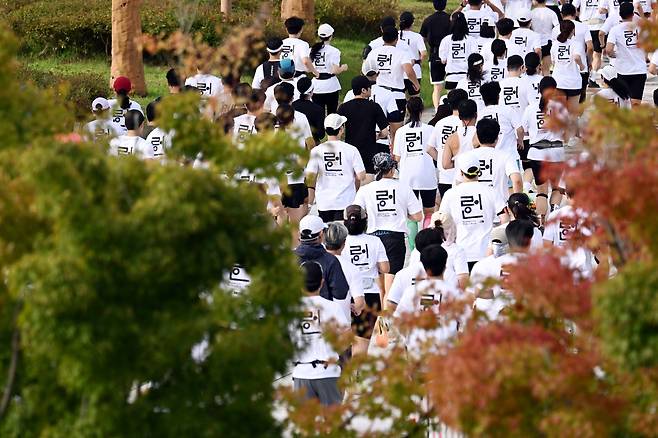
Nearly 10,000 runners took part in two symbolic courses through Sejong’s urban parkland. A 10.9-kilometer route, symbolizing the Oct. 9 Hangeul Day, and a 5.15-kilometer option, representing the birthday of King Sejong (May 15), the 15th-century monarch who commissioned the script.
Both routes crossed Ieung Bridge, a structure purpose-built to be 1,446 meters long, a reference to the year Hangeul was first promulgated.
“This is not just a race. It’s a cultural statement,” said Choi Jin-young, CEO of Herald Media Group. “We often talk about K-pop or Korean dramas as global phenomena, but at the heart of it all is Hangeul, the system that allows Korea to tell its story to the world.”
The morning began with performances by singer and entertainer Kim Chang-yeol and charity runner Sean, followed by a prerace stretch led by the LG Twins cheerleaders.
In his remarks at the opening ceremony, Sejong Mayor Choi Min-ho called the event “a non-competitive celebration of Hangeul, where the act of running becomes a way to remember the values and vision of our script’s creation.”
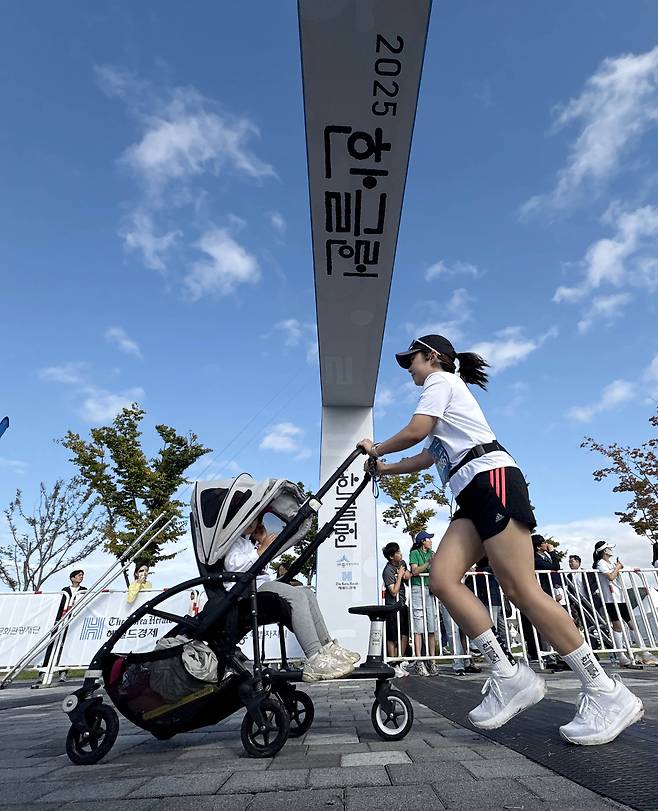
Runners of all backgrounds hit the pavement, from elite athletes to families with young children in strollers. Participants came from every region of Korea, with over 30 percent traveling from outside the Sejong-Chungcheong provinces area. International residents and students also joined, many of them experiencing Hangeul Day traditions for the first time.
National marathon legend Lee Bong-ju, now recovered from a long-term illness, joined the start line as a special guest and participant. “I couldn’t walk for years, so being able to run again today for Hangeul means everything,” he said before taking to the course.
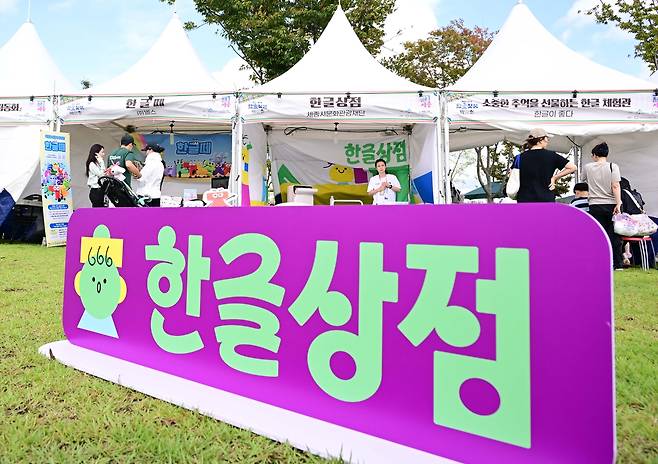
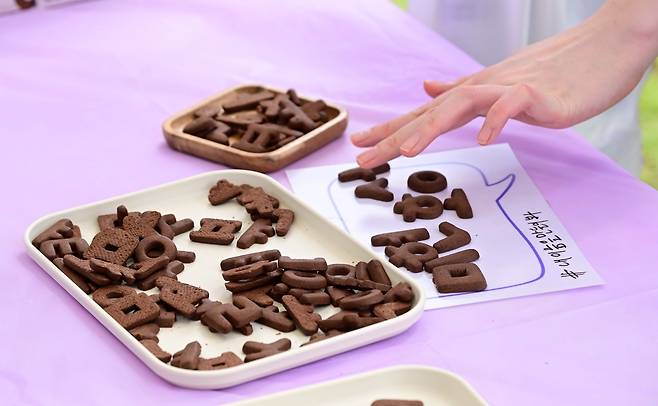
After crossing the finish line, visitors gathered at the first-ever Hangeul Goods Fair, a three-day open-air market showcasing over 30 booths of Hangeul-inspired food, crafts, books and household items.
Among the most popular items were Hangeul-shaped cookies called Kalphabets, a food brand founded by TV personalities Tyler Rasch and Nidhi. “There are alphabet cookies everywhere in the West,” Rasch said. “But we realized no one had made anything similar with Hangeul. That’s where the idea started.”
Nearby, families personalized name stamps, designed keychains with Korean letters, and shopped for calligraphy sets and reusable bags printed with Hangeul characters.
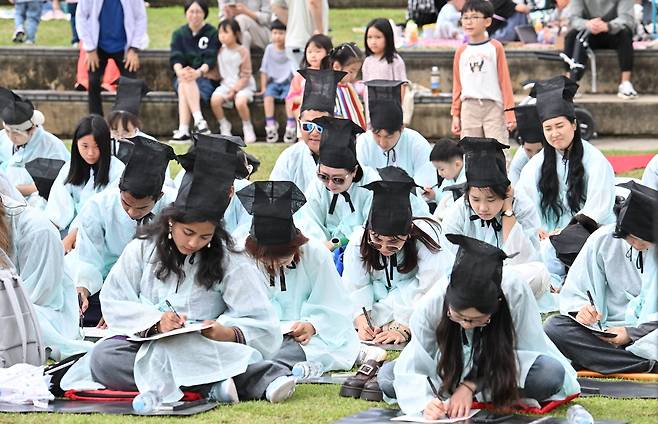
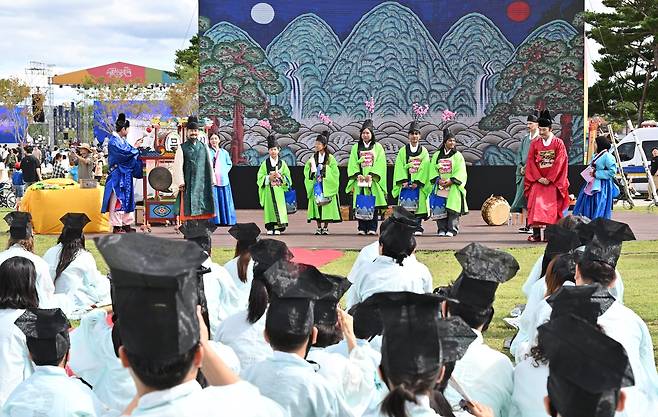
At Sejong Lake Park, the Sejong Hangeul Daejeon brought Korean history to life through a reenactment of the Joseon-era (1392-1910) civil service exam, once used to recruit government officials. Hundreds of participants, including dozens of foreign students, donned traditional scholar robes to take part in poetry composition, quiz challenges and drawing sessions.
This year’s “top scholar” title went to Bui Nguyet Minh, a Vietnamese student whose poem expressed Hangeul as a bridge connecting people across borders. The event concluded with a “Bangbangnye” parade, where the top performers were honored in a traditional court ceremony and led through the park to music and cheers.
Copyright © 코리아헤럴드. 무단전재 및 재배포 금지.