Symbolic, imaginary and real
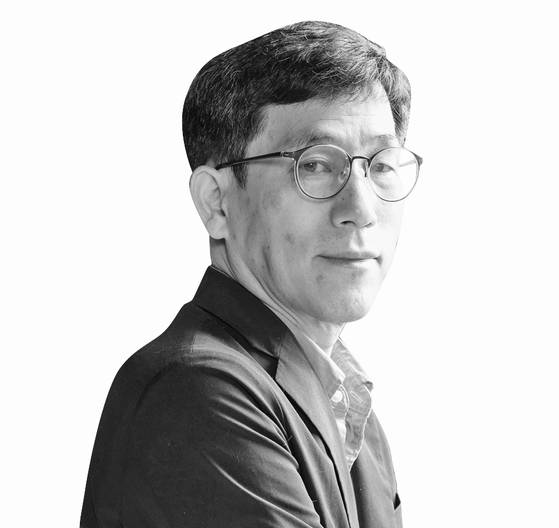
Chin Jung-kwon The author is a professor at Kwangwoon University.
According to French psychoanalyst Jacques Lacan, human subjectivity is composed of three orders: the symbolic, the imaginary, and the real. Whether one accepts his philosophy or not, this tripartite framework can be applied not only to individuals but also to the broader condition of society, offering a way to understand today’s political distortions.
Lacan defined the symbolic as the realm of language, logic, reason and law. In broader social terms, it includes education, scholarship, public debate, the judiciary and legislatures — activities governed by meanings and rules collectively recognized.
![The Legislation and Judiciary Committee of the National Assembly holds a hearing on Sept. 30 into allegations that Chief Justice Jo Hee-de interfered in the presidential election, with key witnesses absent. [YONHAP]](https://img3.daumcdn.net/thumb/R658x0.q70/?fname=https://t1.daumcdn.net/news/202510/02/koreajoongangdaily/20251002000428812xcjo.jpg)
The imaginary, in contrast, belongs to the world of images and fantasies. Today, it is reflected in films, comics, video games, idol culture, YouTube and the selfie-driven aesthetics of social media. It is the domain of powerful desires and the illusions of fulfilling them.
Korean politics now shows the imaginary overpowering the symbolic. As society shifts from a text-centered to an image-centered culture, the symbolic order has steadily yielded ground to the imaginary.
![National Assembly Speaker Woo Won-shik, Supreme Court Chief Justice Jo Hee-de and Constitutional Court President Kim Sang-hwan attend a ceremony marking the 77th Armed Forces Day at the Gyeryongdae military headquarters in South Chungcheong on Oct. 1. [YONHAP]](https://img2.daumcdn.net/thumb/R658x0.q70/?fname=https://t1.daumcdn.net/news/202510/02/koreajoongangdaily/20251002000430612odkk.jpg)
One example is the Democratic Party’s (DP) attempt to summon the chief justice of the Supreme Court for questioning. The reason was implausible: He allegedly joined in a “meeting of four” — a supposed secret gathering later revealed as a fabrication, even involving AI-generated voice manipulation — to influence the 2025 presidential election by pushing opposition leader Lee Jae Myung’s campaign law case toward a guilty verdict. In fact, the referral of Lee’s case to the full bench followed normal procedure. It is common sense that a chief justice cannot coerce 10 other justices into a ruling.
Yet this conspiracy theory, born in the fervent imagination of pro-Lee supporters often labeled "gaeddal," became an official agenda item in the National Assembly’s Legislation and Judiciary Committee. The term “gaeddal” originated from the phrase “daughters of reform.” It does not exclusively refer to women, and over time has acquired a derogatory nuance. Today, it is rarely used by DP supporters themselves but is often employed by political opponents as a pejorative. Still, it has come to signify Lee’s most ardent base. A leading DP figure, himself a former law professor, was reported to have prepared an impeachment motion in anticipation of the chief justice’s refusal to attend. Disturbingly, such reasoning has spread into public consciousness. A poll showed 43.9 percent of respondents in favor of the chief justice’s resignation and 47.5 percent opposed — meaning nearly half of voters regard the conspiracy as true.
Legacy media, once representing the symbolic order, have proven powerless against this tide. Their role has been reduced to amplifying raw claims from the imaginary and adding inverted commentary, such as, “If half the people demand resignation, perhaps the court must reflect.”
Canadian philosopher Marshall McLuhan argued that electronic media transform a “public” into a “mass audience.” What disappears is the public dimension itself. Reality no longer belongs solely to the tangible; collective illusion takes its place.
Debates over prosecutorial reform unfold less in institutional forums than in YouTube's imaginary sphere. The ruling party leader vowed before the Chuseok holiday to bring “the joyful news of dismantling the prosecution,” echoing the rhetoric of Kim Eo-jun, a broadcaster and YouTuber nicknamed “Eo-jun Christ” by followers. Kim, who commands strong devotion among DP supporters, has leveraged his platform to exert significant influence on party politicians.
In truth, prosecutorial and judicial reform are illusions. They did not emerge from grievances of ordinary citizens harmed by the justice system. Advocates rarely cite actual victims. From the beginning, these reforms were projects designed by and for the DP elite. Their beneficiaries have shifted over time — from former president Roh Moo-hyun, to Cho Kuk, and now to Lee Jae Myung.
The so-called “salmon dinner” episode illustrates this logic. The incident refers to allegations that prosecutors, while investigating Lee Hwa-young, a former vice governor of Gyeonggi, summoned him to an interrogation room and served salmon sashimi and alcohol — food and drink normally prohibited in detention — in an attempt to elicit statements related to Lee Jae Myung’s case. Over time, the “salmon dinner” has come to symbolize the suspicion of political dealmaking and backroom maneuvering. Other proposals, such as expanding the Supreme Court to prepare for post-presidency trials or abolishing the breach of trust statute to help Lee Jae Myung avoid conviction, reflect the same calculated intent.
Those who suffer are found in the real. Under these reforms, defendants gain an advantage through weak investigations and fragile prosecutions, increasing the likelihood of acquittals. Victims, by contrast, face the burden of costly legal fees. Supporters may dwell in the imaginary, but their bodies remain bound to the real. Their chosen politicians benefit, while they themselves pay the price.
The imaginary offers an illusion of self-fulfillment. It grants political empowerment absent in the symbolic order, where institutions fail to represent the real. Within YouTube’s imaginary, supporters imagine themselves as power brokers influencing lawmakers, party leaders and even the presidential office.
![The Supreme Prosecutors’ Office building is reflected in a sculpture installed at its headquarters in Seocho District, southern Seoul, on Sept. 25, ahead of a parliamentary vote on a government reorganization bill that includes abolishing the prosecution service. [YONHAP]](https://img2.daumcdn.net/thumb/R658x0.q70/?fname=https://t1.daumcdn.net/news/202510/02/koreajoongangdaily/20251002000432972codf.jpg)
The Constitution declares that sovereignty rests with the people, yet in a representative democracy, few feel this tangibly. Lee's fervent supporters are different. They sense directly that they are the sovereign, experiencing an intoxicating “political efficacy” as powerful as a narcotic.
But the real does not vanish because the imaginary overwhelms the symbolic. The suffering hidden and suppressed will eventually reach a breaking point. When that moment arrives, and reality bursts through the surface of illusion, it will trigger a profound political crisis.
This article was originally written in Korean and translated by a bilingual reporter with the help of generative AI tools. It was then edited by a native English-speaking editor. All AI-assisted translations are reviewed and refined by our newsroom.
Copyright © 코리아중앙데일리. 무단전재 및 재배포 금지.
- North Korea publicly tries, humiliates women for illegal breast implants
- Korean national arrested in prostitution raid on Ohio massage parlors
- China's Seoul hotel cancellation casts doubt on Xi's potential state visit during APEC summit
- Airport labor union strike begins ahead of Chuseok holiday travel surge
- Korean Air offers 1:1 Asiana mileage conversion, 10-year retention ahead of merger
- Unification minister says North Korea capable of hitting U.S. mainland
- Wedding guests-for-hire cash in as Korean families put image over reality
- Kim Soo-hyun addresses dating claims by releasing personal diary entries online
- 'Unconstitutional': Shocked politicians, prosecutors resist Friday's bill as debate continues
- EVs, cosmetics top list of Korea's leading exports