[Women Shaping Korean Art] Asian Art Museum's Lee So-young charts new vision for Asian diaspora
전체 맥락을 이해하기 위해서는 본문 보기를 권장합니다.
Saying she was "fortunate" to meet many mentors at the museum, she recalled a favorite quote from her first boss, who always said, "Asia is half of the world and all of time."
"Museums in the US and Europe have built Korean collections and presented exhibitions over the last 20 years, and one of the most fascinating and transformative developments has been the rise of contemporary Korean art," she said. "This transformation has been explosive and game-changing, not just for Korea but for the global artistic landscape."
이 글자크기로 변경됩니다.
(예시) 가장 빠른 뉴스가 있고 다양한 정보, 쌍방향 소통이 숨쉬는 다음뉴스를 만나보세요. 다음뉴스는 국내외 주요이슈와 실시간 속보, 문화생활 및 다양한 분야의 뉴스를 입체적으로 전달하고 있습니다.
The following is the second installment of a three-part series exploring Korean female pioneers of the global art scene — Ed.
San Francisco has long been a meeting point of Asia and America. The Gold Rush in the 19th century was one of the first tides to carry thousands of Asians across the Pacific.
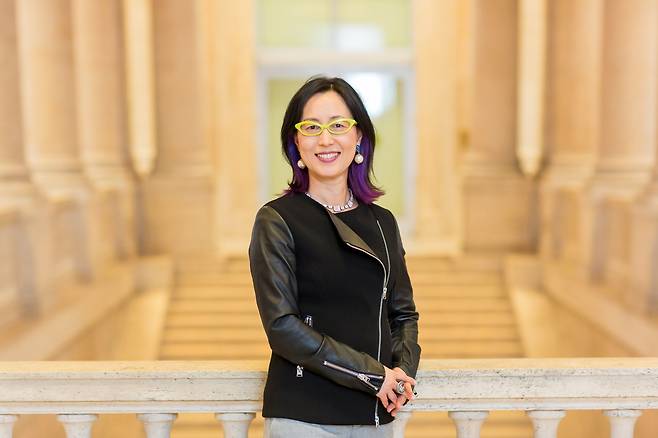
“San Francisco has a really key role in telling the story of the Asian diaspora in its culture — it has a deep, long history of Asians coming right from the 19th century onward,” said Lee So-young, new director of the Asian Art Museum of San Francisco, during an interview with The Korea Herald in Seoul on Sept.3.
“For all Asian Americans working in the US, the question of identity about the Asian aspect and American aspect is incredibly rich. There is no single answer, and each artist approaches it from their own experiences. That is what makes the work so fascinating,” she said.
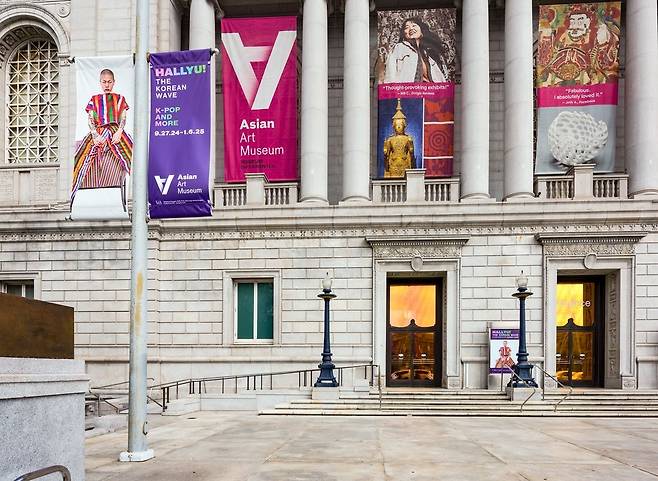
Many Asian American communities started on the West Coast, particularly in the San Francisco area. Within the city, the Asian Americans make up about 38 percent of the population, according to Lee. This presence, she noted, is not confined to immigrant neighborhoods but has seeped into daily life in the US — from food and language to popular media — making Asian culture part of the mainstream.
Building on that diffusion, Lee said the time has come to view Asian culture not only through a traditional regional lens but also through the perspective of diaspora, for Asian culture has continuously evolved and is now woven into global culture.
“It (Asian culture) became like a global thing,” she said. “What is the Asian culture today, and what is the future of Asian art and culture? I would like the Asian Art Museum to lead in conversation with all of the museums and cultural institutions in the region as well,” the director said.
Lee took office in April as the new director of the country's leading Asian art museum. She previously served as the chief curator at Harvard Art Museum, which she described as an opportunity to “grow in a leadership position” after working for 15 years as a Korean art curator at the Metropolitan Museum of Art in New York.
Lee said she took on the new post at an “exciting time” for the city, as San Francisco works to recover from the COVID-19 pandemic under a new mayor determined to revitalize it both economically and culturally, and cultural institutions across the city are coming together to draw audiences back.
“You’re not just researching (as curators) — you’re engaging with people who come to the museum. You’re building communities, telling stories and even creating new ones with visitors — and that’s the part of the job I really enjoy.
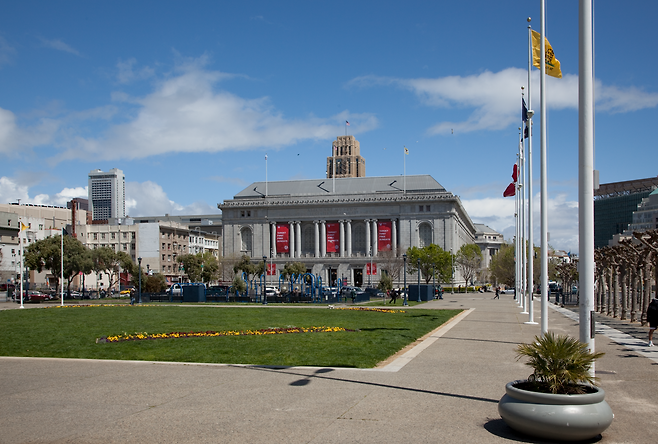
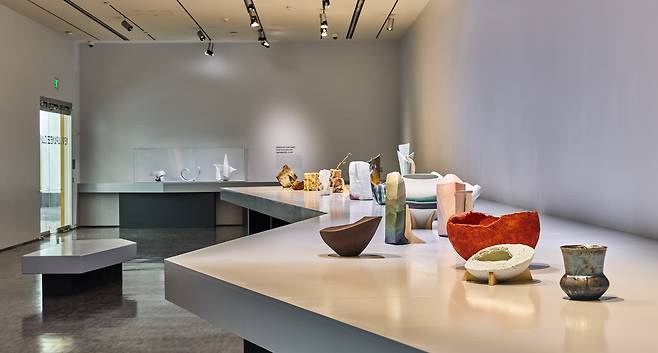
The Asian Art Museum in San Francisco traces its origins to the late 1950s with a gift to the city of some 8,000 works collected by Avery Brundage. The museum, now home to more than 20,000 artworks from 48 Asian countries and the worldwide Asian diaspora, is in the city’s Civic Center and has opened a new wing, the Pavilion for contemporary art exhibitions.
Korean art’s first voice at the Met
Born to a diplomat father, Lee said she spent most of her life on the East Coast, studying art history at Columbia University and assuming she would pursue a career as a professor. Though she had always enjoyed visiting museums, Lee said she never imagined working at one — but in 2003, Lee became the first curator of Korean art at the Met.
Saying she was “fortunate” to meet many mentors at the museum, she recalled a favorite quote from her first boss, who always said, “Asia is half of the world and all of time.”
“For a long time, many museums, when collecting and telling stories about Asia, treated it as a historical entity —like the US is here, Asia is there. But in fact, Asia is a vibrant current community.
It is important that you continue not only telling the stories of the past, but what Asia is today and tomorrow," she said.
One of the proudest moments as the first Korean curator at the museum was in 2013 when she co-curated the exhibition “Silla: Korea’s Golden Kingdom,” which featured more than 100 objects created between A.D. 400 and 800, in collaboration with the National Museum of Korea and Gyeongju National Museum.
“It was the first time this period of Silla was presented outside Asia, highlighting its role as the easternmost point of the Silk Road and its internationalism. We think the 20th century was the global century, but globalism has happened many times throughout history,” she said.
Over the past two decades, Lee has seen the rapid rise of Korean art on the global stage, propelled by government support abroad and the growing international recognition of contemporary Korean artists.
“Museums in the US and Europe have built Korean collections and presented exhibitions over the last 20 years, and one of the most fascinating and transformative developments has been the rise of contemporary Korean art,” she said. “This transformation has been explosive and game-changing, not just for Korea but for the global artistic landscape.”
Copyright © 코리아헤럴드. 무단전재 및 재배포 금지.