Remains of former President Chun find no resting place 4 years after death
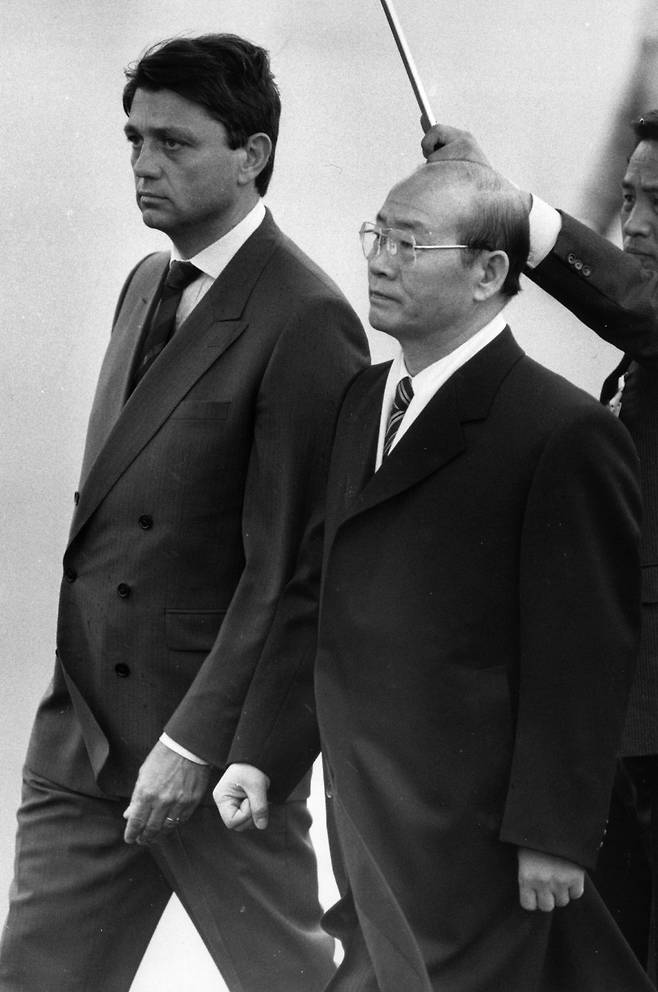
Four years after his death from illness, the remains of former President Chun Doo-hwan, who led a coup in 1979, repressed pro-democracy movements, including the 1980 Gwangju Democratic Uprising, and ushered in another decade of military dictatorship, have yet to find a resting place.
A representative of Chun's bereaved family was quoted as saying by Yonhap News Agency that there are "discussions over ways to keep his body permanently at the front yard of the house where he lived" in Seodaemun-gu, western Seoul.
Chun ruled South Korea from 1980 to 1988. He was later convicted of insurrection, homicide and bribery, with the Supreme Court in April 1997 upholding a life sentence handed down by a lower court. This criminal record stripped Chun of his eligibility to be buried in a South Korean national cemetery, despite having been president.
Chun was pardoned by then-President Kim Young-sam in December 1997, but Chun's responsibility to pay penalties of over 220 billion won ($157.8 million) was not lifted. At the time of his death in November 2021 from multiple myeloma, Chun still owed some 86 billion won.
A high court trial is underway over whether Chun's house in Seodaemun-gu, which is currently owned by his widow Lee Soon-ja, should be returned to the deceased's estate and confiscated by the government to pay off his liabilities to the state, as the prosecution argued that Chun had attempted to conceal assets.
Earlier in February, a district court dismissed the claim that the asset owned by Chun's wife should be returned to Chun, indicating that Chun's liabilities expired upon his death.
Of the nine former presidents of South Korea who have died, Chun and his successor Roh Tae-woo were both denied burial in a national cemetery. Roh, president from 1988 to 1993 following a democratic election, was also involved in Chun's military coup in 1979. He is buried in Paju, Gyeonggi Province.
The other former presidents buried in the Seoul National Cemetery in Dongjak-gu in southern Seoul are Syngman Rhee, Park Chung-hee, Kim Young-sam and Kim Dae-jung.
Choi Kyu-hah's body rests at Daejeon National Cemetery. Yun Po-sun's remains are buried in Asan, South Chungcheong Province, along with his ancestors. Roh Moo-hyun was laid to rest in his hometown of Bong-ha village near Gimhae, South Gyeongsang Province.
Copyright © 코리아헤럴드. 무단전재 및 재배포 금지.