Gangneung to tap Pyeongchang’s Doam Dam to fight record drought
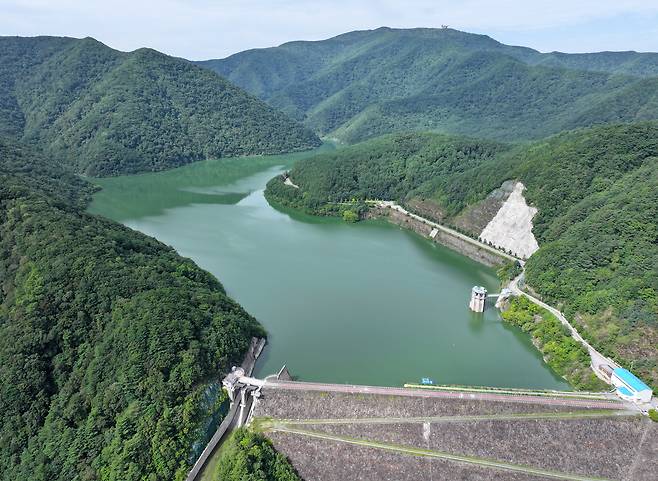
The Gangneung city government announced Wednesday that it will start making emergency water releases from Doam Dam in nearby Pyeongchang, Gangwon Province, as the city continues to struggle with one of its worst droughts in decades.
The plan involves channeling water through an existing tunnel to increase water storage levels at Obong Reservoir, which supplies 87 percent of Gangneung’s tap and industrial water.
A test release is expected to begin on Sept. 20 after thorough checks of water quality and security.
Gangneung city officials estimate that securing an extra 10,000 tons per day could significantly slow the decline of Obong Reservoir’s water levels.
To assess the safety and stability of the emergency water supply, Gangneung city officials stated that they will form a water quality verification committee, consisting of government officials from the Gangneung city and Gangwon provincial governments, as well as academic experts and civic groups.
In addition to tests conducted by the Ministry of the Environment, the city government added that it would carry out its own water quality assessments. During these tests, if Doam Dam’s water is deemed unsuitable for use, the city government stated that emergency water releases would be halted in consultation with authorities.
Earlier analyses by the Environment Ministry and the Wonju Regional Environmental Agency had concluded that emergency water from the Doam Dam meets drinking water standards after purification.
The ministry added that it will disclose future water quality test results transparently if water from Doam Dam is to be used consistently and provide any necessary technical help to ensure stable operation at the Hongje Water Purification Plant.
Doam Dam, which holds 30 million metric tons of water, has consistently been brought up by authorities as a way to ease Gangneung's recurring drought conditions. The proposal, however, stalled repeatedly amid strong opposition from civic and environmental groups over pollution and ecological damage.
According to the ministry, the dam’s water quality has significantly improved in recent years.
“Since the enactment of the Act on the Management and Use of Livestock Excreta in 2006, livestock waste upstream has been strictly controlled, and the (Doam Dam) area was designated as a pollution control zone in 2007,” said the Environment Ministry in an official statement on Aug. 22. “Continuous pollution reduction efforts have since been carried out, and the dam is now a more viable option to supply water to Gangneung.”
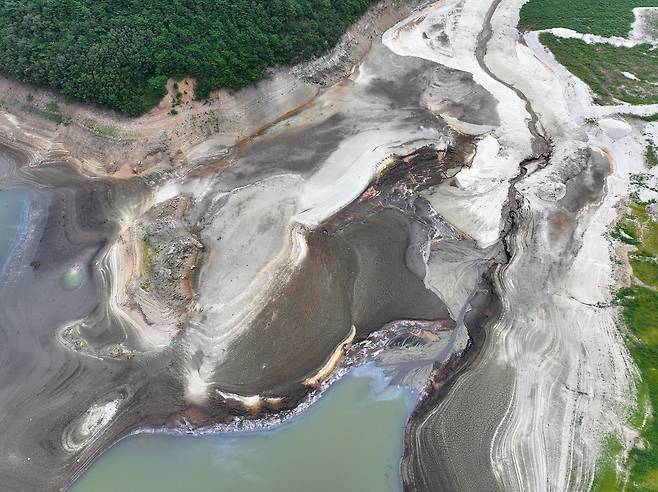
Meanwhile, according to the Gangneung city government, Obong Reservoir’s water storage levels stood at 12.1 percent Wednesday morning. If the city continues to see little to no rainfall, experts were quoted as saying that the reservoir’s water levels could fall below 5 percent within four weeks.
Copyright © 코리아헤럴드. 무단전재 및 재배포 금지.