Part of Gyeongbokgung closed to public
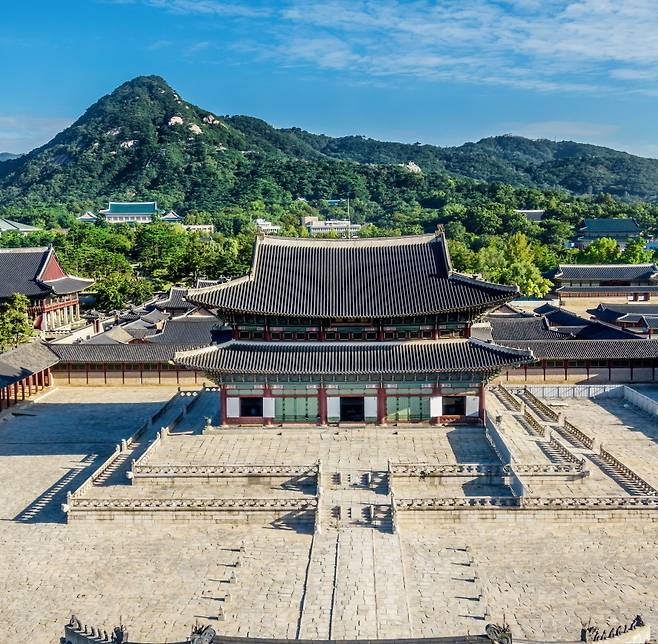
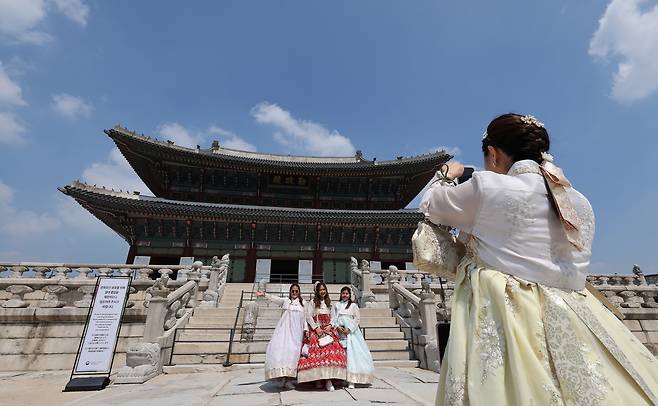
The elevated stone platform of Gyeongbokgung's Geunjeongjeon will be off-limits until the end of October, the Korea Heritage Service announced Tuesday.
Instead of stepping onto the hall's terrace, or woldae, for an up-close view, visitors will only be able to observe Geunjeongjeon from the courtyard during this period.
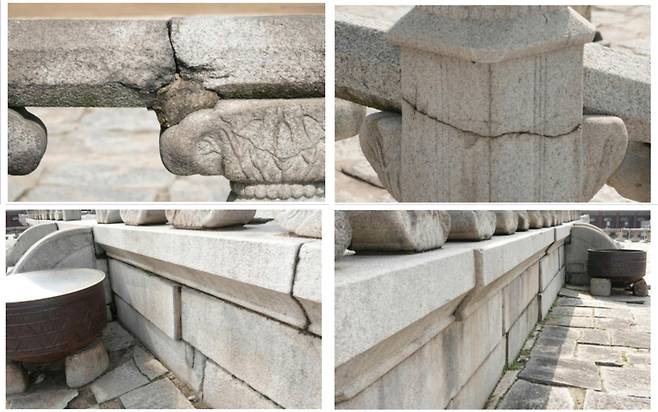
Starting last year, authorities began limiting access to the woldae during the crowded spring and fall seasons to protect its fragile stonework. According to the 2023 Monitoring Report on Priority Cultural Heritage Sites, Geunjeongjeon received a “C” grade in safety inspections, meaning it requires careful observation.
Restoration work was carried out between 2021 and 2023 after concerns were raised about the structural stability of the upper and lower east-side sections of the woldae.
Originally built in 1394, Geunjeongjeon served as the main throne hall of Gyeongbokgung, where kings conducted state affairs, presided over official functions and received foreign envoys. High-ranking officials, including military officers, gathered in its courtyard to pay their highest respects to the monarch. Between 1399 and 1546, seven Joseon-era (1392-1910) kings were enthroned here.
As the palace’s largest and most formal building, Geunjeongjeon was destroyed during the Japanese invasions of 1592 and rebuilt in 1867, the fourth year of King Gojong’s reign.
In 1985, Geunjeongjeon was designated as National Treasure No. 223.
Gyeongbokgung is the most visited palace among the five major royal palaces in Seoul. In 2024, it drew 6.44 million visitors, including 2 million from overseas, according to the Ministry of Culture, Sports and Tourism.
Copyright © 코리아헤럴드. 무단전재 및 재배포 금지.