In streaming, those with deepest Rolodex will win: expert
전체 맥락을 이해하기 위해서는 본문 보기를 권장합니다.
"One of the challenges that streamers are facing right now is that there are many streaming video services available," Aguete said. "There are more than 6,000 streaming video services that we track at Omdia."
"If you are a Korean company today, you are in the best place ever in the history of Korean content," she said. "Netflix has made Korean content so popular, all the streamers now want to access that content. So if you have Korean content at the moment, I really recommend to try to sell it worldwide, because the appetite is huge."
이 글자크기로 변경됩니다.
(예시) 가장 빠른 뉴스가 있고 다양한 정보, 쌍방향 소통이 숨쉬는 다음뉴스를 만나보세요. 다음뉴스는 국내외 주요이슈와 실시간 속보, 문화생활 및 다양한 분야의 뉴스를 입체적으로 전달하고 있습니다.
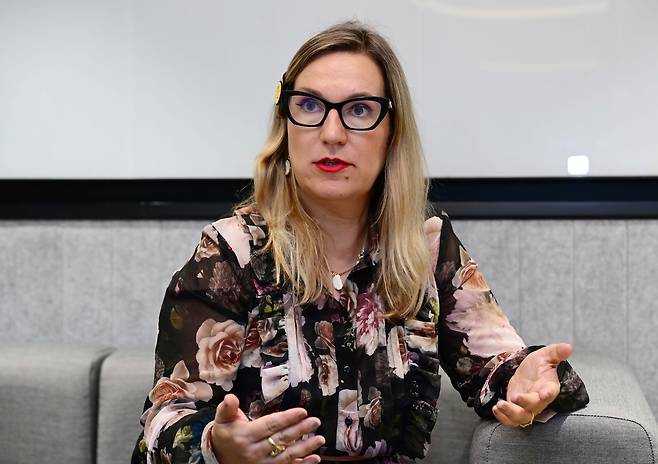
In today’s crowded streaming landscape, survival is not about battles but alliances, and Korea is uniquely positioned to thrive in this new era of strategic partnerships, says senior research director at Omdia, Maria Rua Aguete.
Aguete, head of media and entertainment at London-based technology research and advisory firm Omdia, leads research on service providers and advises global media and tech companies. As an expert in the international media and broadcasting landscape, she has conducted due diligence on media firms, competitive analyses of broadcasting markets and guided TV market-launch projects.
When discussing the forces behind streaming’s next phase, Aguete was clear in her assessment: drop the battlefield rhetoric.
“One of the challenges that streamers are facing right now is that there are many streaming video services available,” Aguete said. “There are more than 6,000 streaming video services that we track at Omdia.”
“I believe the way to succeed is through partnerships. Those companies that manage more partnerships are those that will succeed. ... That's why I never speak of the streaming wars. I always speak a lot of streaming friends," she said.
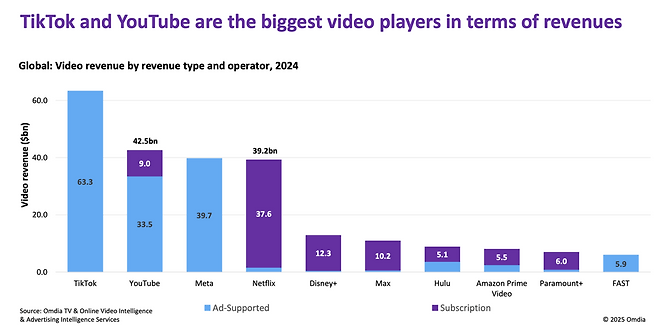
That shift from rivals to “friends” is already rewriting the industry playbook, with YouTube at the center, she says.
“A new trend for streamers is to view YouTube not as a competitor, but as a platform they can leverage to their advantage. (They are thinking,) can YouTube help us different platforms to grow?” she said. According to Omdia data, YouTube ranks second in global revenue among video players as of 2024.
“Even industry leader Netflix has been partnering with YouTube using YouTubers to promote content — for example, for 'Squid Game' in different countries around the world. In many cities they worked with YouTubers to promote the content to people that maybe didn’t subscribe to Netflix,” Aguete said.
And it’s not just influencer campaigns. Big-name studios such as Warner Studios are currently seeding content on YouTube, upending Hollywood’s traditional content distribution model.
Aguete stressed the winners of tomorrow won’t be those with the flashiest originals or deepest libraries but those with the deepest Rolodex, which will enable their content to be exposed through various channels.
"Many people say ‘content is king,’ but I disagree. The real king is being able to find that content," she said.
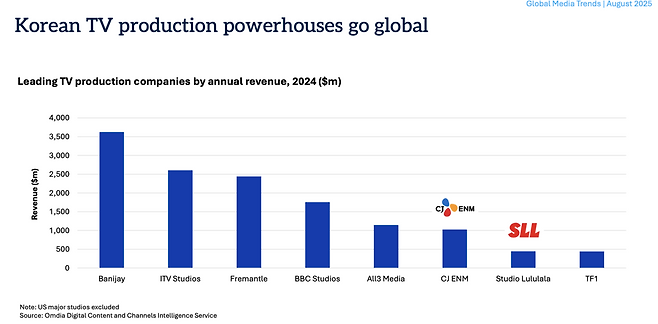
Furthermore, Korea stands to benefit the most from this friendship-first model, Aguete says.
“It’s the best moment to be a Korean production house or to be a Korean content producer,” Aguete said. “Korean production companies are already among the top 20 outside the US production companies in the world. For example, CJ ENM — it ranks really highly in the industry."
“If you are a Korean company today, you are in the best place ever in the history of Korean content,” she said. “Netflix has made Korean content so popular, all the streamers now want to access that content. So if you have Korean content at the moment, I really recommend to try to sell it worldwide, because the appetite is huge."
And it’s not just long-form dramas or big-budget films driving demand. Bite-sized storytelling is next, she said.
“Another thing very important around the world is microdramas — those little episodes that are one to two minutes that are really popular around the world,” Aguete said. “(Soon) we will find out the numbers and the revenues (for the microdramas) because people pay to watch those little clips.”
As the boundaries blur between platforms, devices and formats, her conclusion is unequivocal: The future of streaming won’t be claimed by the fiercest competitors, but by the friendliest collaborators.
“Everyone wants to be everywhere,” Aguete said. “In fact, we're working already with some companies who are asking us (for microdramas). Netflix wants to increase their content on mobile phones, YouTube wants to increase their content on the big screen — everyone wants to be everywhere.”
Copyright © 코리아헤럴드. 무단전재 및 재배포 금지.