Iconic headwear worn by Saja Boys 'more than just a hat'
When the Saja Boys in Netflix's hit animated film "KPop Demon Hunters" stole fans' hearts with their style, many wondered what the members were wearing on their heads.
The wide-brimmed hats, called "gat," were once a must for men stepping out in public.
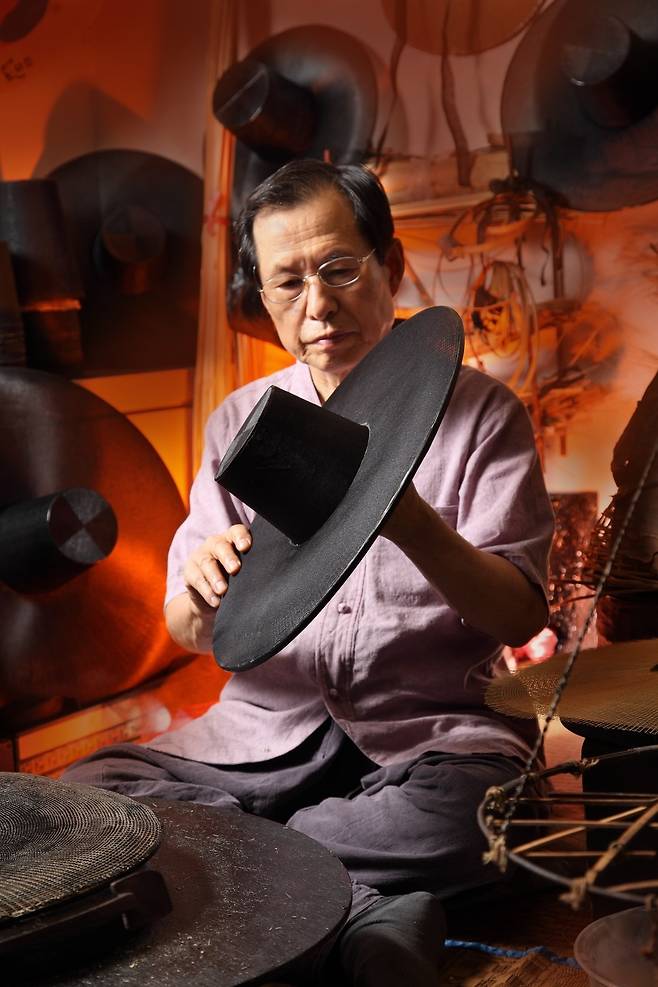
The headgear gained newfound interest, but to Chung Choon-mo, Intangible Cultural Heritage title holder for gannil, the film missed an opportunity to honor Korea's tradition. Gannil refers to the method of crafting gat with fine bamboo strips or horsehair.
"'Gat' is more than just a hat. Historically, it represented a man's respect for etiquette, his sense of honor and ceremonial awareness, similar to how men today might wear a suit for formal occasions to show respect or dignity," Chung said Monday in an interview with The Korea Herald at his studio at the Korea Heritage Agency in Samseong-dong, Seoul.
Today, hats are mostly about function and style. They shield us from the sun or complete a look. But a hat was essential to every man's outfit during the Joseon era (1392-1910); it showed his social status, profession, and reflected the occasion as well, according to Chung, 84, who has been making gat for some 67 years.
"The tradition and significance of such items are often overlooked in dramas or movies, and it is a little disappointing. It makes me feel as if the traditions and aesthetics of men's attire are slowly disappearing. Now, Koreans rarely see the hats in real life, and even less try them on," he said.
"Gat is unique to Korea. There is nothing equivalent in Western cultures or nearby Asian countries. Apart from Confucian values, it also served as a visible expression of how a person should live properly and honorably in society," Chung said.
The master gat maker added that traditional hats seen on film and TV shows are typically cheap versions made with PVC or nylon, rather than the traditional bamboo and horsehair. While budget constraints may explain this choice, Chung said using authentic gat — even if rented — would better reflect and convey the cultural and historical value of the item.
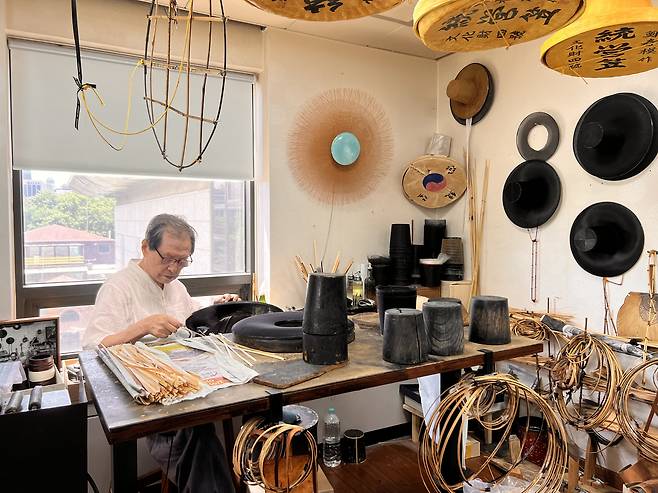
Looking around his workshop with stacks of bamboo strips, silk fabric and lacquer, each waiting to be transformed into an impeccable gat in the hands of the master who has spent a lifetime perfecting the craft, Chung pointed to an image of "jinsarip" hanging on the wall.
"Something like this should be featured in dramas, shouldn't it?" he said, laughing.
Jinsarip is a premium bamboo hat distinguished by its finely crafted, delicate brim that is constructed by layering fine strands of bamboo three or four times. Masters who craft the crowns and brims use heated irons to fuse silk threads one by one, blending precision with artistry for a flawless touch.
Chung's gat making begins with shaping the crown, known as "chongmoja." Thin bamboo threads called "juksa" are carefully woven and secured using heated irons. Then, the flat "yangtae," or brim, is molded before the final finishing touches are applied.
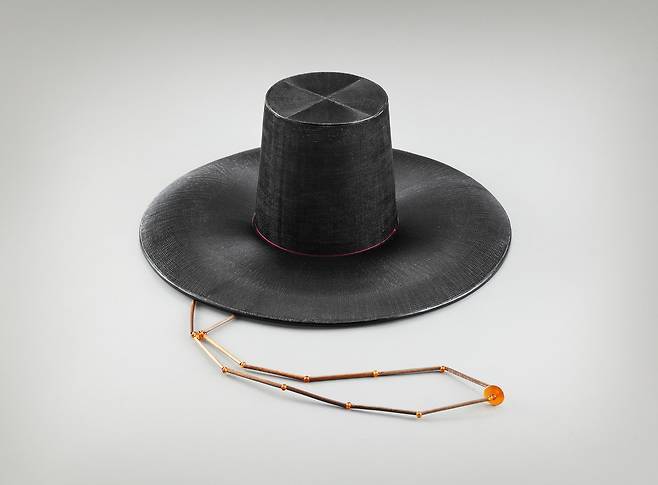
For an added aesthetic appeal, decorative paper embellishments called "jeonggot" and "eungak" made from hanji — Korean traditional paper — are added inside the crown's frame. Around the junction where the brown part meets the brim, a braided silk thread is carefully attached as a finishing touch.
"This type of hat was typically worn by kings and noblemen, highlighting its status as a symbol of authority and prestige," Chung explained. "It usually takes a year to make this, and the one that I made last year is by far my favorite piece of art. It would be nice to see this on the screen. Or should I say the 'real gat'?"
Chung's confidence isn't just empty bravado. He began learning gat making in 1958, and in 1991, was designated by the government as Important Intangible Cultural Property No. 4. He followed in the steps of his three mentors — Ko Jae-gu, Mo Man-hwan and Kim Bong-ju — who became the first gat makers to receive the title in 1964 in Tongyeong, South Gyeongsang Province.
Chung is also based in Tongyeong, a small coastal city known since the Joseon period for its many crafts that were supplied to the royal court in Seoul, among them, gat.
By 1973, Chung was the only one still learning the craft from the masters. The two young apprentices who started alongside him quit shortly after starting.
"None of my teachers wanted their children to carry on the tradition because they knew it had no promising future. But I was afraid these skills would disappear."
With only a few artisans keeping gat making alive, Chung called for more government support to preserve the vanishing cultural tradition.
"I am trying to preserve gat with heart and skill, but government officials are out of touch, and at times, it feels like they do not truly understand or appreciate what I am doing," he stressed.
"Holding exhibitions and allowing people to experience hat-making could help promote Korea's traditional hat for the time being, but that is not enough," he said.
Copyright © 코리아헤럴드. 무단전재 및 재배포 금지.