With new hardline leader at helm, ruling DPK accelerates reform legislation
이 글자크기로 변경됩니다.
(예시) 가장 빠른 뉴스가 있고 다양한 정보, 쌍방향 소통이 숨쉬는 다음뉴스를 만나보세요. 다음뉴스는 국내외 주요이슈와 실시간 속보, 문화생활 및 다양한 분야의 뉴스를 입체적으로 전달하고 있습니다.
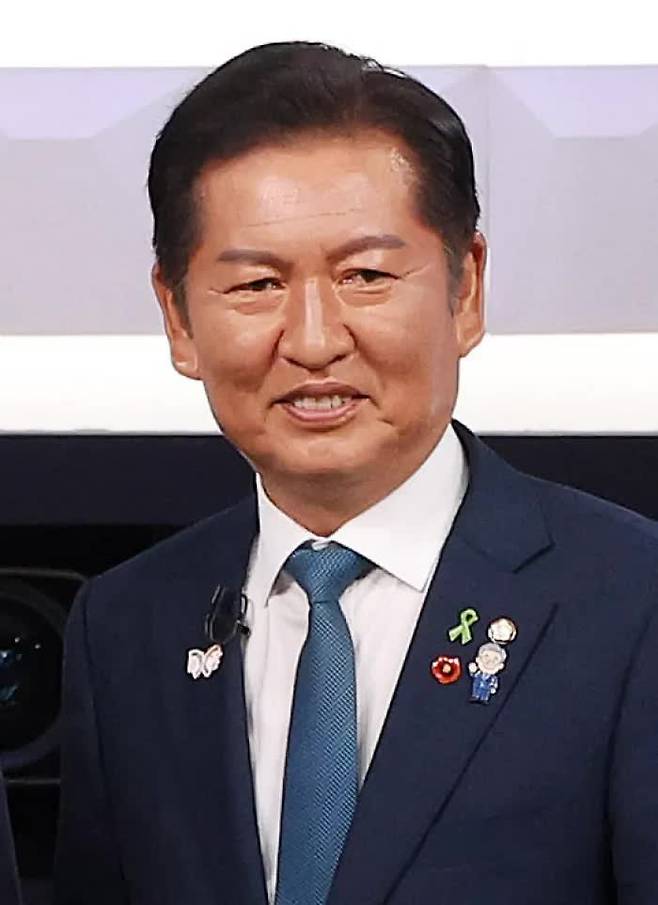
Four-term lawmaker Jung Chung-rae (pictured) was elected as the first ruling party leader under the Lee Jae-myung administration, campaigning on a platform of “lightning-speed, whirlwind reform” on August 3.
With Jung at the helm, the ruling Democratic Party of Korea (DPK) is expected to accelerate legislative efforts to push through bills aimed at reforming the prosecution, judiciary, and media, leveraging its majority in the National Assembly. Tensions with the opposition People Power Party (PPP) are also expected to escalate, especially as Jung has ruled out dialogue with them.
According to the National Assembly on the 3rd, Jung won 61.74 percent of the vote in the party’s national convention held the previous day at KINTEX in Goyang, Gyeonggi Province, becoming the first ruling party leader under the new administration. His term will run for one year until August next year. Although that is only half of the standard two-year term, his position carries considerable influence, especially as he will oversee candidate nominations for the next local elections, which is set to be held in June 2026.
Seen as a hardline reformist within the party, Jung gained overwhelming support from party members with his clear stance on progressive reforms. He secured more than 65 percent of the vote from dues-paying members across all regions, including the DPK’s stronghold of the Honam region. His performance as chair of the National Assembly’s Legislation and Judiciary Committee, where he aggressively pushed through bills opposed by the PPP, appears to have played a role in swaying party members.
Now leading the 167-seat overwhelming ruling party, Jung is expected to move even faster on legislative reforms. In his acceptance speech, he declared, “Starting today, we will immediately launch task forces on prosecutorial, media, and judicial reform,” adding that “we will complete the three major reforms before the Chuseok holidays.”
Observers are also watching how Jung will manage relations with the PPP, the second-largest party in the National Assembly, as he takes on a dual role: carrying out the party’s reform agenda while acting as the governing party’s leader.
Jung has maintained that there can be no dialogue with the PPP unless it apologizes for its stance on the insurrection attempted by former President Yoon Suk-yeol. Even the customary courtesy visit between new party leaders may be skipped, with Jung unlikely to meet Song Eon-seog, the PPP’s interim leader and floor leader. Jung has already introduced a bill to amend the Constitutional Court Act that would lower the threshold for requesting the dissolution of unconstitutional political parties, a clear jab at the PPP. Some within the ruling party worry that while Jung’s combative stance may resonate with the party members now, it could become a liability over time, as the ruling party is expected to take responsibility for state affairs and parliamentary governance.
A clash with the PPP is already expected at the National Assembly’s first plenary session on August 4, just a day after Jung's official inauguration. The PPP plans to launch filibusters against a series of contentious bills, including the so-called "Yellow Envelope Bill" (amendments to Articles 2 and 3 of the Labor Union Act), three broadcast reform bills, and a second set of commercial law revisions.
Members of the DPK leadership say the possibility of inter-party dialogue will hinge on how the PPP responds to the three ongoing special counsel investigations into Yoon’s alleged insurrection, former First Lady Kim Keon-hee, and the death of a Marine during a rescue mission. One DPK lawmaker said, “Extending a hand to a party that refuses to apologize for the insurrection would contradict what Jung has always stood for,” adding, “The PPP’s stance during the special counsel probe will likely determine the path forward.”
As the ruling party, the DPK must not only support the administration as a unified team but also convey the public’s sentiments on sensitive issues. Coordination with the presidential office will be crucial. In his acceptance speech, Jung said, “I will do my utmost to ensure that every policy decided by President Lee succeeds.”
Jung also expressed support for DPK lawmaker Kang Sun-woo, who recently withdrew her nomination for Minister of Gender Equality and Family amid allegations of mistreating her aides. “Stay strong. I will be a solid shield for you,” Jung said.
※This article was translated by an AI tool and edited by a professional translator.
Copyright © 경향신문. 무단전재 및 재배포 금지.
- [단독]광화문광장 ‘받들어총’ 조형물 결국 들어선다···서울시 “4월 내 공사 마무리”
- “너무 아파 눈물 나” 부천 유치원교사 사망 전 메시지···아버지 “현실 너무나 가혹”
- 트럼프 “이란과 합의 안 되면 모든 발전소·유전·하르그섬·담수화 시설까지 완전 파괴”
- 미 국방장관 “예수 이름으로 압도적 폭력 작전을”···군에 ‘종교의 언어’ 끌어들였다
- 옛 용산 청사로 복귀하는 국방부, 이전 비용 219억 책정
- 시장으로 불도저 돌진 비명·신음 “사망자 다수”…베이징서 참사, 영상은 삭제
- ‘헤일메리’ 등 작업한 번역가 황석희 성범죄 전력 의혹···“변호사와 검토 중”
- “연좌제 두려워 말 못한 4·3…” 미신고 희생 아직도 260여건
- [정리뉴스] 종량제 봉투 가격, 어떻게 정해질까? “봉투 값 아니라 ‘쓰레기값’”
- 이 대통령 지지율 62.2%···민주 51.1%·국힘 30.6%[리얼미터]