Tony-winning K-musical ‘Maybe Happy Ending’ faces backlash over lead casting change
이 글자크기로 변경됩니다.
(예시) 가장 빠른 뉴스가 있고 다양한 정보, 쌍방향 소통이 숨쉬는 다음뉴스를 만나보세요. 다음뉴스는 국내외 주요이슈와 실시간 속보, 문화생활 및 다양한 분야의 뉴스를 입체적으로 전달하고 있습니다.
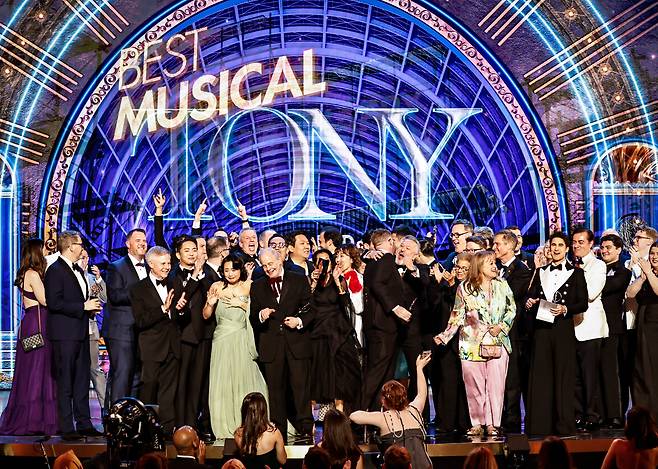
Maybe Happy Ending, which swept six awards including Best Musical at the Tony Awards in June — the most of any production this year — and was hailed as opening a new chapter for K-musicals, is now embroiled in controversy over the casting of its male lead.
The dispute arose after it was revealed that a role previously played by an Asian actor will, starting next month, be taken over by a white actor. Some Asian actors and critics argue the decision undermines the show’s symbolic significance as a work representing Asia on Broadway. Others have raised a philosophical question: “Do robots have race?” — a debate that shows no signs of subsiding.
The musical won Best Musical, Best Direction, Best Book, Best Original Score, Best Scenic Design, and Best Leading Actor in a Musical at the 78th Tony Awards. Co-created by Korean lyricist and playwright Park Chun-hue and American composer Will Aronson, Maybe Happy Ending premiered in Seoul’s Daehangno theater district in 2016. The homegrown production became a sensation for what many saw as a near-miraculous feat — a Korean musical making its mark in New York, the world’s theater capital.
The story follows retired robots Oliver and Claire who form a deep bond and fall in love, set against the backdrops of Seoul and Jeju, and is filled with Korean cultural elements.
The controversy began when producers announced that Andrew Barth Feldman, a white actor would take over the role of Oliver, played by Darren Criss, for nine weeks starting in September. Criss, who won the Tony for Best Leading Actor in a Musical for the role, had extended his contract through August before Feldman was scheduled to step in.
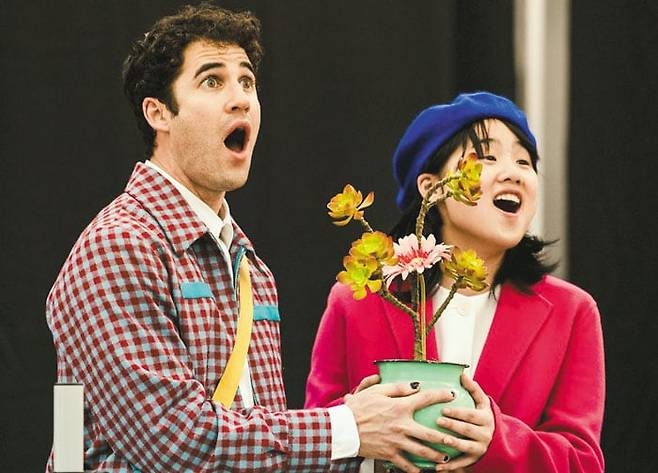
The news drew criticism from Asian American actors. The musical is set in Asia (specifically Korea), and until now, the role had been played by Asian actors. Replacing the lead with a white actor, critics say, disregards the production’s “Asian representational” value. Of the eight current cast members, including four alternates, seven are Asian American, Native Hawaiian, or Pacific Islander. Criss himself is of Filipino descent.
The Asian American Performers Action Coalition said in a statement, “A different precedent has been set; one that de-emphasizes cultural specificity and the opportunities for a far too often excluded population of actors,” the statement read.
Acclaimed Asian American actor BD Wong, known for roles in Jurassic Park and other films, said, “I feel for them. Yet, this decision’s still taken as a hard slap in the face of both the Asian actor community and the Asian audience.” Actor Conrad Ricamora, another prominent Asian American performer, announced plans to create a scholarship fund for aspiring Asian American male actors.
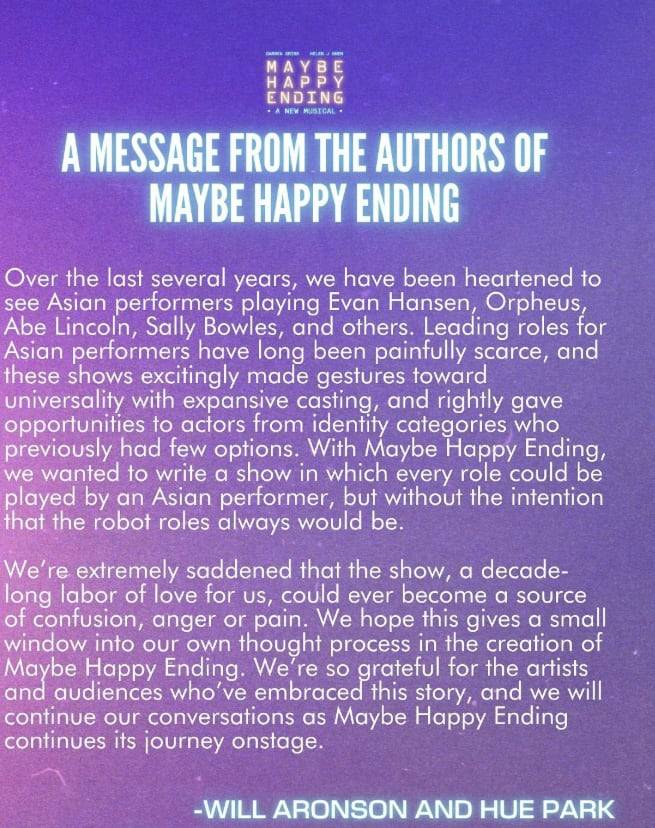
As criticism mounted, co-creators Park and Aronson issued a joint statement on social media. They said they recognized the casting’s significance to many in the Asian American acting community and acknowledged that, although unintentional, the decision had reopened wounds from past experiences. They explained that their vision from the outset was to create a fable-like story about robots that could be performed by anyone, anywhere, while maintaining a distinctly Korean setting. While they had written the musical so all roles could be played by Asian actors, they said it was never their intention that robot roles must always be cast that way.
The Washington Post noted that “the response from ‘Maybe Happy Ending’ creators Will Aronson and Hue Park, posted Thursday to the show’s Instagram account, raises some valid counterpoints amid a soft shoe of mea culpas. Yes, these are robots we’re talking about, and do they even have ethnicities?”
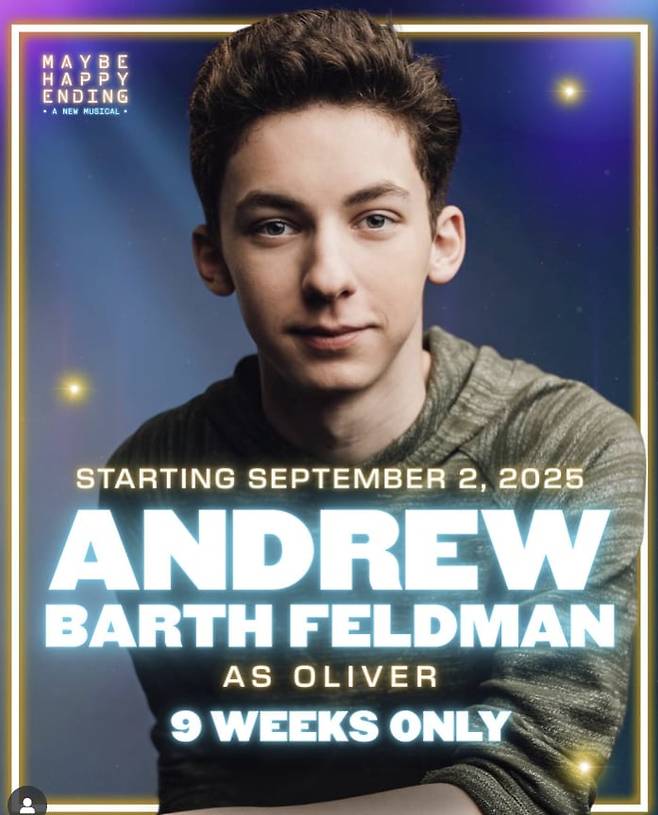
On the same day, Helen J. Shen, who plays Claire in the musical and is Feldman’s real-life partner, also posted her thoughts. Shen, who is Asian, wrote, I know the hurt that people feel because growing up, I would have found a beacon of hope in seeing our show on TV on the Tony Awards. A part of me is mourning that along with the community,” Shen said in a statement. “This has been an immensely challenging moment within my home with Andrew, and in this building filled with A/PI folks to say the least. I don’t know what’s forward, but to have this opportunity to play opposite my favorite actor in the world for 9 weeks, who happens to be perfect for the role is a huge moment of joy for me.”
Copyright © 조선일보. 무단전재 및 재배포 금지.
- 트럼프 “기자들이 날 G.O.A.T로 인정”…백악관 기자단 만찬 첫 참석
- 합수본, 국민의힘 압수수색 재개... 당원 명부 등 확보
- [만물상] 녹고 있는 ‘아이스크림 제국’
- 한음저협 등 6개 음악단체, 가요계 AI 정책 한목소리 낸다
- 유럽까지 튄 전쟁 불똥... 프랑스 “항모·전투기 파견” 대규모 난민 우려도
- “공습경보 울릴 새도 없었다”…이란 보복에 미군 6명 전사
- 이 대통령 “한국인이 필리핀 가장 많이 방문… 우리는 필리핀을 사랑한다”
- 헌재, 재판관회의 진행... ‘재판소원’ 도입 후속 논의
- 정부 “호르무즈 인근에 우리 선박 40척… 이상 없어”
- 반도체 웨이퍼 연마 기술 ‘중국 유출’… 전·현직 업체 직원, 징역형