After tariff deal reprieve, Samsung braces for new trade rules
전체 맥락을 이해하기 위해서는 본문 보기를 권장합니다.
"We are keeping a close watch on the outcome of the Section 232 investigation, as it may have implications beyond chips," a Samsung Electronics official said. "We have been actively presenting our views throughout the investigation process and have maintained close communication with relevant authorities in both countries."
"Our HBM4 applies advanced logic processes to the base die and features an optimized design, resulting in improvements in performance and energy efficiency compared to the previous generation, HBM3E," a Samsung Electronics official said. "We plan to ramp up timely supply in line with the full-scale demand for HBM4 expected next year."
이 글자크기로 변경됩니다.
(예시) 가장 빠른 뉴스가 있고 다양한 정보, 쌍방향 소통이 숨쉬는 다음뉴스를 만나보세요. 다음뉴스는 국내외 주요이슈와 실시간 속보, 문화생활 및 다양한 분야의 뉴스를 입체적으로 전달하고 있습니다.
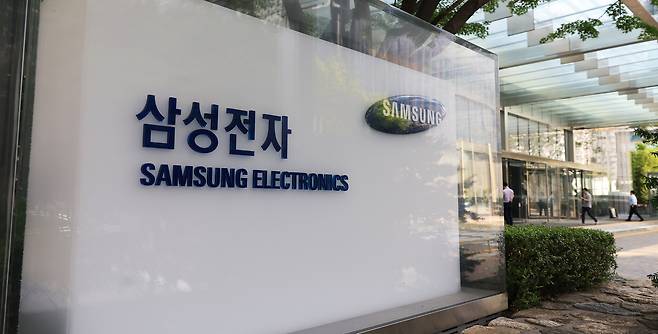
Samsung Electronics said Thursday it is closely monitoring the upcoming decision by the US Department of Commerce regarding semiconductor-related trade regulations, despite an easing in uncertainty following tariff negotiations between South Korea and the US on the same day.
During a conference call following its second-quarter earnings announcement, the tech giant said the decision expected in mid-August pertains to the Section 232 investigation under the US Trade Expansion Act, which covers semiconductor and finished products, including smartphones, tablets, PCs and monitors.
“We are keeping a close watch on the outcome of the Section 232 investigation, as it may have implications beyond chips,” a Samsung Electronics official said. “We have been actively presenting our views throughout the investigation process and have maintained close communication with relevant authorities in both countries.”
Samsung said it is preparing a multi-layered response strategy to minimize business risks and seize potential opportunities, depending on the outcome of bilateral discussions between Seoul and Washington.
Meanwhile, Samsung highlighted a recent $16.5 billion order secured from Tesla as a “milestone” that demonstrates the competitiveness of the company’s advanced process technologies. It said the deal is expected to pave the way for additional orders from other major clients, contributing to stable operations at its US-based Taylor plant.
Samsung has been pushing ahead with the construction of a new chip fabrication plant in Taylor, Texas, with the goal of fulfilling high-value chip contracts from diverse US clients. The plant is slated to begin full-scale operations next year. For 2025, the company said investment in the Taylor facility will remain within this year’s capex range but will increase next year.
The company also announced that it has completed approval for transitioning its 1c DRAM using a 10-nanometer process to pilot mass production. Based on this, it has finalized the development of its sixth-generation HBM chips, known as HBM4, and has begun shipping samples to major clients.
“Our HBM4 applies advanced logic processes to the base die and features an optimized design, resulting in improvements in performance and energy efficiency compared to the previous generation, HBM3E,” a Samsung Electronics official said. “We plan to ramp up timely supply in line with the full-scale demand for HBM4 expected next year.”
Earlier in the day, Samsung announced its preliminary earnings for the second quarter, reporting an operating profit of 4.68 trillion won ($3.36 billion), down 55.2 percent from a year earlier. Net income fell 48 percent to 5.12 trillion won, while sales rose slightly by 0.67 percent to 74.6 trillion won.
These figures fell short of market expectations. According to financial data provider FnGuide, consensus estimates had forecast 6.18 trillion won in operating profit and 76.2 trillion won in sales.
Samsung’s Device Solutions division, which oversees the semiconductor business, posted 27.9 trillion won in sales and 400 billion won in operating profit — its lowest since a 2 trillion won loss in the fourth quarter in 2023. Despite growth in high-value memory and foundry sales, profitability was impacted by inventory-related charges and US sanctions affecting the non-memory business.
The Device eXperience division, which handles mobile and consumer electronics, recorded 43.6 trillion won in revenue and 3.3 trillion won in operating profit. The decline was attributed to reduced Galaxy S25 smartphone sales and intensified competition in the TV market, resulting in a 16 percent drop in revenue and a 1.4 trillion won fall in profit compared to a year ago.
Looking ahead, Samsung forecasts a gradual rebound in the third quarter as one-off costs subside, although lingering tariff uncertainties and global economic slowdowns may pose challenges.
“While global trade uncertainties and geopolitical risks raise concerns about slower growth, we expect momentum in the artificial intelligence and robotics industries to gradually drive recovery in the IT sector,” a Samsung Electronics official said.
Copyright © 코리아헤럴드. 무단전재 및 재배포 금지.