Korea pitches strategic ‘MASGA’ project in last-minute trade talks with U.S.
이 글자크기로 변경됩니다.
(예시) 가장 빠른 뉴스가 있고 다양한 정보, 쌍방향 소통이 숨쉬는 다음뉴스를 만나보세요. 다음뉴스는 국내외 주요이슈와 실시간 속보, 문화생활 및 다양한 분야의 뉴스를 입체적으로 전달하고 있습니다.
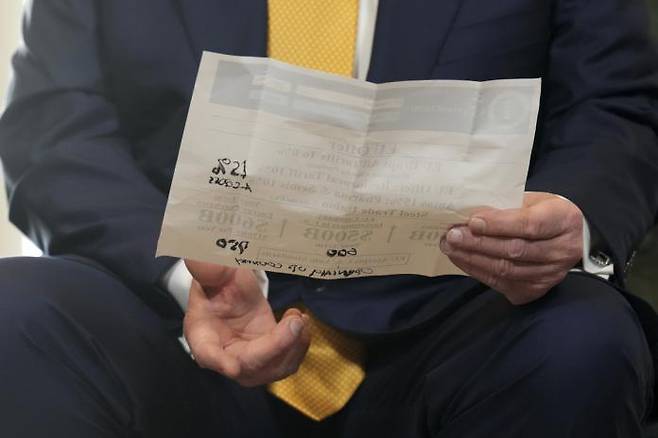
The Korean government, currently making a last-ditch effort to conclude tariff negotiations with the U.S., has reportedly proposed a multi-trillion-won shipbuilding cooperation project to Washington.
With Japan and the EU frontloading large-scale investments in the U.S. to gain exemptions from the so-called “Trump tariffs,” Korea has presented shipbuilding cooperation and investment, a sector critical to America’s containment of China, as its strategic card.
According to relevant ministries on July 28, Trade, Industry and Energy Minister Kim Jeong-gwan directly laid out the blueprint for a shipbuilding partnership centered on what is being called the “MASGA Project” during the Korea-U.S. industry ministerial talks held on July 25 (local time). “MASGA” is a coined term combining “MAGA” (Make America Great Again) and “Shipbuilding.” Minister Kim is said to have explained the plan personally during discussions in the U.S. Commerce Secretary Howard Lutnick’s residence in New York.
The project involves a comprehensive package that includes investments in U.S.-based shipbuilding facilities by Korean private shipbuilders as well as financial support in the form of loans and guarantees totaling tens of billions of dollars. The exact amount is subject to future negotiations. Korea's policy finance institutions, including the Export-Import Bank of Korea and Korea Trade Insurance Corporation, are expected to participate in providing financial support.
The Ministry of Trade, Industry and Energy remained cautious, saying, “Nothing has been finalized yet, and negotiations are still ongoing, so we cannot confirm specific details.”
Experts have evaluated the MASGA project as a unique proposal that only Korea, given its world-class shipbuilding capabilities, could offer. For the U.S., which needs to rebuild its domestic shipbuilding capacity to compete with China for maritime supremacy, a partnership with Korea, the global leader in shipbuilding, presents the most attractive and practical option.
“A warship that takes seven years to build in the U.S. or China takes about three years at a Korean shipyard,” said one Korean industry insider. “Considering maintenance and repair of naval vessels, Korea is effectively the best partner.”
Lee Tae-ho, former Second Vice Minister of Foreign Affairs and now an advisor at law firm Gwangjang, said, “America needs allied partners for shipbuilding cooperation, and given domestic legal constraints, production must occur within the U.S., but the country currently lacks both manpower and manufacturing capabilities. Korea’s proposal directly targets that need.”
Given the bipartisan consensus in the U.S. on strengthening naval manufacturing capabilities to counter China, the proposal could provide political leverage for President Trump, who might present it as a diplomatic win achieved through tough bargaining with Korea.
“It appears President Trump needs a visible, headline-worthy achievement more than technical assurances of enforcement mechanisms,” said one trade expert on condition of anonymity. “Japan’s approach, offering concrete financial figures, may serve as a useful reference.”
Indeed, Japanese Economic Revitalization Minister Ryosei Akazawa recently told NHK in an interview on July 26 that most of Japan’s US$550 billion package consists of loans and guarantees, with only 1 to 2 percent being direct investment.
Meanwhile, after concluding talks with U.S. Commerce Secretary Lutnick on July 24 and 25, Korea’s Industry Minister Kim Jung-kwan and Trade Minister Yeo Han-koo departed for Scotland to resume negotiations in alignment with the U.S. delegation's travel schedule.
Lutnick, Kim’s counterpart in the negotiations, is currently accompanying President Trump in Scotland along with Jamieson Greer, the U.S. Trade Representative.
※This article was translated by an AI tool and edited by a professional translator.
Copyright © 경향신문. 무단전재 및 재배포 금지.
- UAE, 내달 1일 ‘OPEC 탈퇴’···호르무즈 봉쇄 장기화에도 독자적 증산 나서나
- ‘조국 저격수’ 김용남 “먼저 공격 안 해” 혁신당 “민주당 우군 맞냐”···재보선 핫플 ‘
- [속보]이 대통령 “하정우 수석, 큰 결단했다…어디에서든 국가·국민 위해 역할 하길”
- 도이치 주가조작 ‘유죄’ 뒤집힌 김건희, 2심 ‘징역 4년’···“시세 조종 가담, 중대 경제 범
- “오배송 책임 전가” 거센 반발에 결국···쿠팡이츠 ‘라이더가 메뉴 확인’ 하루 만에 중단
- [단독]“생각보다 빡빡한 선거될 수도, 절대 오만해선 안돼”···민주당, 비공개 의총서 ‘내부
- MBC ‘추경호 클로징 멘트’에 국힘 “사과 안 하면 취재 거부”···‘선거 개입’ 주장
- ‘진짜 사나이’ 출연했던 해군 첫 여소대장, 최초 주임원사 역사 썼다
- 30년 넘게 제사 지냈는데…대법 “종손 지위는 양도 불가능”
- 대학 붙어 자취방 구했는데 입학 취소?…농어촌전형 거주요건 완화