Pyongyang dismisses talks with Seoul, rejects engagement under Lee administration
이 글자크기로 변경됩니다.
(예시) 가장 빠른 뉴스가 있고 다양한 정보, 쌍방향 소통이 숨쉬는 다음뉴스를 만나보세요. 다음뉴스는 국내외 주요이슈와 실시간 속보, 문화생활 및 다양한 분야의 뉴스를 입체적으로 전달하고 있습니다.
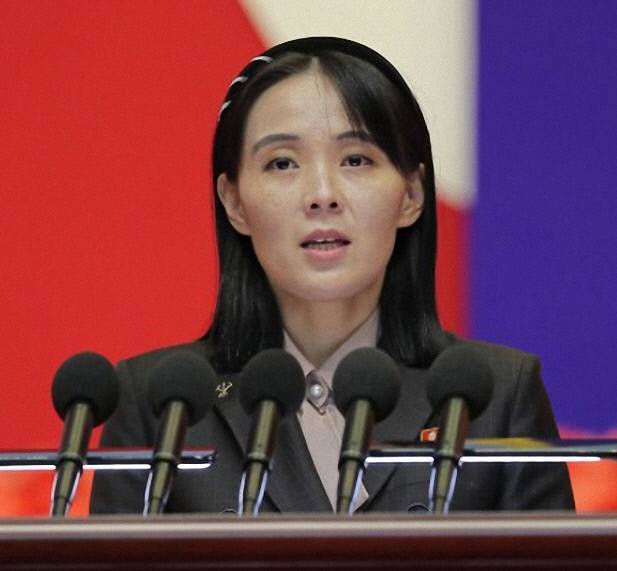
On July 28, North Korea declared it has “no reason to sit down with South Korea or discuss anything,” marking its first official response to the Lee Jae-myung administration. The announcement appears aimed at blocking any possibility of renewed dialogue while maintaining Pyongyang’s policy of treating the South as a “hostile and separate state.” However, some observers note that Pyongyang’s response to Seoul’s policies, however negative, still represents a step forward from its previous stance of total silence.
Kim Yo-jong, sister of North Korea's leader Kim Jong-un, made the remarks in a statement titled “Inter-Korean Relations Have Completely Departed from the Concept of a Single Nation,” released via the Korean Central News Agency. “We have no interest in whatever policies are set or proposals are made in Seoul,” she said. The statement comes 54 days after the launch of the Lee administration and appears to outline Pyongyang’s formal policy stance on inter-Korean relations.
Kim Yo-jong reaffirmed the North’s policy shift since December 2023 of treating the South as a “separate state,” not a fellow countryman. “Through the past few years, we have reached a serious historical conclusion that South Korea, whether it hides behind the mask of ‘democracy’ or ‘conservatism,’ can never be a partner in harmony or cooperation,” she said. She added that North Korea has now “parted ways with a long and uncomfortable history bound by sentimental rhetoric about ‘fellow countrymen.’”
She dismissed any gestures of goodwill from the Lee administration, saying that even if Seoul “pretends to be a brotherly nation doing all sorts of just deeds,” it would not change Pyongyang’s hostile perception of the South. Kim also downplayed Seoul’s decision to halt loudspeaker propaganda broadcasts along the border, calling it “merely a reversal of something that should never have happened in the first place” and “nothing to be praised.”
Regarding speculation that Kim Jong-un might be invited to the APEC summit in Gyeongju this October, she dismissed the idea as “a delusional fantasy.”
Kim Yo-jong also criticized recent discussions in Seoul about halting anti-North Korea leaflet campaigns and allowing individual tourism to the North, warning that if South Korea “expects to undo the consequences of its own hostile provocations with a few sentimental words, it could not be more gravely mistaken.”
She went on to denounce the upcoming South Korea-U.S. joint military exercises, saying that the “endless aggressive war drills” have kept the Korean Peninsula under constant tension. She claimed that Seoul is trying to shift blame for the worsening situation to Pyongyang. She also took aim at South Korea’s Ministry of Unification, calling it an “institution that seeks unification by absorption” and criticizing Minister Chung Dong-young for prioritizing the normalization of an agency that “should be dismantled.”
Kim Yo-jong’s statement is widely seen as a preemptive rejection of any dialogue with Seoul, in anticipation of a clash between the South’s push for engagement and the North’s firm stance of treating the South as a “separate and hostile state.” Hong Min, a senior researcher at the Korea Institute for National Unification, said, “From Pyongyang’s strategic perspective of ‘state-to-state’ relations, this is a direct rebuttal to Seoul’s unification-oriented approach.”
Still, some analysts see a subtle shift. This marks the first time in five years that North Korea has explicitly rejected a proposal for individual tourism, a departure from its previous silence on such initiatives. For example, in 2020 under the Moon Jae-in administration, then-Unification Minister Lee In-young proposed allowing individual tourism to the North, but Pyongyang never responded.
Yang Moo-jin, a professor at the University of North Korean Studies, said, “This could signal a low-level shift from ‘disregard and silence’ to ‘attention and recognition.’” He also noted that Pyongyang’s statement avoided the kind of extreme rhetoric, such as “puppets” or “destruction,” that characterized its reactions during the Yoon Suk-yeol administration. As the Lee administration is still in its early days, some analysts interpret the North’s response as a recalibration of its South Korea policy while watching for further developments in Seoul.
Others believe Pyongyang’s message may hint at conditions for dialogue, such as reducing or suspending joint military drills with the U.S. In this context, the upcoming South Korea-U.S. joint exercise, Ulchi Freedom Shield (UFS), scheduled for August, could become a pivotal moment for inter-Korean relations. Notably, Kim Yo-jong’s remarks were not published in Rodong Sinmun, the North’s major newspaper read by its people.
※This article was translated by an AI tool and edited by a professional translator.
Copyright © 경향신문. 무단전재 및 재배포 금지.
- [속보] 급거 귀국 이재용 “내부 문제로 심려끼쳐···국민께 머리 숙여 사죄”
- ‘운동회 악성 민원’에 결국 칼 빼든 경찰청 “소음 신고 들어와도 출동 자제”
- 노동장관, 삼성전자 경영진 면담···“대화 적극 나서달라”
- “아리가또 하이닉스”…외국 개미, 한국 증시로 얼마나 몰려올까
- 러시아의 우크라 도심 맹폭에 27명 사망…젤렌스키 “응징할 것”
- 6·3 지방선거 기초단체장 3명·지방의원 510명 ‘무투표 당선’
- MZ, 이번엔 중국 밀크티에 꽂혔다…“4시간 기다려 받았다” 대기 한때 1000명
- “국민의힘을 정치 플랫폼 삼겠다”…‘절윤’ 못한 국힘, ‘윤어게인’ 침투 통로 됐다
- 트럼프 “대만 무기판매는 좋은 협상칩…팔 수도, 안 팔 수도”
- 임재범, 오늘부터 마지막 콘서트…40년 음악 인생 마침표