Hanwha vice chief heads to Washington to aid tariff talks
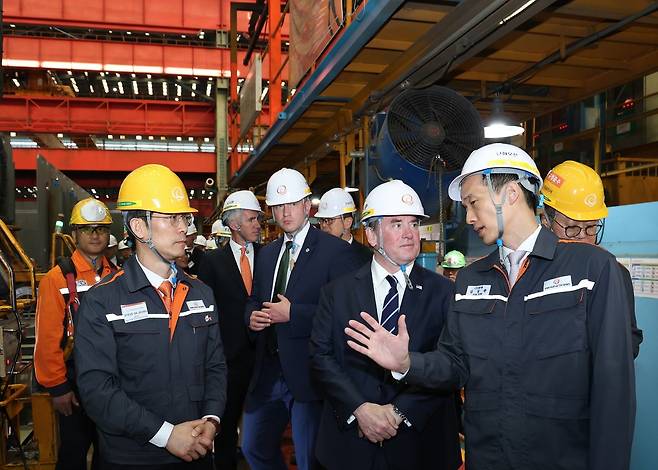
Hanwha Group Vice Chairman Kim Dong-kwan has traveled to Washington, reportedly to support South Korea’s efforts to leverage Korean shipbuilders’ investments in ongoing trade negotiations with the United States.
According to media reports, Kim flew to Washington on Monday as part of a South Korean delegation, which also includes Finance Minister Koo Yun-cheol and Industry Minister Kim Jung-kwan. He plans to stay through Friday, the deadline for the negotiations, working alongside the nation's top trade negotiators.
A key strategy for Korea to lower the current 25 percent tariff on exports to the US is to offer substantial investments in the country’s struggling shipbuilding sector. Minister Kim introduced the government-led “Make American Shipbuilding Great Again," or MASGA, initiative during a meeting with US Commerce Secretary Howard Lutnick on Friday.
Hanwha Ocean, a major shipbuilding arm of Hanwha Group, is a central player in the MASGA proposal. The company reportedly submitted ideas to the Korean government to support the negotiations, including additional US investments, technology transfers and workforce training programs at the US-based Philly Shipyard, which Hanwha acquired in December.
Notably, experts say that Kim may propose acquiring additional shipyards in the US.
“Acquiring more shipyards aligns with President Trump’s focus on job creation in the US, as it involves Korean companies making direct investments by building factories and expanding local production,” said Kim De-jong, a business professor at Sejong University. “Such incentives could help lower tariffs to 15 percent or less — similar to Japan’s outcome.”
Japan previously secured a 15 percent tariff rate with the US, while the European Union also negotiated the same rate on most exports, including automobiles, well below the 30 percent tariff initially set to take effect Friday.
Copyright © 코리아헤럴드. 무단전재 및 재배포 금지.