Samsung secures $16.5 bn semiconductor foundry deal from Tesla
전체 맥락을 이해하기 위해서는 본문 보기를 권장합니다.
"Samsung's giant new Texas fab will be dedicated to making Tesla's next-generation A16 chip," Musk said in a post on his social media platform X. "The strategic importance of this is hard to overstate."
He also noted that "Samsung currently makes A14 [chips]," while nothing that "Taiwan Semiconductor Manufacturing Co. (TSMC) will make A15, which just finished design."
이 글자크기로 변경됩니다.
(예시) 가장 빠른 뉴스가 있고 다양한 정보, 쌍방향 소통이 숨쉬는 다음뉴스를 만나보세요. 다음뉴스는 국내외 주요이슈와 실시간 속보, 문화생활 및 다양한 분야의 뉴스를 입체적으로 전달하고 있습니다.
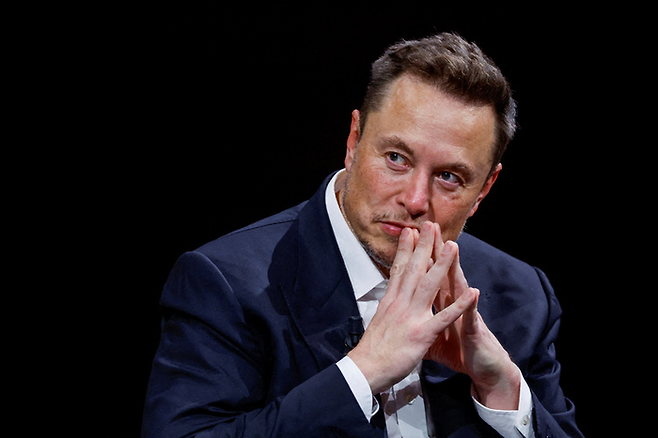
Tesla Chief Executive Officer (CEO) Elon Musk announced on Monday that his company signed a $16.5 billion semiconductor foundry supply contract with Samsung Electronics.
The deal accounts for 7.6 percent of Samsung’s entire sales of 300.87 trillion won ($216.52 billion) in 2024, with the contract period spanning from July 24th, 2025 to December 31st, 2033.
“Samsung’s giant new Texas fab will be dedicated to making Tesla’s next-generation A16 chip,” Musk said in a post on his social media platform X. “The strategic importance of this is hard to overstate.”
He also noted that “Samsung currently makes A14 [chips],” while nothing that “Taiwan Semiconductor Manufacturing Co. (TSMC) will make A15, which just finished design.”
The AI6 chip is Tesla’s latest AI semiconductor, designed for autonomous vehicles to be released after 2027.
Featuring a scalable architecture, it is expected to be used not only in autonomous vehicles and humanoid robots but in data centers and supercomputers as well.
According to Musk, “Samsung agreed to allow Tesla to assist in maximizing manufacturing efficiency,” adding, “This is a critical point, as I will walk the line personally to accelerate rhe pace of progress.”
His statement signals that Samsung is not merely producing Tesla’s AI chips, which are one generation ahead of TSMC’s offering, but has become its strategic and collaborative partner that goes beyond a simple client-supplier relationship.
An industry insider also viewed this development as “positioning Samsung at the forefront of technological trends, not just ahead of TSMC in chip generation.”
With the latest contract, Samsung’s foundry division - currently facing lackluster performance - is expected to gain a rebound opportunity by narrowing the gap with TSMC.
In its recently announced preliminary second-quarter 2025 results, Samsung Electronics posted an operating profit of 4.6 trillion won on sales of 74 trillion won.
The operating profit fell well below market expectations, mainly due to the sluggish performance of the foundry and System LSI divisions.
Copyright © 매일경제 & mk.co.kr. 무단 전재, 재배포 및 AI학습 이용 금지
- 주가 100만원 돌파 노린다…다음 ‘황제주’에 쏠린 눈 - 매일경제
- 신평 변호사 “尹 전 대통령, 쭈그리고 앉아 식사…처참한 주거환경” - 매일경제
- “대출 규제가 불 지폈나”…처음으로 40억원 넘긴 ‘이 아파트’ - 매일경제
- 30억 아파트 벽에 금이 ‘쩍’, 입주민은 ‘불안불안’…‘올파포’ 전수조사 착수 - 매일경제
- “신체적 학대 하지 않았다”…2살 원아 얼굴 부상, 어린이집 교사 CCTV 보니 - 매일경제
- “韓 나 만나러 스코틀랜드로 날아와”…美상무장관이 말하는 한국인의 정체 - 매일경제
- 트럼프, 아직 무역합의 안한 국가에 “관세 15∼20%일 것” - 매일경제
- [속보] 법인세 인상 속도…민주당·정부 “尹정부 낮췄던 법인세·대주주 기준 원상복구” - 매일
- “카드값 못 막는 사람 너무 많아”…상반기 카드사 실적 타격, 순익 18% 감소 - 매일경제
- ‘英 단독!’ 손흥민, 결국 LA FC로 향하나? ‘556억원’ 사우디 관심 속 영입 협상 진전…“계약