Art tour to Arles: where ancient legacies fuel contemporary creativity
ARLES, France — Located on the banks of the Rhone River in southern France, the city of Arles has witnessed over 2,000 years of history and was once a crucial spot for military movement and commerce in Roman times.
Home to a population of 53,000, Arles is full of cultural gems. From traces of Vincent Van Gogh to remnants of structures built under Julius Caesar during its time as a Roman colony, visitors to Arles often feel as though they are discovering hidden treasures when exploring the city.
In recent years, Arles has flourished as a hub for contemporary art. LUMA Arles, a cutting-edge art center built on a 19th century industrial site, opened in 2021, while Lee Ufan Arles, a museum dedicated to the minimalist works of the eponymous Korean artist, opened in 2022.
Those who want to explore the history of the city and the Provence region can head to the Museon Arlaten, which covers local social and cultural life, such as the traditional Arlesian costume.
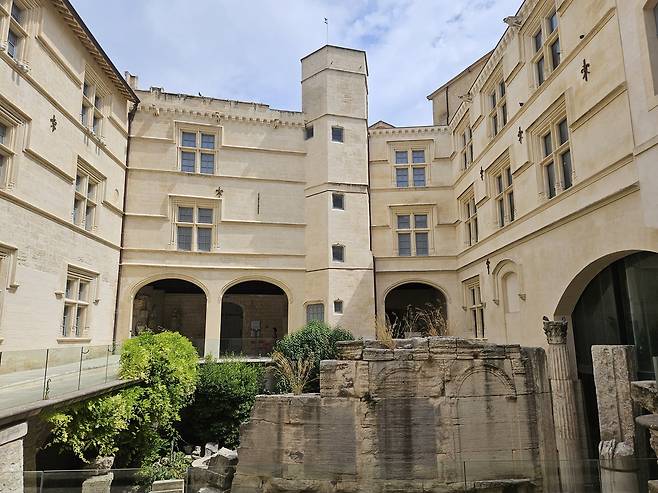
The 15th century buildings housing the museum were constructed on the site of a secondary Roman forum built in the first century AD and later functioned as a municipal school in the 19th century, according to the museum. The vestiges of the Roman forum were unearthed and inaugurated as a museum in 1909.
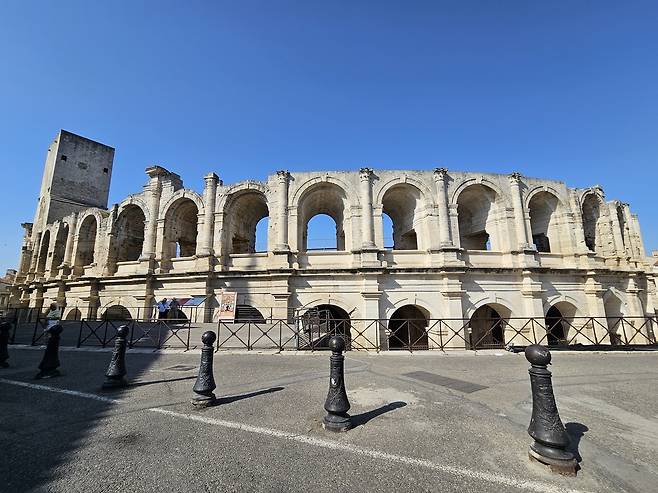
Other remnants of the ancient empire in Arles include a well-preserved Roman amphitheater and Roman thermal baths.
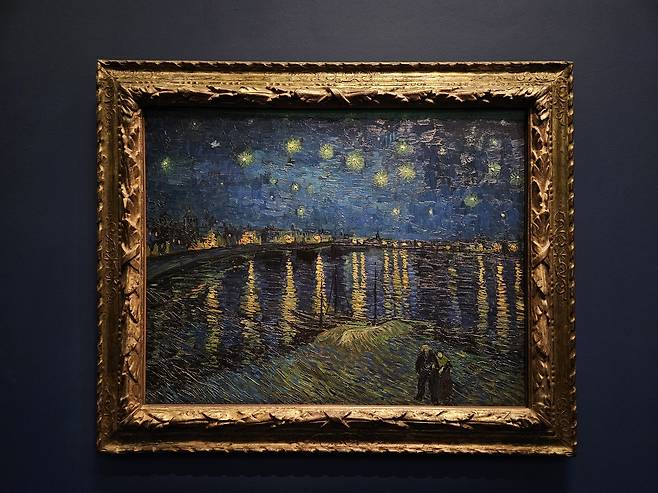
Anyone familiar with Vincent van Gogh’s work will recognize parts of the city from some of his most iconic paintings: “The Starry Night,” “Cafe Terrace at Night,” “Van Gogh’s Chamber in Arles” and his famous sunflower paintings. Each of these was painted during his stay in the city — from 1888 to 1889 — when he moved there in search of warmer weather and golden sunlight.
Van Gogh created some 400 paintings in less than two years before leaving for Saint-Remy-de-Provence to stay in an asylum following a nervous breakdown. It was in Arles where the artist cut off a part of his left ear out of despair after Paul Gauguin, with whom Van Gogh had been working at the time, left the city after an argument between the two.
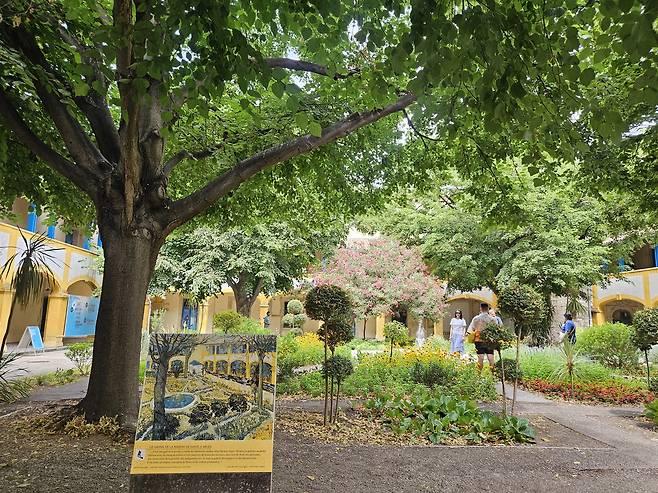
A hospital in Arles where Van Gogh was once admitted is now a cultural center named "Espace Van Gogh." Its courtyard full of flowers and the pond remain just as the artist depicted them in his paintings.
The cafe seen in the background of the popular painting “Cafe Terrace at Night” is unfortunately closed for now due to legal issues, according to people familiar with the city.
Some say Arles has a “guilt complex” about Van Gogh because its residents did not recognize his greatness. In tribute to the master, however, the city built the Foundation Vincent Van Gogh Arles, which houses at least one original Van Gogh painting in partnership with the Van Gogh Museum in Amsterdam.
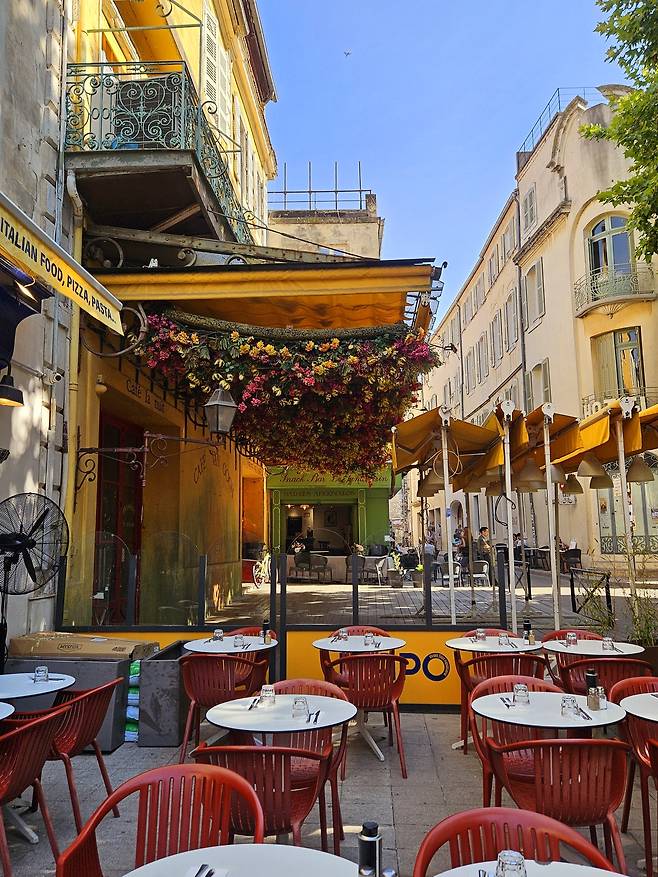
When The Korea Herald visited the foundation on July 6, it had two of his paintings on display — “Peasant and Peasant Woman Planting Potatoes” and “Basket of Potatoes” — alongside the retrospective of German artist Sigmar Polke (1941-2010).
The exhibition “Beneath the Cobblestones, the Earth” runs until Oct. 26 and brings together Polke's expansive works of art and draws a symbolic link between the two masters through the motif of the potato. The foundation offers a combined ticket with entry to the LUMA Arles priced at 17 euros ($20) until December, according to the foundation's website.
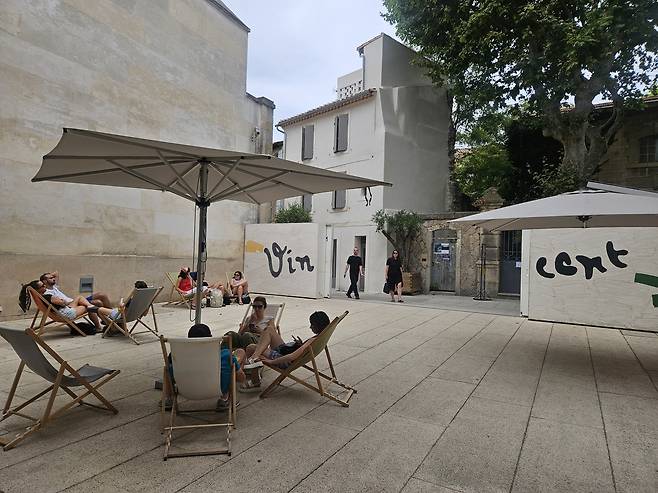
LUMA Arles is a hotspot for art lovers around the world. The contemporary art institute stands as an homage to Van Gogh with its iconic building, The Tower, designed by Frank Gehry.
The museum is expected to draw crowds year-round -- not just in summer for the renowned Arles Photo festival -- according to LUMA CEO Arles Mustapha Bouhayati.
In July, the museum opened seven massive contemporary art exhibitions featuring leading figures in the scene: Singapore's Ho Tzu Nyen, Egypt's Wael Shawky, Switzerland's Peter Fischli, Belgian landscape architect Bas Smets, American photographer David Armstrong, interdisciplinary studio EBB in collaboration with American artist Tony Oursler, and South Korea's Koo Jeong-a.
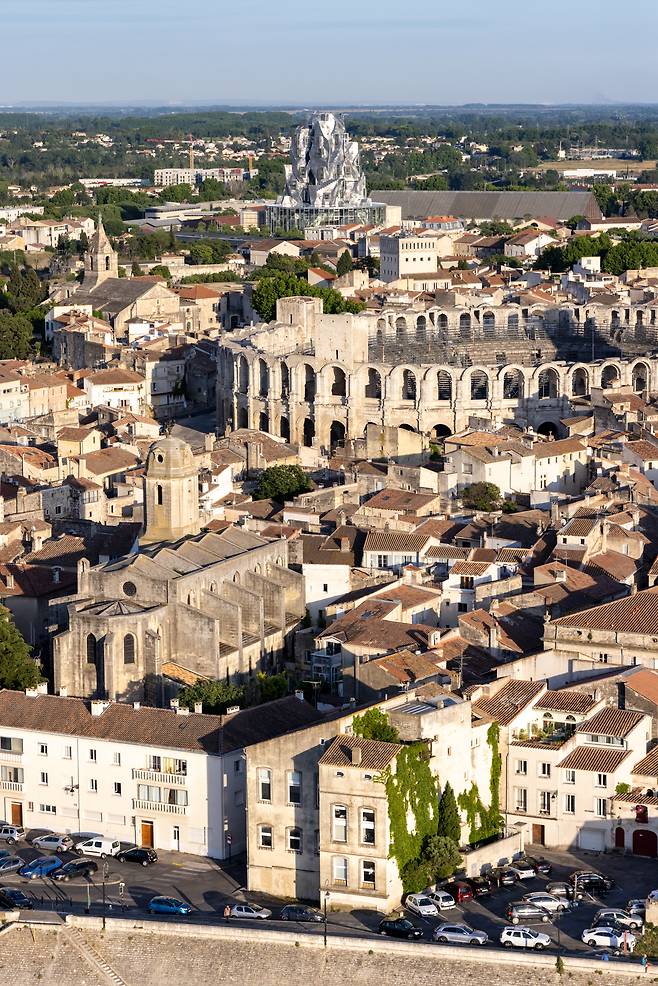
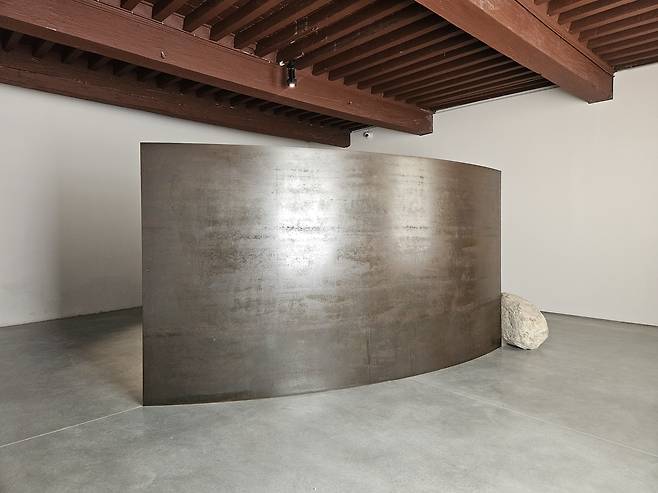
Another art destination in Arles, Lee Ufan Arles, is a space dedicated to a wide variety of works by the Korea-born artist Lee Ufan. The building is rather understated, built between the 16th and 18th centuries as a private mansion, and can be easily missed with only a small sign to guide you.
The space is home to Lee's installations and paintings, including “Relatum — The Stage” and “Relatum — Infinity of the vessel,” which offer viewers a chance to meditate and focus on oneself while appreciating his art.
Lee Ufan Arles is the artist's third museum, following spaces in Naoshima, Japan, and Busan, South Korea. The artist is known for leading the avant-garde Mono-ha movement in Japan in the late 1960s to 1970s, which delved into the relationships between materials and perceptions.
Lee was born in Korea in 1936 and lives and works in Paris, New York and Japan.
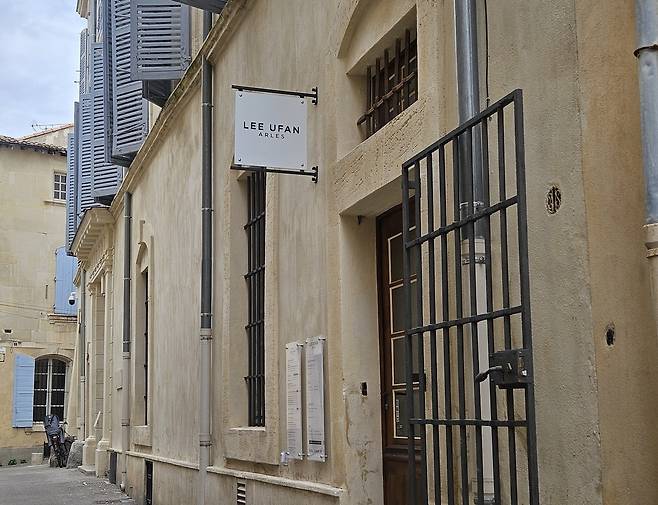
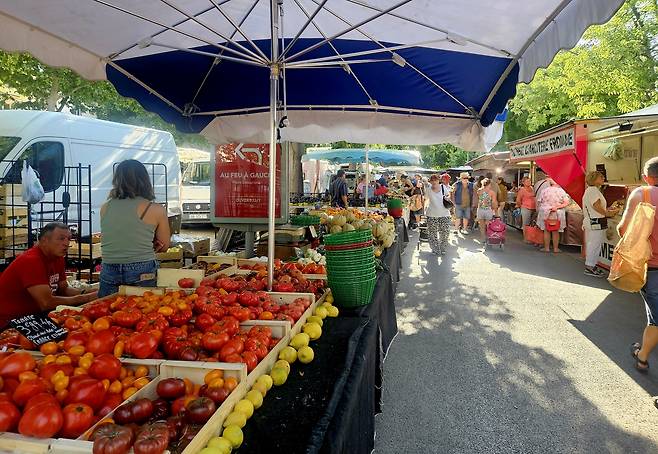
If you happen to visit Arles on a Wednesday or Saturday, you're in luck. On these days, a bustling market comes to life with hundreds of stalls offering a wide variety of local goods and foods — olives, cheeses, fresh fruits, meats and more.
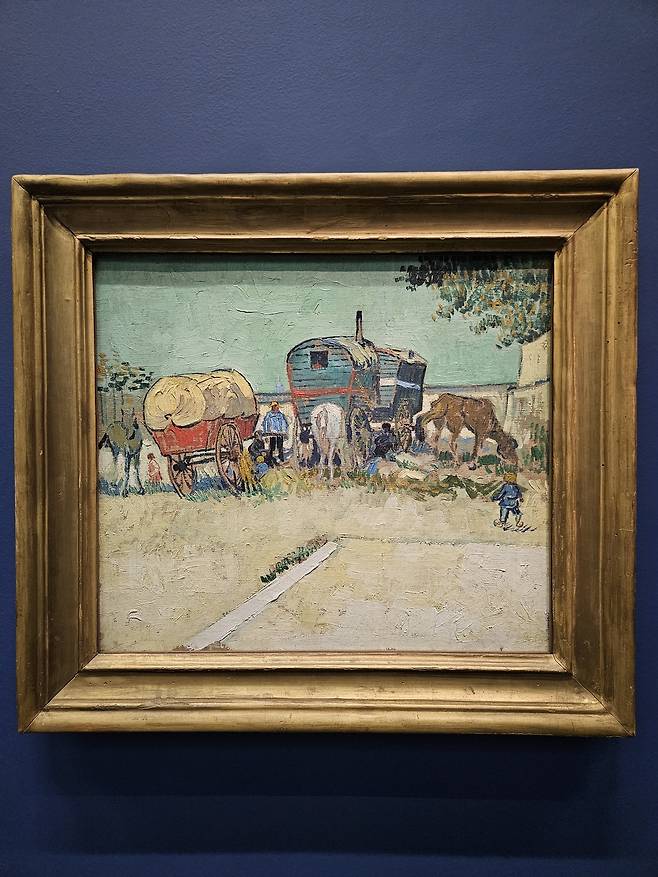
For some, the market scenery might bring to mind Van Gogh's “Caravans, Gypsy Camp near Arles" (1888), leading you to imagine how the city has evolved over the past 200 years and how life there has changed.
A note on the painting shown at the Orsay Museum in Paris reads: “Since his arrival in Arles, (Van Gogh) had been very enthusiastic about the multiplicity of subjects available to him as he explored the area. A small gypsy camp caught his attention due to its contrasting colors and the peaceful atmosphere conveyed by the scene."
Copyright © 코리아헤럴드. 무단전재 및 재배포 금지.