Seoul finds no radiation risk in suspected North Korean discharge
이 글자크기로 변경됩니다.
(예시) 가장 빠른 뉴스가 있고 다양한 정보, 쌍방향 소통이 숨쉬는 다음뉴스를 만나보세요. 다음뉴스는 국내외 주요이슈와 실시간 속보, 문화생활 및 다양한 분야의 뉴스를 입체적으로 전달하고 있습니다.
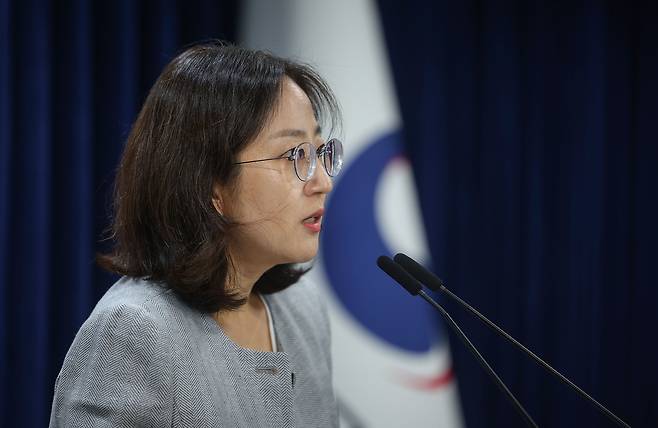
South Korea said Friday it has not found any unusual levels of radioactivity or heavy metal concentrations at various sites near the inter-Korean border, which was suspected of being contaminated by a reported wastewater release from a North Korean uranium refining plant.
Seoul’s Unification Ministry confirmed in a press briefing that there “were no abnormalities found” after running contamination tests for two radioactive nuclides -- uranium, cesium -- and five heavy metals -- cadmium, arsenic, mercury, lead and hexavalent chromium. The tests were conducted over the past two weeks at 10 sites near Ganghwa Island and the Han River estuary.
Both Ganghwa Island and the Han River estuary are located near the Ryesong River in the North, where Pyongyang is suspected of dumping waste from a uranium refining plant in Pyongsan County.
The tests were conducted jointly by the Nuclear Safety and Security Commission, the Ministry of Oceans and Fisheries and the Ministry of Environment.
Uranium concentrations at six of the 10 locations near Ganghwa Island and Gimpo were found to be similar to levels recorded in 2019. They ranged from 0.135 to 1.993 parts per billion over the past two weeks, compared with 0.59 to 1.97 ppb in 2019.
Uranium concentrations at the remaining four locations, including the Han River estuary and Incheon, were also at normal levels, ranging from 0.087 to 3.211 ppb.
The average uranium concentration in the Han River stood at 0.31 ppb in 2019, while the maximum allowed uranium level in drinking water is 30 ppb.
The level of cesium at all ten sites was below the threshold of minimum detectable activity, or MDA, which is the smallest amount of radioactivity that a measuring instrument or system can reliably detect above the background radiation level. It was also below the five-year average of cesium found in the West Sea.
Chang Yoon-jeong, deputy spokesperson at the Unification Ministry, stressed, however, that the tests do not prove whether the North actually released uranium wastewater.
The government plans to perform monthly monitoring of contamination levels at seven of the 10 major sites.
The latest contamination test was launched in early July after a news report raised speculation that North Korea may have dumped wastewater from a uranium refining plant in Pyongsan County into a nearby river.
Copyright © 코리아헤럴드. 무단전재 및 재배포 금지.