QuantaMatrix Hits Upper Limit on Growing Order Intake…Aptabio·Alteogen ↑[K-bio Pulse]
전체 맥락을 이해하기 위해서는 본문 보기를 권장합니다.
A company official commented "Once the ongoing financing is completed, we plan to start clinical trials for U.S. market entry. Rising dRAST sales and improved financing have positively impacted investor sentiment."
An Aptabio spokesperson said "We are in discussions with multiple global firms for licensing and joint development of our DN and AKI therapies."
이 글자크기로 변경됩니다.
(예시) 가장 빠른 뉴스가 있고 다양한 정보, 쌍방향 소통이 숨쉬는 다음뉴스를 만나보세요. 다음뉴스는 국내외 주요이슈와 실시간 속보, 문화생활 및 다양한 분야의 뉴스를 입체적으로 전달하고 있습니다.
[Shin-Min Joon, Edaily Reporter] On July 16 Korea’s biotech stock market saw QuantaMatrix hitting the daily upper limit. The stock rallied sharply after a Pharmedaily pay to read article reported that the company’s rapid antibiotic susceptibility testing solution is gaining adoption at domestic hospitals fueling expectations of improved earnings.
Aptabio also rose following reports that it is in discussions with global pharma giant GlaxoSmithKline (GSK) for a package licensing deal. Alteogen extended its winning streak for a third session on news that its ALT-B4 hyaluronidase has secured a substance patent in the U.S.
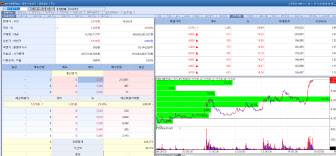
According to KG Zeroin’s MP Doctor (formerly MarketPoint) QuantaMatrix shares jumped 29.99% to close at 5,570 won. Investors attributed the rally to heightened expectations for earnings improvement as QuantaMatrix’s rapid antibiotic susceptibility solution dRAST sees increasing adoption by major Korean hospitals.
dRAST can reduce testing time by 30 to 50 hours compared to conventional antibiotic resistance tests a critical advantage in managing acute infections such as sepsis, where survival rates decrease rapidly over time.
In a PharmEdaily article published today, QuantaMatrix CEO emphasized plans to expand domestic hospital adoption to 20~24 sites by year end.
Although last year’s medical conflict slowed dRAST sales, QuantaMatrix secured four new hospital clients in the first half of 2025 alone. The company’s growing share of consumable sales is also drawing attention, as it could help establish a stable, recurring revenue base. Consumables currently account for 25% of total sales, with a long term target of 70~80%.
On the export front QuantaMatrix is accelerating overseas expansion. In January 2025, it obtained product registration approval from Saudi Arabia’s public procurement body, allowing direct supply to local public hospitals without individual tenders.
In May 2024 it also won an exclusive supply deal with France’s public hospital procurement group. The company is working on cost reduction for its equipment in preparation for commercialization in the U.S. market.
QuantaMatrix also secured fresh funding announcing a 10 billion won private placement with its largest shareholder, Ezra Asset Trust, late last year. As of the first half of this year, 8 billion won has been received, with the remaining amount scheduled for later this year.
A company official commented “Once the ongoing financing is completed, we plan to start clinical trials for U.S. market entry. Rising dRAST sales and improved financing have positively impacted investor sentiment.”
Aptabio Rallies on GSK Package Licensing Talks
Aptabio jumped 10.00% to 10,120 won, buoyed by prospects of a package technology licensing deal involving its contrast-induced acute kidney injury (AKI) treatment and diabetic nephropathy (DN) therapy.
The company hinted at a potential deal during a Korea Exchange corporate briefing, with GlaxoSmithKline reportedly among the global partners in discussion.
Aptabio’s APX-115-DN (for DN) and APX-115-AKI (for AKI) are both first-in-class therapies based on NOX inhibition. APX-115-DN completed Phase 2 in Europe and is undergoing Phase 2b trials in Korea, while APX-115-AKI is in Phase 2 with patient enrollment expected to conclude by October 2025.
Aptabio is also collaborating with Merck & Co. on combination therapies targeting solid tumors, combining Keytruda with Aptabio’s proprietary immune-oncology agent APX-343A.
An Aptabio spokesperson said “We are in discussions with multiple global firms for licensing and joint development of our DN and AKI therapies.”
Alteogen Extends Rally as U.S. Grants ALT-B4 Patent
Alteogen climbed 3.62% to 486,000 won, posting a three day winning streak. The U.S. Patent and Trademark Office has issued a final notice of allowance for the company’s ALT-B4 hyaluronidase substance patent, with official registration expected within three weeks.
The patent covers the differentiation and improvements of ALT-B4, a variant of PH20, reaffirming its novelty and inventive step. With this, Alteogen secures a second U.S. patent following its manufacturing method patent further strengthening ALT-B4’s IP protection in the world’s largest pharmaceutical market.
Alteogen plans to accelerate global partnerships, leveraging its patent portfolio. The U.S. patent is also expected to support regulatory approvals and commercialization.
However the company clarified that the new patent is unrelated to the post grant review (PGR) proceeding filed by Merck & Co. (MSD) against Halozyme’s MDASE patent in which Alteogen is not a party.
Alteogen is currently verifying details with its U.S. subsidiary and plans to issue an official statement once internal confirmation is complete.
A company official noted “Further clarification is still needed before we disclose more information.”
신민준 (adonis@edaily.co.kr)
Copyright © 이데일리. 무단전재 및 재배포 금지.
- “여보, 차가 떠내려가”…폭우 속 50대男, 결국 사망
- “ADHD약으로 시작해 필로폰까지” 아들 마약 신고한 남경필의 경고
- '콜라광' 트럼프 성화에…코카콜라, 재료까지 바꾼다
- "퇴사 조치했다"...'베트남 폭행' 한국 여성, 출장 중이었다
- 소고기? 미용실? “소비쿠폰, 어디에 쓸 거냐면…”
- "계몽령만 기억하는데..." 김계리 유튜버 됐다
- 롯데그룹 상속녀 신영자, 730억원 주식 처분…무슨 일
- 강형욱도 “가슴 아프다”…8살 아이 개물림 사건 [그해 오늘]
- "손흥민 아이 임신" 협박 남녀 재판 시작…일부 범행 부인
- "불났다" 벨 누른 뒤 '문막기' 콘텐츠 찍은 20대들 징역형