US chip thaw boosts outlook for Samsung, SK hynix
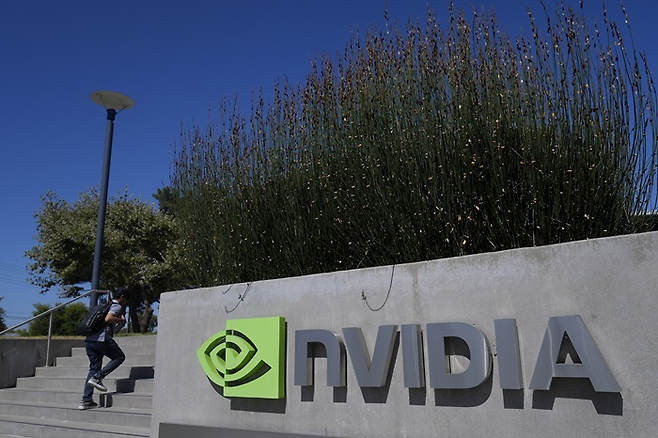
Anticipation is growing for a boost to Korean chipmakers Samsung Electronics and SK hynix, as the US reversal of restrictions on Nvidia’s AI chip sales to China is expected to revive demand for their high-bandwidth memory, or HBM, chips.
On Tuesday, US Commerce Secretary Howard Lutnick confirmed that the government had approved Nvidia’s sales of its H20 graphics processing units to China. He explained that the decision was part of broader negotiations with Beijing on rare earth materials and a strategic effort to make China reliant on American technology.
“We don’t sell them our best stuff, not our second-best stuff, not even our third-best,” Lutnick said, noting that the H20 is Nvidia’s “fourth-best” chip.
US President Donald Trump had previously restricted exports of the H20 chips to China in April, as part of efforts to curb Beijing’s access to cutting-edge American technology.
“You want to sell the Chinese enough that their developers get addicted to the American technology stack. That’s the thinking,” Lutnick added.
The restriction had left Nvidia with unsold inventory, resulting in a $4.5 billion charge and a $2.5 billion hit to its quarterly revenue.
With Nvidia now set to resume sales in China, Korean chipmakers are expected to benefit from the renewed demand for HBMs. These critical memory components are used in AI accelerators and high-performance servers, enabling significantly faster data transfer compared to conventional DRAM.
Nvidia’s H20 chip features fourth-generation HBM3 and the latest fifth-generation HBM3E. While it may lag in training AI models, it performs well in inference — the AI process of generating answers to users — which is currently the fastest-growing segment in the AI chip market.
Samsung has reportedly been supplying HBM3 for Nvidia’s H20 since last year. However, the US trade restrictions appear to have impacted the company’s performance, with its operating profit plunging 55.9 percent on-year in the April-June period.
Although Samsung’s fifth-generation HBM3E has yet to pass Nvidia’s quality certification, the resumption of H20 exports to China is expected to help the company expand HBM shipments.
Samsung also stands to benefit from Nvidia’s upcoming low-end AI chip for the Chinese market, known as the B40, expected to launch later this year. Unlike the H20, the B40 will be equipped with GDDR7, a next-generation graphics DRAM capable of processing more data at once than conventional DRAM. Samsung was the first in the industry to develop a 12-nanometer, 24-gigabit GDDR7 chip.
SK hynix, the global leader in HBM market share and the first company in the world to supply HBM3E to Nvidia, is also expected to see a sales boost.
“It’s a short-term positive development for the AI GPU and HBM sectors that Nvidia is now able to resume exports to China,” said Ryu Hyung-keun, an analyst at Daishin Securities. “SK hynix is expected to benefit in the near term from the resumption of H20 shipments.”
Sohn In-joon, an analyst at Heungkuk Securities, said the export resumption is likely to benefit SK hynix more significantly, but could also offer Samsung an opportunity to pass Nvidia’s qualification test for its HBM3E chips amid tight supply conditions.
Industry officials are also expressing hope that the latest approval of Nvidia’s exports could signal a broader shift in US trade policy, potentially paving the way for a further easing of chip export restrictions to China.
“The reopening of the Chinese market sends a positive signal for the entire industry. It presents a major opportunity by expanding the demand base for semiconductors,” one industry official said.
Copyright © 코리아헤럴드. 무단전재 및 재배포 금지.