Power struggle over reforms rattles Korea’s financial agencies
The Lee Jae Myung government's sweeping organizational reforms across Korea’s financial and economic agencies are extending into lengthy and complex negotiations, testing the administration's ability to balance and delineate agency roles.
While discussions continue on reallocating responsibilities among key institutions including the Ministry of Economy and Finance, the Financial Services Commission and the Financial Supervisory Service, progress has been sluggish in filling top leadership positions.
Nominations for the FSC chair and FSS governor remain pending, despite Cabinet appointments having been made across 19 ministries on Friday.
Widespread speculation suggests these delays are driven by deeper disagreements over the scope and structure of the proposed reforms.
On Sunday, the State Affairs Planning Committee said it had submitted an initial draft of the reform plan to the president’s office on July 3.
Key proposals include separating the Ministry of Economy and Finance’s budget management from the regulation of financial policies, alongside the establishment of a new Financial Supervisory Committee dedicated solely to oversight, which aims to clearly distinguish policymaking from supervisory functions, deemed essential for effective oversight and a stable financial system.
The plan also proposes splitting off the FSC’s financial consumer protection department into an independent agency to focus exclusively on consumer safeguards.
However, the FSS strongly opposes this move. Last week, senior FSS officials met with lawmakers, asserting that while boosting consumer protection is vital, the organizational structure should remain within the FSS to ensure coordination and accountability.
The FSS union also warned that splitting the consumer protection division could lead to fragmented oversight, making it harder to respond swiftly to issues like misselling or systemic crises and risking blurred responsibility during emergencies.
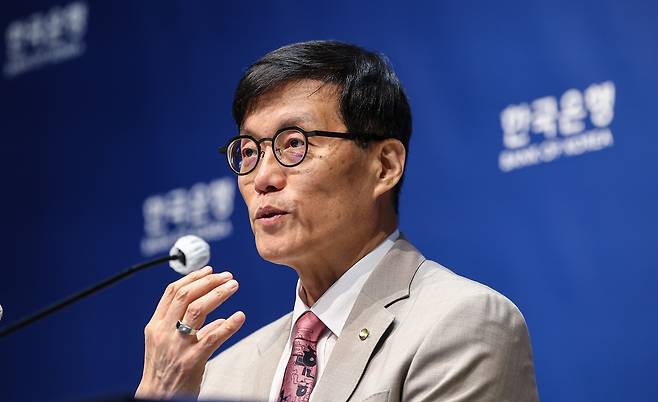
Amid these ongoing debates, Bank of Korea Gov. Rhee Chang-yong added a new twist by publicly emphasizing the need to strengthen the central bank’s role in macrofinancial policy.
“The reasons behind issues like household debt not decreasing for over 10 years and problems with real estate project financing are because, although the government talked about macroprudential policies, they were not effectively enforced in practice,” Rhee stated during a press briefing after Thursday’s Monetary Policy Committee meeting
The BOK is exploring ways to acquire key regulatory powers from the FSC and FSS, seeking to expand its mandate to include critical decision-making authority and exclusive inspection rights over both banks and nonbanking financial institutions.
Specifically, it seeks to transfer authority over credit, capital, liquidity regulation and macroprudential tools, such as the debt service ratio and loan-to-value from the FSC to the BOK’s Monetary Policy Committee.
Concerns are mounting that key policy issues are losing momentum amid the ongoing leadership vacuum and increasing speculation over the reform plan.
“A lot of financial agenda items such as household debt are on hold while we wait for new leaders to be appointed,” said an official at a major financial group.
Last month’s scheduled announcement of preliminary approval for South Korea's fourth internet-only bank was indefinitely postponed. The Virtual Asset Committee, which discusses regulations for stablecoins, has meanwhile been dormant since May due to the vacancy of the FSC deputy chairman.
The reform is expected to increase the number of watchdogs that financial firms must report to and be audited by, raising concerns of further adding to the complexity of the regulatory landscape, the official added.
Copyright © 코리아헤럴드. 무단전재 및 재배포 금지.