N. Korea sends boats, not words, to retrieve 6 returnees from South
전체 맥락을 이해하기 위해서는 본문 보기를 권장합니다.
"During the repatriation process, the free will of the North Korean individuals to return was confirmed multiple times, and the individuals were safely protected in cooperation with relevant agencies until the repatriation was carried out."
"They did not give a response," the unnamed official explained. "While they did not provide a definitive reply to the notification, it is true that they received the message."
이 글자크기로 변경됩니다.
(예시) 가장 빠른 뉴스가 있고 다양한 정보, 쌍방향 소통이 숨쉬는 다음뉴스를 만나보세요. 다음뉴스는 국내외 주요이슈와 실시간 속보, 문화생활 및 다양한 분야의 뉴스를 입체적으로 전달하고 있습니다.
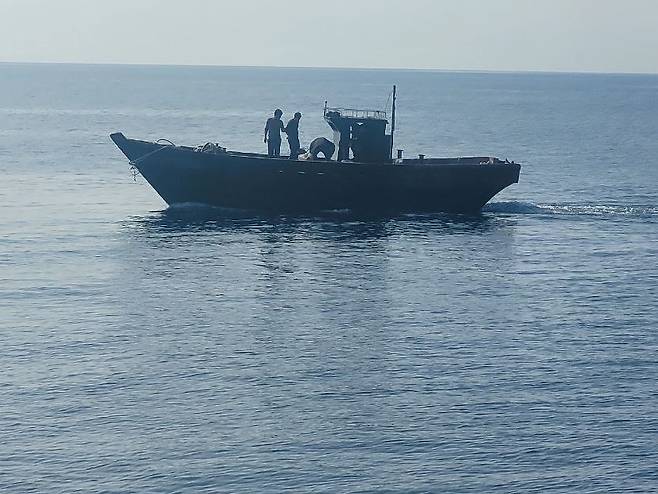
The South Korean government on Wednesday repatriated six North Koreans via an inter-Korean maritime route in the East Sea, after they had drifted across the maritime border.
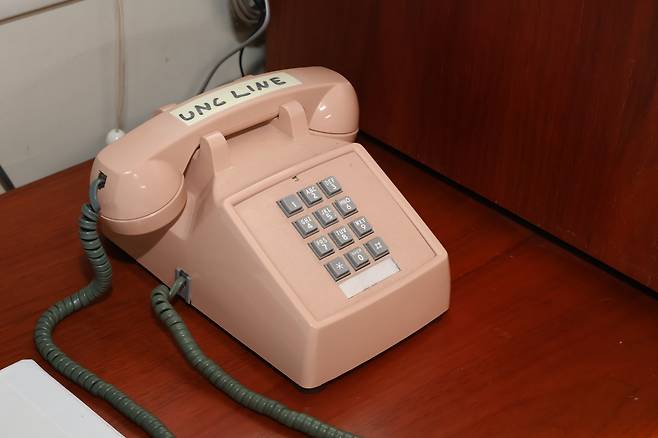
North Korean vessels arrived to retrieve them, despite Pyongyang remaining silent in response to Seoul’s notifications through its hotline with the United Nations Command.
A vessel carrying the North Koreans crossed the Northern Limit Line, the de facto inter-Korean maritime border in the East Sea, at 8:56 a.m. on Wednesday, the Unification Ministry said. It was met by a large North Korean fishing boat — presumed to be for towing purposes — and a patrol vessel at 9:24 a.m. The North Korean vessel returned under its own power.
"In the end, the repatriation was carried out smoothly and safely," the Unification Ministry said.
The six include two North Koreans who were rescued after drifting in the West Sea on March 7 and four others who were rescued in the East Sea on May 27.
The Unification Ministry further explained that the vessel rescued in the West Sea was unable to operate due to engine failure, while the other, towed from the East Sea, was found to be operable upon inspection.
“With the full consent of all the North Korean individuals, six people — including the two rescued in the West Sea — were repatriated together aboard the East Sea rescue vessel,” the ministry said.
"During the repatriation process, the free will of the North Korean individuals to return was confirmed multiple times, and the individuals were safely protected in cooperation with relevant agencies until the repatriation was carried out."
According to the Unification Ministry, the South Korean government, the United Nations Command Military Armistice Commission and the Neutral Nations Supervisory Commission each conducted separate interviews to confirm their intent to return to North Korea.
“The two individuals rescued in the West Sea and the four in the East Sea are all fishers, men in their 30s to 40s. Our investigation confirmed that they each have wives and children back in North Korea,” a Unification Ministry official said on condition of anonymity.
“We don’t verify their intention to return just once during the joint investigation. We confirm it multiple times through several rounds.”
The South Korean government also shared the repatriation plan, including the date, time and maritime coordinates, through the hotline between the UN Command and the North Korean military both last week and again this week.
“They did not give a response,” the unnamed official explained. “While they did not provide a definitive reply to the notification, it is true that they received the message.”
Seoul had to use the hotline between the UNC and the North Korean military because all inter-Korean communication channels have been severed since April 7, 2023.
This is not the first time South Korea has repatriated North Korean individuals by sea after they drifted into South Korean waters due to a breakdown in inter-Korean communication channels.
For instance, a North Korean fishing vessel and its crew that had drifted across the inter-Korean border in the East Sea on May 27, 2017, were repatriated four days later, according to the Unification Ministry.
North Korea at the time similarly did not respond to Seoul’s offer for repatriation, as South Korea nonetheless proceeded with the maritime return. However, unlike in Wednesday’s case, North Korean authorities then took no action — not even sending ships to retrieve the returnees.
Lim Eul-chul, a professor at Kyungnam University's Institute for Far Eastern Studies, said, "North Korea’s use of a patrol boat and ship to take custody of the returnees can be interpreted as limited communication between the two Koreas."
"North Korea’s standby with a patrol boat and a ship is exceptional compared to its previous stance of refusing to take back (six individuals), and suggests limited confidence in the Lee Jae Myung administration’s conciliatory policy," Lim added.
In contrast to the Yoon Suk Yeol administration’s hard-line North Korea policy, the Lee administration has preemptively suspended anti-North Korea loudspeaker broadcasts, effectively banned civic groups from sending anti-North propaganda leaflets across the border and allowed nongovernmental organizations to engage with North Koreans.
"The return of six North Koreans suggests that the Lee Jae Myung administration’s humanitarian and conciliatory policy has made a breakthrough in inter-Korean communication, drawing limited cooperation with North Korea," Lim said.
Copyright © 코리아헤럴드. 무단전재 및 재배포 금지.