To these creators, lovebugs aren’t just pests. They're clickbait

Amid a frenzy of swarming lovebugs swallowing Seoul, digital creators are cashing in on the chaos with clickbait videos, from insect-eating to dramatic bug hunts.
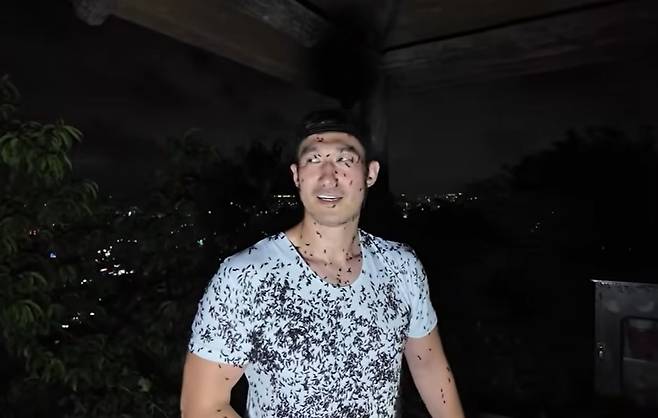
Chambo, an Australian TikToker with nearly 980,000 followers known for his short-form content about Korean culture, recently drew attention after posting a “mukbang” video, or eating show, filmed on Mount Gyeyang in Incheon, the notorious epicenter of the lovebug invasion.
In the video, he eats ramyeon, gimbap and snacks with lovebugs crawling on his face and clinging to his clothes.
A Korean YouTuber went even further. He turned the bugs into a meal.
In a video posted on his channel "Lee Chung-geun," he created a batter by combining dead lovebugs with flour and eggs and cooked it just like a beef patty for a “lovebug burger.”
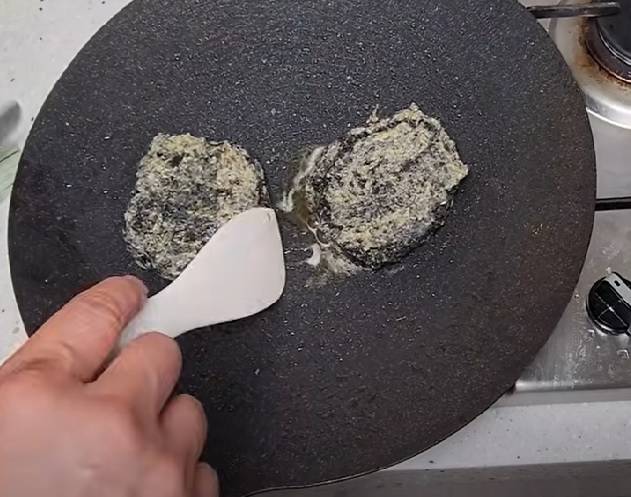
Eating the burger with a spicy gochujang-based sauce and beer, he said, “It’s more savory than expected.” This video amassed 550,000 views within two days of being uploaded.
Another creator filmed himself catching swarms of flying lovebugs using a giant electric bug racket, sparking a wave of comments from viewers tired of the ongoing infestation.
“Apparently he’s doing it for the views and money, but honestly, I’m just thankful he’s catching the lovebugs for us. It gave me a bit of relief from the stress,” one comment read.

However, not everyone is amused. Some are expressing fatigue over lovebug videos constantly popping up on their social media feed.
“Seeing lovebugs on the streets is tiring enough. Now they’re swarming my YouTube feed. Honestly, I hope these clickbait YouTubers vanish in two weeks just like the bugs. It’s so annoying how they’re trying to cash in on the situation,” one user wrote. Lovebug populations, known for their low survival rates, typically decline sharply around two weeks after a mass emergence.
Since June, an outbreak of lovebugs, a species of March fly known for flying in mating pairs, has quickly spread across Seoul and nearby Gyeonggi Province. The capital region has become a hotspot for the summer bugs, as its dense buildings and LED streetlights create the warm, humid conditions they favor.
Irritated by the fact that the lovebug outbreak seemed confined to the greater Seoul area, one social media user even claimed to have brought the insects’ carcasses to Busan and scattered them in multiple places.
After first being spotted in Incheon in 2015, lovebugs saw a major outbreak in 2022 in Seoul’s Eunpyeong District and Goyang, Gyeonggi Province. The insects have now spread throughout all 25 districts of Seoul.
They originated from China's Shandong Province, according to the National Institute of Biological Resources, which conducted DNA tests on lovebug specimens collected from China, Taiwan and Japan. Lovebugs in Korea were found to carry genes that allow them to resist pesticides and adapt to heat stress.
Meanwhile, these insects have few natural predators, largely because of their acidic, sour-tasting body fluids and tough exoskeletons, which make them unappealing to common insect-eating animals such as birds or frogs.
“With no natural predators, their population often grows quickly at first, but typically stabilizes over time. But recently, during field research, we’ve frequently observed birds like magpies and sparrows, as well as spiders and mantises, preying on lovebugs," said Park Seon-jae, a researcher at the NIBR.
“I believe nature’s self-regulating mechanisms will eventually kick in, though it will take some time for the population to come under control."
Copyright © 코리아헤럴드. 무단전재 및 재배포 금지.