SK Telecom resumes sign-ups after hacking fallout, braces for subsidy showdown
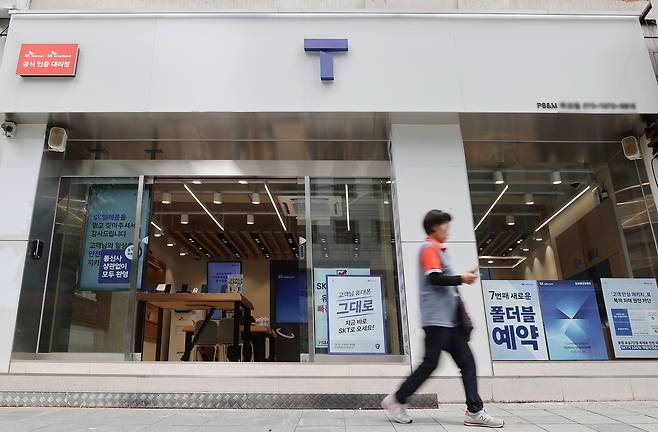
SK Telecom resumed new subscriber sign-ups on Tuesday, 50 days after halting operations due to a massive USIM card hacking scandal, a move expected to reignite competition between Korea’s top three mobile carriers.
“Until now, we focused on USIM replacements. We will provide seamless services to new customers through close cooperation with our nationwide sales network starting today,” Lim Bong-ho, head of the MNO business division at SK Telecom, said in a press briefing in Seoul on Tuesday. He also announced that more than 2,600 offline retail stores nationwide have reopened new subscription services.
The Ministry of Science and ICT on Monday announced it would lift SK Telecom’s suspension on new customer recruitment, saying the company has secured sufficient USIM inventory to meet demand beyond replacement needs. The ministry also cited the stabilization of the telecom company’s revised USIM replacement reservation system, introduced on Friday.
According to SK Telecom, an average of 30,000 customers per day replaced their USIM cards through Monday, with the cumulative total reaching 9.34 million as of midnight Tuesday.
Industry sources said SK Telecom is widely expected to roll out aggressive subsidies to offset recent business setbacks.
The company has reportedly lost some 607,000 subscribers between April 22 -- when the USIM hacking incident came to light -- and Sunday. Even accounting for new subscribers gained through third-party vendors, SK Telecom saw a net loss of about 518,000 subscribers.
Market watchers believe the exodus may have pushed the mobile carrier’s market share below 40 percent.
“For now, our priority is to focus on normalizing operations,” Lim said.
Two other mobile carriers -- KT Corp. and LG Uplus -- are likely to respond in kind. The impending repeal of the Mobile Device Distribution Improvement Act, set for July 22, will remove caps on subsidies. The act came into force in 2014 to keep fierce competition to woo customers with hefty subsidies in check.
Additionally, Samsung Electronics is gearing up for the unveiling of its Galaxy Z Fold 7 and Z Flip 7 models next month, further fueling competition.
However, some sources believe SK Telecom may not be able to commit “astronomical” sums to marketing, given the financial burden of free USIM replacements and compensation for dealer losses.
Commenting on third-quarter marketing spend, Lim said, “There are multiple events lined up in the third quarter -- including the repeal of the Mobile Device Distribution Improvement Act next month, the Galaxy foldable phones launch and the iPhone release in September. It’s difficult to predict marketing costs at this stage as they will depend on market dynamics.”
An industry source who requested anonymity said, “Without the final report from the joint government-private task force investigating the cyberattack, SK Telecom is unlikely to disclose detailed (marketing) plans at this time.”
Meanwhile, the ICT ministry said it aims to deliver the final findings of its investigation by the end of this month. SK Telecom is expected to announce compensation measures and plans to prevent similar incidents once the report is released.
Copyright © 코리아헤럴드. 무단전재 및 재배포 금지.