GS Caltex launches feasibility study for biofuel project in Indonesia
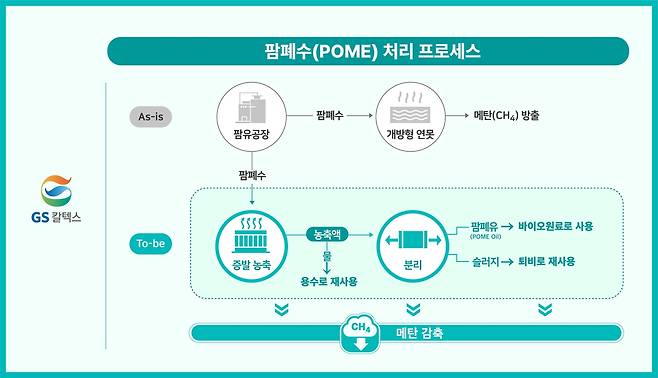
GS Caltex, a South Korean oil refiner, announced Tuesday that it is pursuing a new project in Indonesia aimed at recovering biofuel resources and reducing greenhouse gas emissions by processing palm oil mill waste.
The company said it has been selected for a government-backed initiative to support a full feasibility study for an international greenhouse gas reduction project, with plans to build an evaporative concentration facility to extract oil from palm oil mill effluent, a liquid byproduct of palm oil production.
GS Caltex plans to conduct a six-month evaluation of the project’s feasibility and potential impact on emissions. Based on the results, the company will decide the scope and timing of its investment.
If approved, the project would be the first evaporative concentration facility in Indonesia to process the palm oil waste, the company said.
“Evaporative concentration of palm oil mill effluent is considered simpler than existing methane capture methods and can reduce emissions more effectively by preventing decomposition,” a GS Caltex official said.
“Following the feasibility study, we will consider moving forward with the project at palm oil farms in Indonesia.”
The company expects the project to provide a new source of biofuel, particularly for sustainable aviation fuel, which is experiencing growing demand. Jurisdictions such as Korea, the European Union and the United States plan to increasingly require airlines to blend bio-based fuel into their operations.
According to GS Caltex, each facility could also reduce emissions equivalent to the amount absorbed annually by 14 million 30-year-old pine trees by replacing the traditional practice of leaving palm oil waste to decay in open ponds, which releases large volumes of methane.
Methane has a global warming potential about 28 times greater than carbon dioxide over a 100-year period.
Copyright © 코리아헤럴드. 무단전재 및 재배포 금지.