Korea guides Nepal’s push for holistic agricultural reform: NARC director
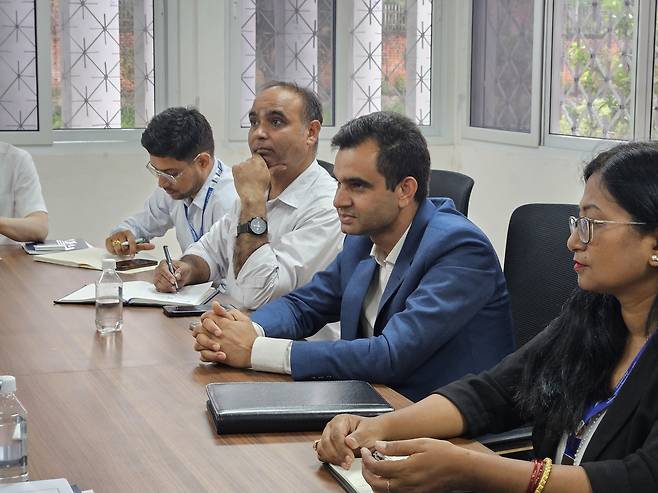
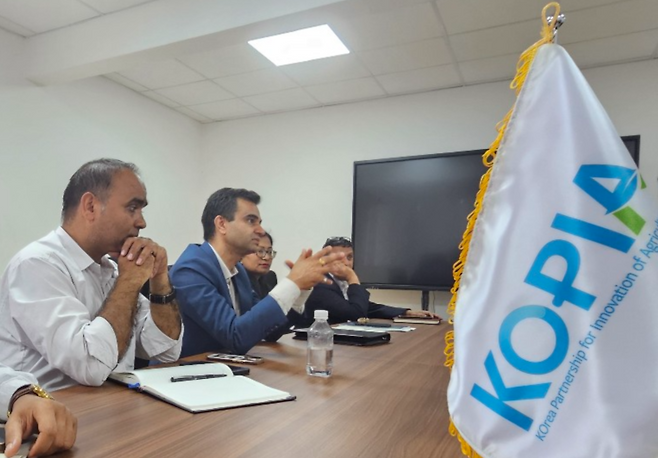
KATHMANDU, Nepal — In May, when Nepal forged a partnership with the Korea Partnership for Innovation of Agriculture, led by South Korea’s Rural Development Administration, it sowed the seeds of transformation in its agricultural development.
In an earnest tone, Krishna Timsina, executive director of Nepal’s National Agricultural Research Council, the country’s key research and policy institution for agriculture, mapped out what the new ties could bring in the years to come.
“This partnership with KOPIA marks a strategic leap toward self-sufficiency especially in rice and potato production,” Timsina said during a press interview at KOPIA’s Nepal center.
He noted that Nepal imports around 15 percent of its agricultural products, which the country aims to reduce by increasing production by 27 to 40 percent by 2030, and by 40 to 85 percent by 2050.
Achieving these goals, however, depends on Nepal’s ability to respond to climate challenges and harness innovation in seed breeding and agricultural technology.
“We would love to learn from KOPIA’s scientific innovations and adapt them to our own context, developing agriculture not as a standalone sector, but as one that functions within a broader ecosystem,” he said.
Nepal views KOPIA’s support as vital across the entire agricultural value chain from seed development and pest management to post-harvest handling and mechanization.
“Yet, the priority should be adapting the right technologies to Nepal’s specific environment,” Timsina said, adding that future breeding efforts will align with consumer preferences, focusing on select rice varieties and native potato types with strong market appeal.
Regarding machinery use, Nepal’s lowland Terai region, home to about 800 of the country’s 1,200 mechanization clusters, has a mechanization rate of 50 percent, but the adoption of rice transplanters remains at just 20 percent.
“Unlike tractors, which are used year-round, rice transplanters are typically operated only during the 30 to 40 days of the planting season," he said.
Timsina highlighted the strengths of Korean farm machinery.
"Nepal needs compact equipment suited for small plots and high-altitude regions, where Korea’s small-scale agricultural equipment could offer a valuable solution," he said.
According to Timsina, Korea’s system could also help improve Nepal’s machinery banks, public facilities for renting agricultural equipment, that currently face operational challenges and lack strategic guidance.
Ultmatley, for Timsina, agricultural development means a comprehensive transformation that fuses technology, research, training and policy into a unified ecosystem.
“We need a multidisciplinary approach, and while our focus will remain on breeding and technological advancements, institutional innovation is just as critical,” he said, adding that technology transfer from research stations to farmers must be ensured through systemic reforms.
“We also need to collaborate more closely with provincial governments, educational institutions and local authorities to ensure meaningful adoption on the ground.”
While Nepal prioritizes self-reliance in food production, it also envisions an export-oriented sector that could eventually share its agricultural expertise with neighboring countries.
“Our first goal is to achieve self-sufficiency in key staple crops. The second is to make certain commodities, such as those in the livestock sector, more competitive in international markets,” he said.
Copyright © 코리아헤럴드. 무단전재 및 재배포 금지.