Korean economy hit by Middle East turmoil just as recovery hopes rise
이 글자크기로 변경됩니다.
(예시) 가장 빠른 뉴스가 있고 다양한 정보, 쌍방향 소통이 숨쉬는 다음뉴스를 만나보세요. 다음뉴스는 국내외 주요이슈와 실시간 속보, 문화생활 및 다양한 분야의 뉴스를 입체적으로 전달하고 있습니다.
The recent U.S. attack on Iran has thrown cold water on Korea’s efforts to shift economic momentum. Rising international oil prices are fueling inflationary pressures at home while raising concerns over a logistics crisis and increased production costs. The KOSPI, which recently rebounded past the 3,000 mark for the first time in three and a half years, is now facing renewed volatility. There are also growing fears that the economic boost expected from a supplementary budget may be offset. On June 22, the Ministry of Economy and Finance held an emergency meeting to discuss its response.
The government’s top concern is international oil prices. With its high dependence on overseas energy, Korea is particularly vulnerable to oil price hikes, which tend to drive up domestic inflation.
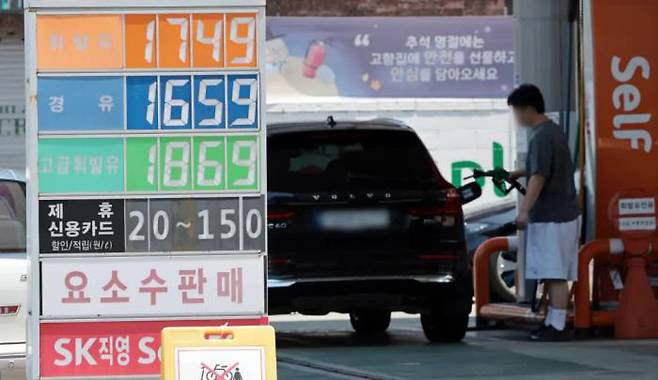
Brent crude futures, for example, surged from $74.23 per barrel on June 13 (local time), the day of the Israeli strike on Iran, to $77.01 by the 20th. Gasoline prices in Seoul also rose to over 1,721 won per liter on the 21st. Typically, domestic fuel prices follow international oil prices with a 2 to 3 week lag. Korea Investment & Securities warned in a report published on the 17th that “if oil prices climb to around $100 per barrel by July and remain 20 percent higher year-on-year, Korea’s consumer inflation could rebound to the high 2 percent range in the fourth quarter.”
Concerns over supply chain disruptions are also mounting. Shipping costs for vessels passing through the Strait of Hormuz could spike, and in a worst-case scenario where the strait is blocked, a global energy supply crisis would be inevitable. Roughly 20 percent of the world’s oil consumption flows through the Strait of Hormuz.
Financial markets are expected to see short-term turbulence as well. After steadily rising since the presidential election on June 3, the KOSPI closed at 3,021.84 on June 20, breaching the 3,000 level for the first time in 3.5 years, but may now pause for breath. If the conflict escalates, demand for safe-haven assets like the U.S. dollar is likely to rise, weakening the Korean won. Korea Investment & Securities predicted that “if the situation develops into a full-scale war, the won-dollar exchange rate could exceed 1,400 won.”
The war adds to the burden amid an already slowing export environment. While the Middle East is not one of Korea’s major export destinations, global trade may still suffer due to mounting uncertainties in the global supply chain. The heightened risk of stagflation, a combination of inflation and economic stagnation, in the U.S. due to the war is also a contributing factor to the slowdown in Korea’s exports to the U.S. The government's plan to stimulate the economy through a second supplementary budget may also be disrupted. If inflationary pressure intensifies, the Bank of Korea could delay its anticipated interest rate cuts. Kim Kwang-seok, head of economic research at the Institute for Korean Economic and Industry, warned, “If uncertainty continues to grow, companies will scale back on new investments and business expansion, significantly offsetting the impact of the supplementary budget.”
On the same day, First Vice Minister Lee Hyung-il, acting as Minister of Economy and Finance, instructed relevant agencies to “implement necessary measures swiftly in close inter-agency coordination should any unusual developments arise.”
※This article has undergone review by a professional translator after being translated by an AI translation tool.
Copyright © 경향신문. 무단전재 및 재배포 금지.
- [속보] ‘코스피 6000 데이’에 ‘자사주 소각 의무화’ 3차 상법 개정안 국회 통과
- [단독]대통령이 ‘전수조사’ 지시한 청소업체, 환경미화원에 줄 ‘연 3억원’ 관리직 줬다
- 시청 7급 공무원이 ‘마약 운반책’···CCTV 사각지대까지 꿰고 있었다
- “말다툼 중 홧김에 던져”···사패산 터널 ‘1억 금팔찌’ 두 달 만에 주인 품으로
- 더 빨리 찾아온 ‘제주바다 불청객’ 괭생이모자반···벌써 800여t 몰려와
- 민희진 “256억 포기할 테니 모든 소송 끝내자”…하이브에 공개 제안
- 주가조작·회계부정 신고하면 ‘상한선 없는 포상금’···부당이득 규모 비례 지급
- 이 대통령 “농지분배 이승만이 빨갱이는 아냐…농사 안 지으면 처분해야”
- 국힘 김재섭 “정원오, 농지투기 조사해야”···민주 “악의적 정치공세”
- 정원오 이어 전재수·박찬대까지…SNS로 격전지 후보 ‘명심’ 싣는 이 대통령