EV battery recycling heats up in Korea despite market slump
전체 맥락을 이해하기 위해서는 본문 보기를 권장합니다.
"Yet it is the right path for Korean companies, as securing a stable supply chain for minerals will become increasingly significant."
"(With policy changes in place,) it may become faster to secure used batteries rather than invest in new mines, exploration, refining and metal procurement. To ensure a stable supply of critical minerals, battery makers will be competing as if at war."
이 글자크기로 변경됩니다.
(예시) 가장 빠른 뉴스가 있고 다양한 정보, 쌍방향 소통이 숨쉬는 다음뉴스를 만나보세요. 다음뉴스는 국내외 주요이슈와 실시간 속보, 문화생활 및 다양한 분야의 뉴스를 입체적으로 전달하고 있습니다.
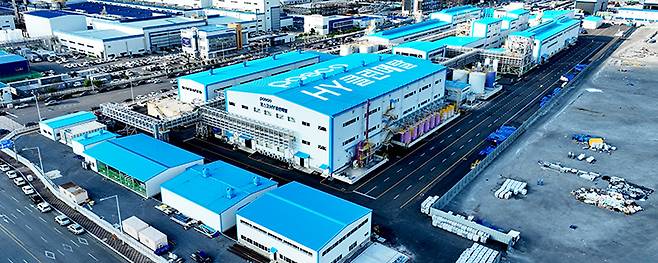
Korea’s industry giants are stepping up their involvement in the electric vehicle battery recycling sector, signaling expectations that the currently subdued industry will evolve into a critical component of the battery value chain.
LG Energy Solution, Korea’s largest battery maker, recently formed joint ventures in Europe and the US — with France’s Derichebourg and Toyota Tsusho Co., respectively — marking its first direct steps into battery recycling operations in both regions.
SK Ecoplant, a construction engineering unit of SK Group, is expanding its European facility in the Netherlands to add 25,000 metric tons of annual black mass processing capacity, with completion scheduled for 2025.
Posco-GS Eco Materials, a 51:49 joint venture between Posco Holdings and GS Energy, acquired full control of its battery recycler, Posco HY Clean Metal, by purchasing the 35 percent stake held by China’s Huayou Cobalt in April.
“It is late compared to other countries’ battery industries, as even Chinese companies such as CATL have their own recycling business,” said Park Cheol-wan, a car engineering professor at Seojeong University.
“Yet it is the right path for Korean companies, as securing a stable supply chain for minerals will become increasingly significant.”
These moves come as the battery recycling sector continues to suffer a deep slump, driven by sluggish EV demand and sharp declines in the prices of key battery minerals such as nickel, lithium and manganese.
International lithium carbonate prices, which were above 450 Chinese yuan ($63) per kilogram in January 2023, have fallen to around 50 yuan. Nickel prices also dropped significantly, from over $31,000 per ton to around $20,000.
As a result, SungEel HiTech, one of only two battery recycling companies listed on Korea’s tech-focused Kosdaq, has experienced declines in profitability and free cash flow for two consecutive years.
A joint battery recycling project between SungEel HiTech and SK Innovation, announced in 2022, has been indefinitely delayed, while SK Ecoplant’s planned facilities in Gyeongju, North Gyeongsang Province, and Kentucky have also shown no signs of progress for years.
The industry, however, anticipates a significant increase in the number of used EV batteries as they reach the end of their life cycle, which is estimated to be around 10 years. This follows the surge in global EV sales in the 2010s, which surpassed one million units in 2015.
With the continued growth of EV adoption, the battery recycling market — valued at $8 billion in 2022 — is projected to expand to as much as $53.57 billion by 2030, according to SNE Research.
Experts say that entering the battery recycling business is increasingly becoming essential for staying competitive in the battery industry, as global policy trends push for recycled minerals to be a core component of battery supply chains.
The European Union requires all EV batteries placed within the region to meet minimum recycled metal content thresholds by 2031: 16 percent for cobalt, 85 percent for lead, 6 percent for lithium and 6 percent for nickel. These requirements will increase by 2036.
Meanwhile, EVs with some key battery components or minerals sourced from foreign entities of concern are excluded from US tax credits under the Inflation Reduction Act, pressuring battery makers to secure materials domestically, often through recycling.
“It is more a matter of broader business strategy than the profitability of recycling itself, whether companies choose to outsource recycled materials or secure them in-house,” Park added.
“(With policy changes in place,) it may become faster to secure used batteries rather than invest in new mines, exploration, refining and metal procurement. To ensure a stable supply of critical minerals, battery makers will be competing as if at war.”
Copyright © 코리아헤럴드. 무단전재 및 재배포 금지.