BOK chief backs need for won-based stablecoin, warns of FX risks
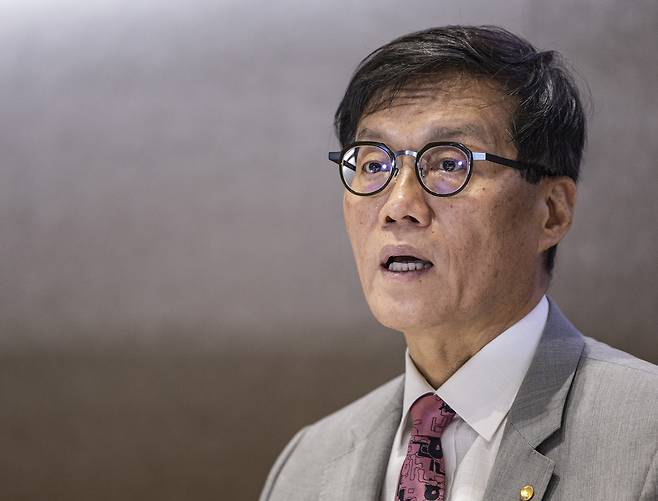
Bank of Korea Gov. Rhee Chang-yong said Wednesday that he is not opposed to the issuance of a Korean won-pegged stablecoin and, in fact, sees a need for it.
When asked whether the issuance of a won-based stablecoin could trigger inflation by increasing the money supply, Rhee clarified his position.
“I do see the need for a won-backed stablecoin. Let me be clear — I am not against it,” he said during a press conference held at the central bank’s headquarters.
He added that the impact of such a stablecoin on the monetary system would depend on the form of issuance and the type of assets backing it.
However, Rhee raised concerns over potential challenges to foreign exchange controls.
“If a won-based stablecoin is issued, it could facilitate the conversion of won-denominated assets into dollar-based stablecoins, which could increase demand for foreign stablecoins and complicate forex management,” he said.
The ruling Democratic Party of Korea has been pushing to allow non-banking institutions to issue a won-based stablecoin.
“We would need to consider the broader implications for bank profitability and structural changes if payment and settlement functions — traditionally handled by banks — are expanded to the non-banking sector," Rhee said.
He added that the central bank would work with the Ministry of Economy and Finance and the Financial Services Commission to establish appropriate measures as soon as possible.
Wednesday’s press conference was also held to review the current inflation trend in Korea.
In the first five months of 2025, consumer prices rose 2.1 percent — slightly higher than the 1.8 percent increase seen in the last six months of 2024, but still near the central bank’s target of 2 percent.
“The pace of growth has stabilized, but prices remain elevated due to the sharp rise that occurred during the COVID-19 pandemic,” Rhee said.
From 2021 to May 2025, overall consumer prices increased by 15.9 percent. Meanwhile, the cost of living index — which includes a selected subset of essential items — rose 19.1 percent during the same period, outpacing general inflation by 3.2 percentage points and highlighting rising household burdens.
The Bank of Korea also commented on the potential inflationary impact of recent US tariff measures.
The central bank noted that the tariffs could actually help ease inflationary pressure in Korea, given its heavy reliance on exports to both the US and China. The logic: weaker global demand could lead to lower raw material prices.
Additionally, if China redirects its low-cost goods to markets like Korea due to reduced exports to the US, it could create further deflationary pressure.
However, the BOK emphasized the uncertainty surrounding these projections.
“Since the implementation and scope of tariffs could vary depending on negotiation outcomes, factors such as won depreciation or partial supply chain disruptions could offset any downward pressure on prices,” the central bank said in a statement.
Copyright © 코리아헤럴드. 무단전재 및 재배포 금지.