S. Korea’s courts are changing: Padel, pickleball, and rise of fusion sports
이 글자크기로 변경됩니다.
(예시) 가장 빠른 뉴스가 있고 다양한 정보, 쌍방향 소통이 숨쉬는 다음뉴스를 만나보세요. 다음뉴스는 국내외 주요이슈와 실시간 속보, 문화생활 및 다양한 분야의 뉴스를 입체적으로 전달하고 있습니다.
In South Korea, sports don’t just grow—they catch fire when backed by a passionate fanbase, or what locals call a “ppa.” Years ago, there was “ppatteru”—a Koreanized play on professional wrestling—and then came “ppadun,” short for “bba-da deonji-gi,” or bat throwing, a uniquely Korean term that refers to the dramatic bat flips that lit up Korean baseball. Now, a new name is making noise on the courts: padel.
Padel? The name alone sparks curiosity. To experience its growing popularity firsthand, head to Yongsan Station, where a rooftop court atop the seventh floor of the I’Park Mall has quickly emerged as one of Seoul’s most distinctive new attractions. At first glance, it resembles a miniature tennis court—about a third of the size—but its vibrant blue surface and transparent glass walls create an eye-catching scene. The sport itself is a fast-paced blend of tennis and squash. An official at HDC I’Park Mall said the venue was conceived with the recent tennis boom in mind. “We were looking for something with more character,” the official said. “We’d heard padel was popular overseas, but the response here has been more encouraging than expected.” Despite an hourly rental fee of 70,000 won (about $50), the court attracted over 20,000 users in its first year. On a recent Monday, a group of high school students was seen playing as part of an experiential learning program.
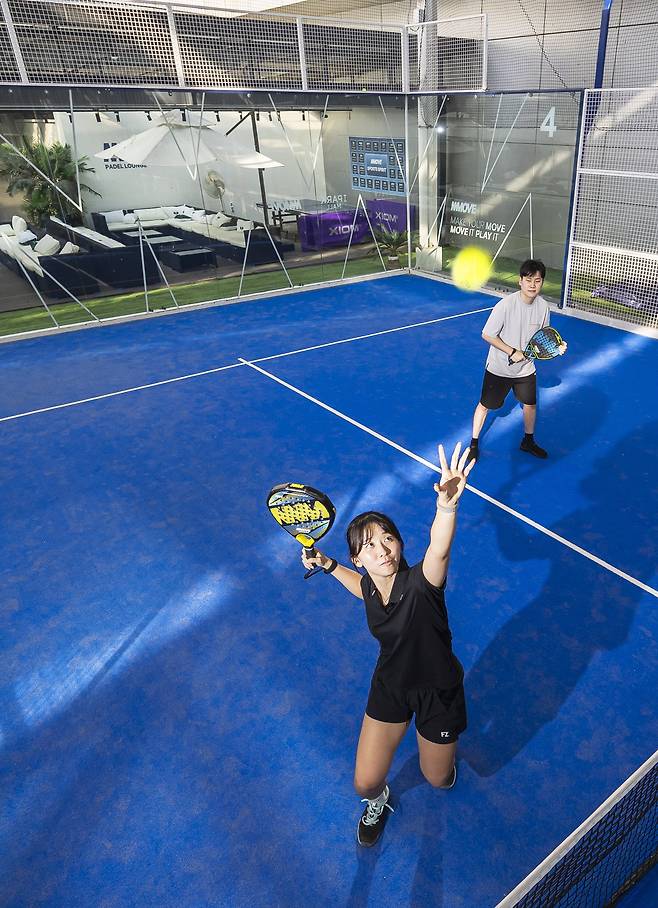
From 6 a.m. to 10 p.m., the rooftop echoes with the crisp, rhythmic sound of rackets striking balls. This year alone, companies such as Hyundai Engineering, Nike, and Johnson & Johnson—as well as organizations including the Korean Chamber of Commerce in Singapore, the Jungnang-gu Office, and the Seoul Tourism Organization—have hosted training sessions and team-building events at the venue. Its appeal lies not only in its novelty but in how accessible the game is. Among tourists from Europe and the Middle East, where padel already holds mainstream status, the court has become a sought-after stop, with many travelers squeezing in a match during their visit. Kim Na-young, 26, a manager at the court, said, “The court is small, and the rackets are light, so the physical entry barrier is low. That’s probably the biggest reason behind its popularity.” While most users are in their 30s and 40s, she noted that parents of preschoolers have also reached out, hoping to give their children an early start before studying abroad. One of the youngest members is just seven years old.
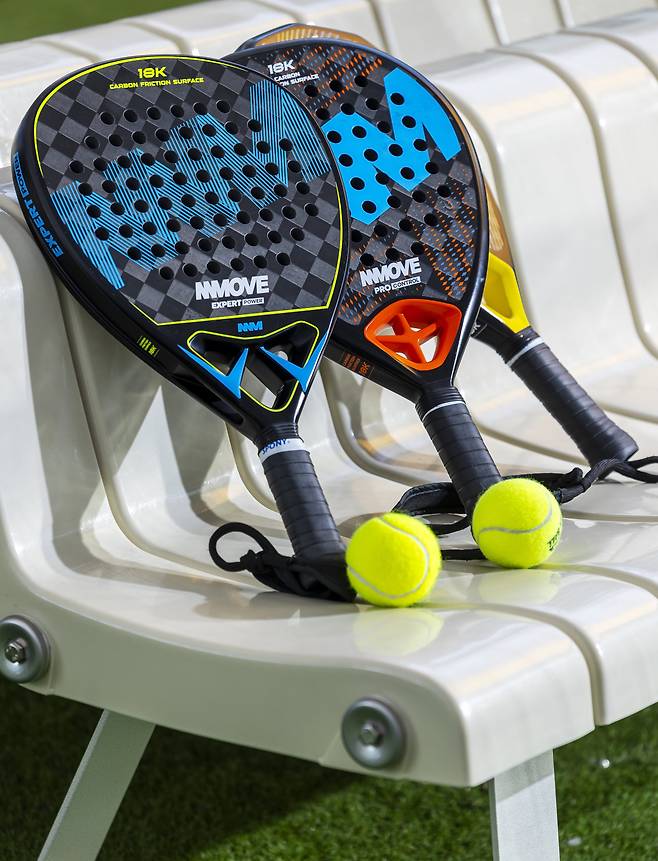
Having tried the sport firsthand, it is clear that padel is easily manageable for children. The racket is about the size of an oversized rice paddle, with perforated holes instead of strings, which makes it easier to control the ball. The design places minimal strain on the wrist. Given the compact size of the court and the responsiveness of the tennis-like ball, players don’t need to hit hard, allowing them to focus more on controlling their shots. Yet the intensity is heightened—thanks to the glass walls. Much like squash, players can use the walls to send the ball back into the opponent’s court, often extending rallies beyond two minutes—something rarely seen in conventional tennis. Some rallies stretch to 30 or 40 shots, creating bursts of excitement and momentum. Kang Min-joo, 24, a coach and former tennis player, said, “Having played both, I can say padel is definitely more fun.” That kind of feedback helps explain the sport’s rapid spread, with courts recently established in Seoul, Gimpo, Hwaseong, and Daejeon.
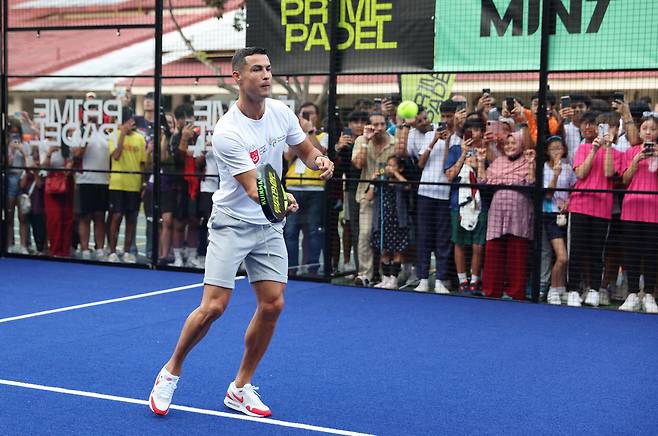
Padel originated in 1962 in a narrow residential area in Mexico and gradually gained popularity across South America and Europe, where it now rivals soccer in cultural significance. Portuguese football star Cristiano Ronaldo, 40, is an avid supporter. He has served as a commentator during matches and invested €5 million (about $5.4 million) to build a “city of padel” in Lisbon, slated to open next year. French football legend Zinedine Zidane, 53, operates a padel center of his own. The sport has also drawn enthusiasts ranging from top tennis players like Rafael Nadal to Hollywood celebrities such as Eva Longoria, accelerating its global reach.
In October last year, South Korea opened its first padel court certified by the International Padel Federation (FIP), located in Daejeon. The facility is operated by Min Kyung-hak, 45, a former physical education teacher. “We receive 20 to 30 visitors a day from cities like Osan, Seosan, and Busan,” he said. Min added that just as futsal—a compact, high-intensity variation of soccer—has found its place in amateur sports, padel has strong potential to evolve into a widely practiced grassroots sport in South Korea. According to the International Padel Federation’s 2024 World Padel Report, there are 30 million amateur players worldwide. Europe leads the way with 42,600 padel courts, followed by the Americas with 12,850–most concentrated in Argentina and South America. Asia trails with 3,200 courts. In search of better facilities and more competitive matches, more South Korean amateur padel players are traveling abroad, particularly to Qatar and Indonesia.
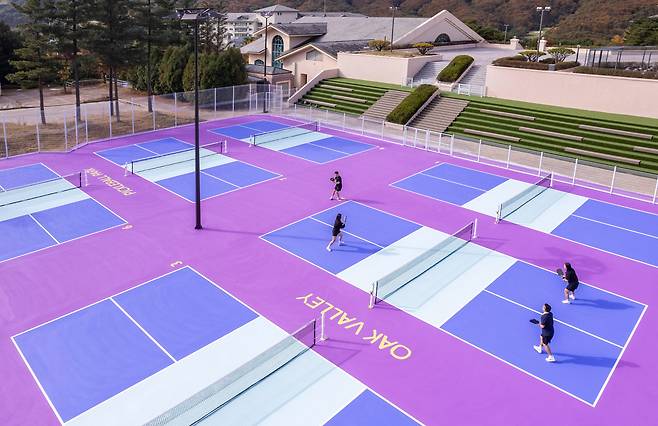
Tennis, with its stylish outfits and photogenic appeal, has become the most “Instagrammable” and popular recreational sport. Hybrid spin-offs are also gaining traction, with pickleball emerging as a standout. Played on a court one-fourth the size of a tennis court and using a lightweight plastic ball, pickleball is growing nationwide. Local governments are already hosting tournaments, and portable nets are now widely available to encourage play anywhere. Another quirky fusion is “tennis baseball,” a game where players use tennis rackets to follow baseball’s format: pitchers hit a tennis ball to the catcher, the batter returns the ball with their racket, and fielders use gloves to catch and relay the ball by striking it again. The game delivers high-speed chaos, with balls exceeding 190 kilometers per hour.
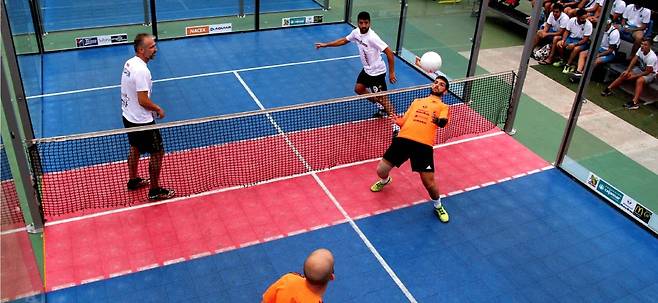
As sports continue to merge and evolve, padel emerged from a blend of tennis and squash. Then came padbol, which combines padel and football. Like padel, padbol is played in a two-on-two format with similar rules, but players must hit the ball over the net using their feet, torso or head instead of rackets. First created in Argentina by Gustavo Miguens in 2008, padbol held its inaugural World Cup in La Plata, Argentina in 2013 under the International Federation of Padbol Associates (FIPA). The sport continues to spread globally, with former English footballer Theo Walcott investing in new venues.
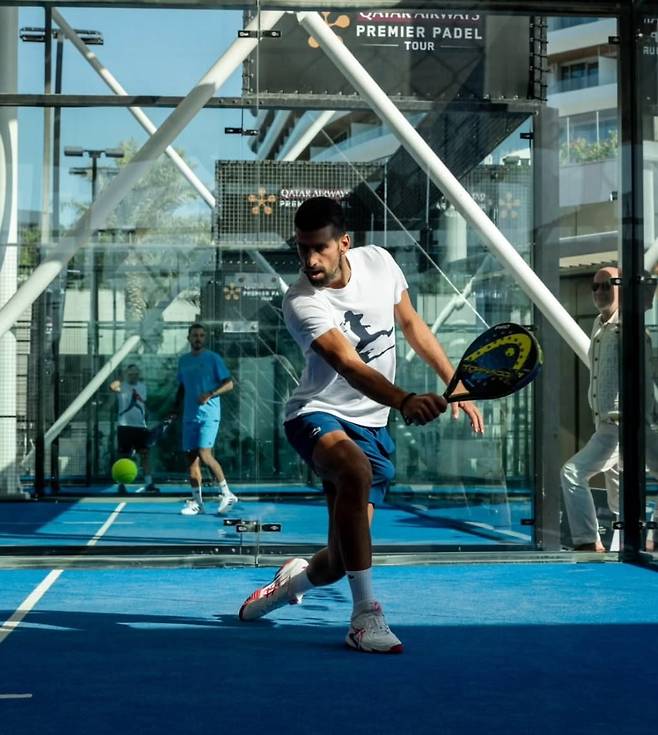
The rise of these hybrid sports has begun to challenge tennis itself. Some speculate that padel and pickleball could one day replace it. At the final press conference at Wimbledon in 2024, tennis legend Novak Djokovic voiced concern: “On a club level, tennis is endangered. It’s a very global sport, but we don’t make it accessible. We don’t make it so affordable.” He added, “People say tennis is the ‘king or queen of all racquet sports.’ If we don’t do something about it, they’re gonna convert all the tennis clubs into paddle and pickleball. Because it’s more economical. You have one tennis court, then you can build three paddle courts on one tennis court.”
Despite tennis’s growing popularity, there’s a paradox: barriers to entry have become steeper. In South Korea, court shortages lead to fierce reservation battles, and the country’s unique “gatekeeping” culture in recreational sports adds further challenges. “Newcomers are required to pass a basic skills test or be recommended by someone in the club,” said one longtime tennis club member. “It’s actually difficult for beginners to learn the basics or participate in matches that way.” That’s why Jung Sung-ryong, a 33-year-old office worker, recently started a padel club at work. “I once looked into tennis clubs, but most required at least six months of experience to join–that was discouraging,” he said. “Padel is easier to pick up than tennis, and since it’s just getting started in Korea, it should be open to everyone.”
Copyright © 조선일보. 무단전재 및 재배포 금지.
- 115년 만에 나스닥 가는 GM…‘자동차주’ 꼬리표 뗄까
- 부산시 캐릭터 ‘부기’, 대한민국 캐릭터 어워즈 2년 연속 대상
- 이찬진 금감원장, 금융지주 이사회에 “자회사 CEO 승계 절차 투명해야”
- 與 가상자산 과세유예에 무게...김민석 “과세 인프라 미비 논의해야”
- [속보] 이태한 선관위 특검, 핸드볼경기장 진입… 투표지 검증 착수
- [속보] SK하이닉스, 3분기 영업이익 83조원...60조원 추가 주주환원
- 김민석, 曺 국정조사 두고 “당내 100% 하나의 의견이라 보긴 어려워”
- 김성기 부산시 행정부시장 취임
- 李대통령, ‘농지조사 책임전가’ 보도에 “최소한의 보도윤리 가졌는지 의문”
- 대선 패배하자 美로 간 보우소나루 장남… 여권 제출 명령도 어겼다