Can coed K-pop make a comeback? Teddy’s ‘Allday Project’ stirs new hope
전체 맥락을 이해하기 위해서는 본문 보기를 권장합니다.
"Coed groups peaked during the era of 1990s dance music," said music critic Lim Hee-yun, Monday. "At the time, public exposure relied heavily on domestic broadcast TV. On music and variety shows, it was common for men and women to perform together, rapping and singing in turns. It suited the shared viewing habits of Korean families at the time."
"Sure, managing a coed group is hard, and fandoms can split. But maybe that's just because we haven't had a successful case yet," the official added. "Who's to say a mixed-gender group can't work now? It's been 30 years of K-pop -- bands are back. Maybe it's time for coed groups to shine again, too."
이 글자크기로 변경됩니다.
(예시) 가장 빠른 뉴스가 있고 다양한 정보, 쌍방향 소통이 숨쉬는 다음뉴스를 만나보세요. 다음뉴스는 국내외 주요이슈와 실시간 속보, 문화생활 및 다양한 분야의 뉴스를 입체적으로 전달하고 있습니다.
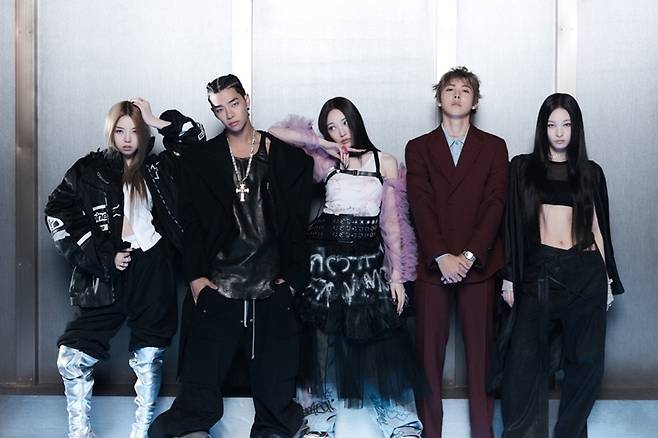
The Black Label, led by hitmaker and Blackpink producer Teddy Park, has sent ripples through the K-pop scene with the surprise announcement of its first coed group, Allday Project, due to debut June 23.
The mixed-gender makeup of the label’s second idol team is already generating a buzz — both skeptical and hopeful — before a single track has dropped.
The concept may seem fresh in today’s hyper-specialized K-pop market, but coed groups once thrived in the industry.
In the 1990s and early 2000s, acts like Roo'Ra, Cool, Sharp and Turtles led the charge, becoming household names. But since the 2010s, coed teams have all but vanished from the mainstream. The K-pop scene has shifted toward gender-segregated acts, with agencies increasingly focused on either all-male or all-female groups optimized for fan-driven business models.
Today, only a handful of coed teams remain.
Koyote, which debuted in 1998, continues to perform with its original male-female lineup. Kard, launched by DSP Media in 2017, is the only other active coed idol group. That will change when Allday Project debuts, the first new mixed-gender K-pop act in eight years.

Experts point to multiple structural reasons behind the genre’s decline: fandom behavior, concept limitations and the demands of social media platforms.
“Coed groups peaked during the era of 1990s dance music,” said music critic Lim Hee-yun, Monday. “At the time, public exposure relied heavily on domestic broadcast TV. On music and variety shows, it was common for men and women to perform together, rapping and singing in turns. It suited the shared viewing habits of Korean families at the time."
“But now, it’s a multi-platform world where success hinges on passionate engagement through social media and short-form content,” Lim said. “That works best when fans can hyper-focus on a single idol. That’s why we see girl groups and boy groups, not coed.”
That is not to say that there have been no attempts to break the mold.
Sunny Hill debuted in 2007 as a five-member coed group but soon restructured into an all-girl team following the exit of its sole male member. Kard has carved out a niche by focusing on international markets, where mixed-gender acts are met with less resistance.
Lim believes The Black Label might be tapping into that very niche.

“This could be a long-term play aimed at audiences who like K-pop performance and music — not necessarily those who just want to stan a particular idol. If they execute it well, it could spark a new conversation.”
But there’s no doubt Allday Project faces an uphill battle. The fan ecosystem of K-pop — largely split along gendered lines — makes the group’s path inherently uncertain. Their success will hinge on whether they can transcend the limitations traditionally placed on coed formats and prove their mass appeal.
The Black Label says it didn’t set out to break barriers — it just followed the music. Allday Project was planned "without bias," like any other team, and its creative direction isn’t confined by the framework of K-pop.
An industry insider from one of the major agencies also expressed cautious optimism.
“It’s not really about whether there have been coed groups or not,” the official said. “These members, regardless of their debut year or gender, have strong individuality. That’s what’s interesting.”
“Sure, managing a coed group is hard, and fandoms can split. But maybe that’s just because we haven’t had a successful case yet,” the official added. “Who’s to say a mixed-gender group can’t work now? It’s been 30 years of K-pop -- bands are back. Maybe it’s time for coed groups to shine again, too.”

Copyright © 코리아헤럴드. 무단전재 및 재배포 금지.