South Korea to pour $735 bn into developing sovereign AI built on Korean language and data
이 글자크기로 변경됩니다.
(예시) 가장 빠른 뉴스가 있고 다양한 정보, 쌍방향 소통이 숨쉬는 다음뉴스를 만나보세요. 다음뉴스는 국내외 주요이슈와 실시간 속보, 문화생활 및 다양한 분야의 뉴스를 입체적으로 전달하고 있습니다.
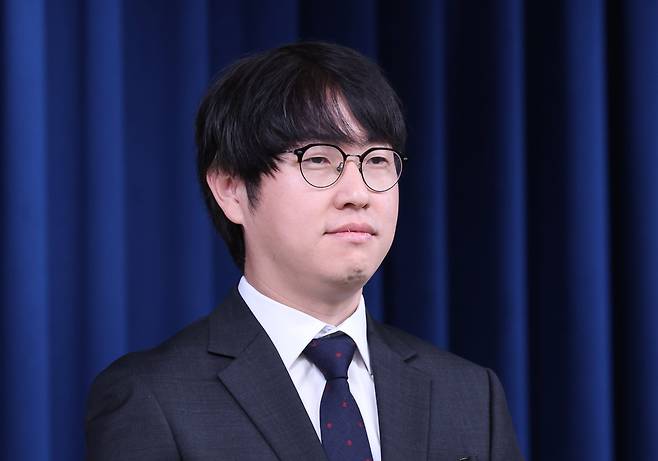
South Korea is entering the intensifying global race for artificial intelligence with a strategy likened to wartime mobilization. On June 15, the presidential office tapped Ha Jung-woo, head of the AI Innovation Center at Naver, as the country’s first-ever senior presidential secretary dedicated exclusively to AI policy. A new AI-focused unit will also be established to support the position.
On the same day, SK Group unveiled plans to build South Korea’s largest AI data center in Ulsan’s Mipo National Industrial Complex in partnership with Amazon Web Services (AWS). The companies will jointly invest several trillion won in the project. With these moves—recruiting a leading expert to oversee national AI strategy and expanding critical infrastructure—South Korea is making a concerted push to secure its place among the world’s top three AI powers.
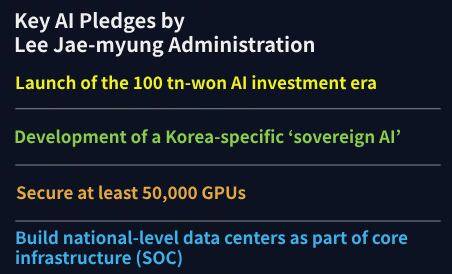
President Lee Jae-myung has consistently emphasized the importance of AI policy, even naming a 100 trillion-won ($735 billion) investment plan as one of his signature campaign pledges. His AI platform also included a proposal to develop a “sovereign AI” tailored specifically to South Korea’s cultural and historical context. Ha, the newly appointed secretary, has been one of the most vocal proponents of the sovereign AI concept.
In past lectures and media interviews, Ha argued that South Korea needs an AI system trained on its own data, stating, “We need a sovereign AI that has learned from Korea’s culture and history.” He added, “The government should select three to four national AI champions and equip them with at least 5,000 graphics processing units (GPUs).” GPUs are vital components in AI data centers and serve as essential infrastructure in the AI era, but securing high-performance units remains a major challenge in South Korea.
Ha is widely expected to promote a public-private collaboration model for developing sovereign AI, in which the government provides infrastructure support. Under this approach, AI systems developed with public assistance would be released as open-source tools for broader use in society—a core tenet of Ha’s sovereign AI vision.
While President Lee’s campaign pledge garnered attention for its scale, it lacked details on implementation. Questions remain over how the government intends to fund the 100 trillion-won initiative and what sectors will be targeted for investment. Industry experts and AI companies argue that sovereign AI must be tailored to Korea’s strategic industries. “To maximize the impact of the 100 trillion-won investment, sovereign AI must be applied to national priority sectors like semiconductors and biotechnology,” one AI industry official said.
Copyright © 조선일보. 무단전재 및 재배포 금지.
- 수서역 KTX, 서울역 SRT 25일 운행 시작
- 이준석, 전한길에 “토론하고 쪽팔리고 감옥 가세요”...27일 끝장토론
- 李 대통령 “임대료 제한 있으니 관리비 올려… 범죄행위”
- 브라질 영부인, 백종원 만났다...BTS 진 선물에 ‘활짝’
- 부동산 규제 강화 속 집값 상승 기대 3년7개월 만에 최대 폭 하락
- 특검, ‘도이치 주가조작 공범’ 이모씨 징역 1년 6개월 구형
- [단독] “조폭이랑 호형호제”…동료 BJ·시청자 돈 빌리고 잠수탄 BJ
- 송언석, 與 강행 처리 예고 ‘사법 3법’에 “명백한 위헌... 즉각 중단하라”
- ‘尹 어게인’으로 선거 되겠나... 국힘 개혁파 “의원 투표하자”
- ‘무기징역’ 尹, 내란 우두머리 1심 선고에 항소