Exclusive: Nitori closes third store in South Korea, raising exit concerns
이 글자크기로 변경됩니다.
(예시) 가장 빠른 뉴스가 있고 다양한 정보, 쌍방향 소통이 숨쉬는 다음뉴스를 만나보세요. 다음뉴스는 국내외 주요이슈와 실시간 속보, 문화생활 및 다양한 분야의 뉴스를 입체적으로 전달하고 있습니다.
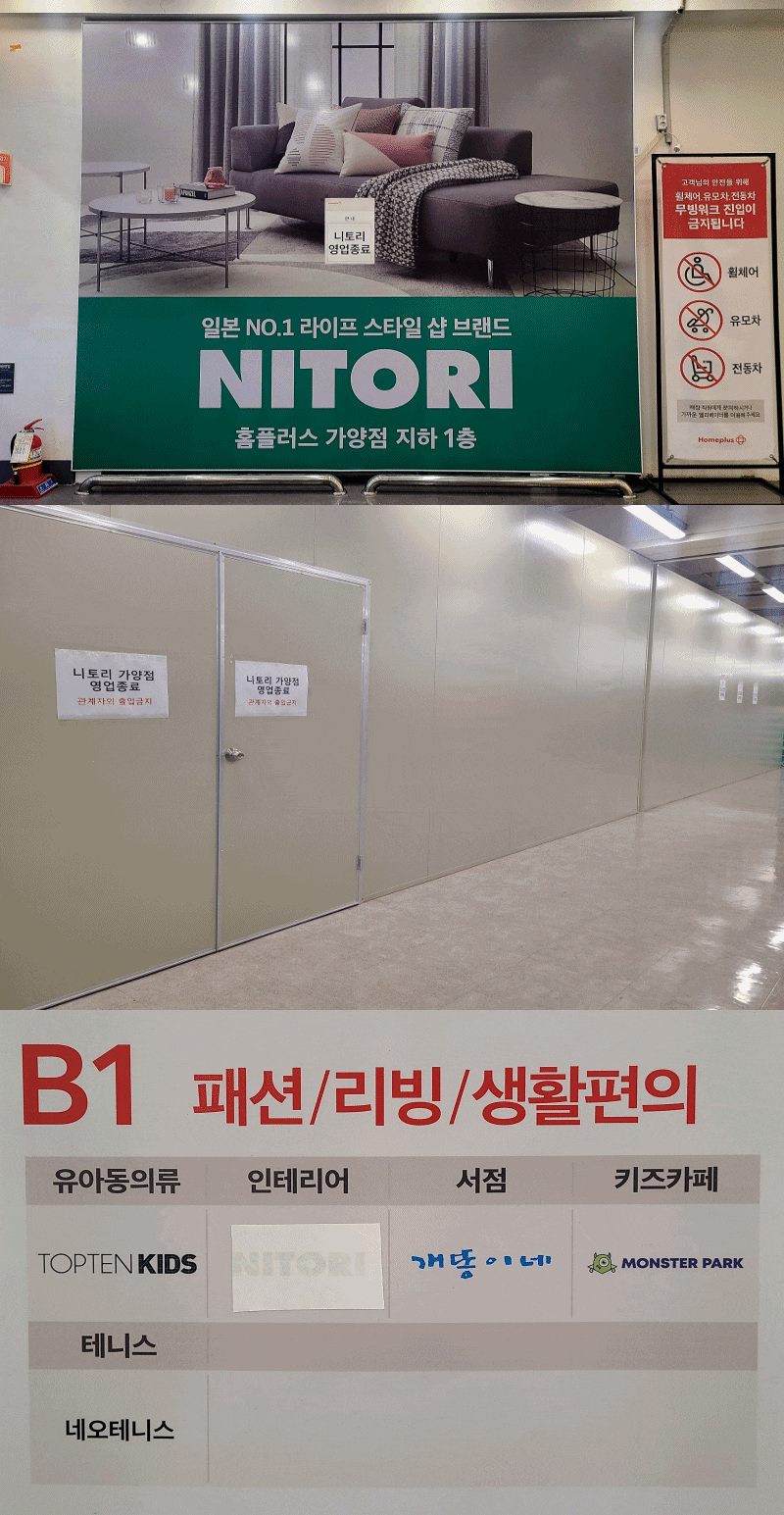
Nitori, Japan’s largest furniture and home furnishings retailer, has shut down its third store in South Korea, the company confirmed on June 13. The closure comes just two months after it shuttered its first store in the country, located at the Emart Hawolgok branch. Less than two years into its South Korean expansion, the company’s decision to close both its flagship location and another branch in rapid succession is being described by industry observers as highly unusual. Some speculate the company may be weighing a full withdrawal from the market.
Established in 1967 as a furniture specialty store, Nitori has evolved into a mid-range Japanese lifestyle brand offering a wide range of products, including daily necessities and household goods. In South Korea, the company sells more than 8,000 items, from compact and mid-sized furniture such as mattresses, sofas, and storage units to various interior and lifestyle products. Known for its SPA (Specialty store retailer of Private label Apparel) model—integrating product planning, manufacturing, logistics, and retail—Nitori has been dubbed “Japan’s IKEA” for its expansive offerings and competitive pricing.
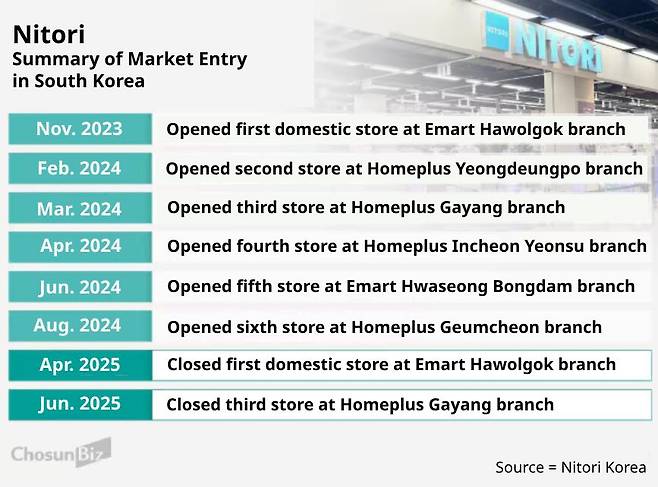
The company officially entered the South Korean market in November 2023 with the opening of its first brick-and-mortar location at Emart Hawolgok. By August 2024, Nitori had launched five additional stores in quick succession, signaling an aggressive expansion strategy. At the time, Takeda Masanori, chairman of Nitori Korea, announced the company’s goal of operating 2,000 overseas stores by 2032, naming Seoul as a strategic hub and outlining plans to open 200 locations across South Korea within a decade.
All six stores adopted a “shop-in-shop” model, operating within major retail chains such as Emart and Homeplus. Rather than establishing standalone warehouse-style stores akin to IKEA, Nitori focused on accessibility and convenience by situating its outlets in large hypermarkets across the Seoul metropolitan area. However, the company has not opened any new stores since August 2024.
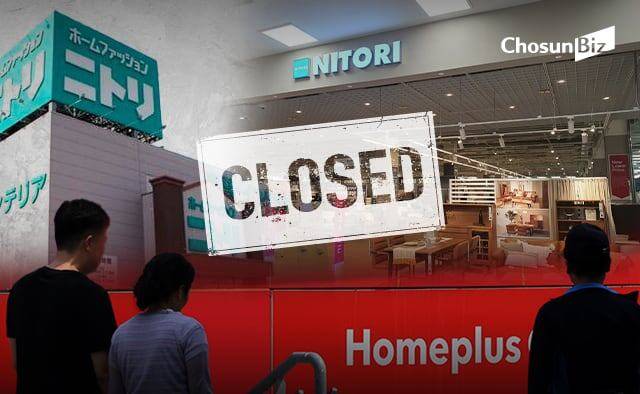
Nitori has not disclosed sales figures for its South Korean operations. A Nitori Korea spokesperson confirmed in a phone call with ChosunBiz that the stores at Emart Hawolgok and Homeplus Gayang had been closed but declined to comment on the reasons behind the decision.
Industry sources suggest that the wave of closures—occurring just three months after the flagship store shut its doors—may be linked to the financial crisis facing Homeplus, which has entered corporate rehabilitation. With four of Nitori’s six stores located inside Homeplus branches, the Japanese retailer may have been significantly affected by the hypermarket’s decline.
“The Homeplus rehabilitation filing is the culmination of prolonged operational struggles,” one industry official said. “If overall foot traffic was already low, even fewer customers would have visited Nitori’s in-store sections. It’s likely this triggered a chain reaction.”
Lee Jong-woo, a professor of business administration at Ajou University, pointed to shifting consumer behavior as another contributing factor. “Furniture and kitchenware are increasingly purchased online,” he said. “With declining visits to physical stores, Nitori’s retail sales likely suffered. Against this backdrop, Homeplus entering court receivership may have cast additional uncertainty over its prospects, prompting Nitori to preemptively recover part of its investment.”
A Homeplus representative, however, denied any direct connection between the company’s legal proceedings and the Nitori closures. “The decision to close Nitori stores had been previously agreed upon and is unrelated to our rehabilitation process,” the official said. “Nitori ended operations at the end of May as part of a strategic realignment.”
Some industry analysts believe that, beyond sluggish demand in South Korea’s furniture and home décor market, Nitori’s broader market strategy may have run into complications. In a worst-case scenario, they say, the company could ultimately decide to exit the South Korean market entirely.
Copyright © 조선일보. 무단전재 및 재배포 금지.
- 엘리자베스 여왕이 트랜스젠더?…논란된 英드라마
- 金총리, 홍콩 최대 경제단체 회장 만나 “한중관계 위해 노력해 달라”
- 로봇청소기 딱 이것만 보고 고르세요, 10만~100만원 모든 가격대 성능 총정리
- 오동운 공수처장, 피고인 신분으로 재판 출석... 현직 첫 사례
- ‘보라빛 고양’… BTS 첫 완전체 투어 앞두고 들썩
- 트럼프 “마크롱, 아내에게 학대” 조롱...프랑스 “수준 이하, 용납 못해” 격분
- 인천 아파트서 숨진 채 발견된 60대 여성… 국과수 “흉기 살해 추정”
- “국아, 나 동훈인데”… 조국 “먹방 말고 창당하라”
- 李대통령, 美 의원단에 “한국전쟁 감사 잊지않아… 미국 방위 부담 줄이기 위해 노력”
- 李, 국빈 방한한 마크롱과 만찬... BTS 사인 앨범과 공예품 선물