Celltrion biosimilars expand dominance in Japan’s oncology market
Latecomer Vegzelma reaches 29%, joins leading group of bevacizumab biosimilars
All Celltrion products in Japan show clear market traction, including Remsima (41%) and Yuflyma (12%)
[Lim Jeong-yeo, Edaily Reporter] Celltrion’s oncology biosimilars -- Herzuma (trastuzumab) for breast and gastric cancers and Vegzelma (bevacizumab) for metastatic colorectal and breast cancers -- are solidifying their presence in Japan, one of the largest pharmaceutical markets in Asia.
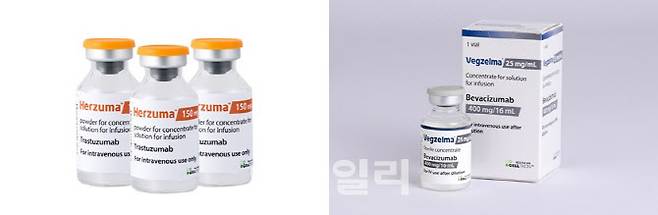
Vegzelma, despite being the most recent entrant among six bevacizumab-based therapies, has made notable strides. Launched in Japan in January 2023, it secured a 29% market share by April 2025. Its rapid ascent, fueled by Celltrion’s strong marketing execution and product competitiveness, has garnered local attention. The drug now trails the top-prescribed bevacizumab product by just two percentage points, positioning it to potentially claim the top spot in the near future.
Celltrion attributes its success in Japan to a combination of market-tailored strategies and favorable policy frameworks that support biosimilar uptake. The company has collaborated closely with its Japanese affiliate and local partners to execute customized sales efforts aligned with market dynamics.
One pivotal factor has been Japan’s Diagnosis Procedure Combination (DPC) system, a bundled payment scheme that promotes cost-effective prescribing. Under this system, hospitals can retain savings from prescribing lower-cost medicines, which include biosimilars, thus creating a financial incentive aligned with government goals and patient interests. The DPC system is widely viewed as a win-win policy for hospitals, patients, and the healthcare system.
Celltrion’s biosimilars for autoimmune diseases are also performing strongly in Japan. Remsima (infliximab) continues to lead the biosimilar category with a 41% market share as of April 2025. Yuflyma (adalimumab), meanwhile, has rapidly grown from 8% to 12% in just four months, further underscoring the solid uptake of Celltrion’s product lineup.
A Celltrion spokesperson commented, “Our four key therapies are achieving dominant prescription results across Japan, reflecting the effectiveness of our hospital-centered sales strategy tailored to the country’s retail distribution model. Building on this momentum, we plan to launch our ustekinumab biosimilar Stekima for autoimmune conditions in Japan later this year. We will leverage the experience and insights gained from our existing products to accelerate Stekima’s market penetration.”
임정요 (kaylalim@edaily.co.kr)
Copyright © 이데일리. 무단전재 및 재배포 금지.
- “이스라엘, 이란 혁명수비대 본부 공습…총사령관 사망”(상보)
- '기적의 생존' 에어인디아 탑승객 1명은 어떻게 살아남았나
- 이미숙, 6천만원 피싱 피해 고백…"비밀번호 다 유출"
- 李 자서전 읽었다는 이재용 회장…"고임금 일자리 창출 노력"
- "엄마 두고 딴 여자를"...아버지와 내연녀 폭행한 20대 딸의 최후
- "뚜껑 여니 참혹"…박수홍 친형 부부, 항소심 오늘 재개
- "아내가 울면서"...여탕·남탕 바꾸고 '낄낄', 20대女 알몸 노출
- 사상 초유 3개 특검 동시 가동…尹 부부·국민의힘 ‘정조준’
- 이스라엘, 이란 핵시설 선제 타격…美 “개입 없어” 강조(상보2보)
- ‘좀비 공제항목’에 10조 혈세 줄줄…“심층평가 실효성 높여야”