“Variety of Tailor made Housing Options for Seniors needed"[ESF2025]
the National Association of Paid Senior Citizen Homes
Japan’s elderly population at the highest ever
[Jiyu Kong, Edaily, Reporter] “In order for seniors to live true to themselves, it is essential to offer housing choices that suit various lifestyles and to establish a system where society as a whole supports them.”
Toshikatsu Nakazawa, Chairman of the National Association of Paid Senior Citizen Homes, stated in a written interview with Edaily, “With demographic changes, creating a safe and secure living environment for seniors, has become a critical issue.”
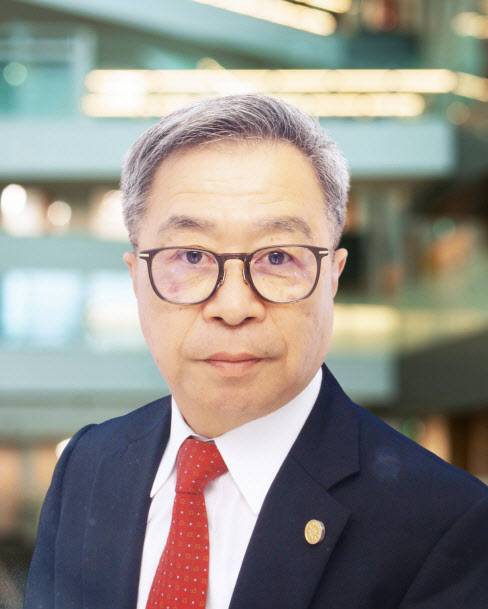
Japan, the First to Experience Super-Aging… Increase in Fee-Based Senior Homes
Japan became the world’s first super-aged society when the proportion of elderly people exceeded 21% in 2007. As of last year, there were about 36.24 million people aged 65 or older, accounting for 29.3% of the total population, the highest ever recorded. Having experienced super-aging first, Japan is recognized for its systematic establishment of residential and living facilities for seniors. Due to population aging, increased demand forcare, and workforce shortages, the number of fee-based senior homes in Japan continues to rise annually. As of October 1, 2023, there were 17,833 fee-based senior homes in Japan, a 2.9% increase from the previous year. Of these, the Association operates about 3,000 facilities. Chairman Nakazawa said, “The proportion of people aged 65 or older in Japan’s population increases every year. It is necessary to build a foundation where seniors can live with a sense of fulfillment and not in isolation.” He added, “Senior housing (in Japan) incorporates barrier-free design, life monitoring services, and links to medical and nursing care, all aimed at supporting independence and improving quality of life for seniors. These measures enable the elderly to continue living safely and with dignity in familiar communities.” In Japan, the definition of fee-based senior homes is legally stipulated under the Elderly Welfare Act. Depending on the services provided to residents, facilities are classified as ‘Nursing Care Type,’ ‘Residential Type,’ or ‘Health Type.’ Chairman Nakazawa explained, “With a systematic fee-based senior home system, users can choose facilities that meet their needs, and national or local government support and subsidies can be effectively applied.”
“Various Housing Types Should Be Offered According to Seniors’ Lifestyles”
He believes that the ideal housing type for seniors should not be one-size-fits-all approach, but should vary depending on health status, economic situation, and the availability of family support. It is important that seniors are able to choose housing according to their lifestyle. Chairman Nakazawa said, “For seniors who wish to continue living at home, remodeling their homes to be barrier-free and utilizing local home care services when needed will allow them to live safely and comfortably in familiar surroundings. Another option is to live at home until care is needed and then move into a nursing-type home to receive appropriate support.” He emphasized that it is important for seniors not to become isolated from their communities, but to coexist with neighbors across generations. Chairman Nakazawa said, “It is necessary to create opportunities for everyday interaction, such as seniors in facilities participating in local events, inviting neighbors for natural exchanges, and jointly engaging in community activities to foster connections with younger generations.” Under this philosophy, the Association has held the “Silver Senryu” (a Japanese short-form poem) contest since 2001, encouraging seniors to express their humor in old age and promoting a culture of social interaction.
He advised that societies experiencing rapid aging, including Korea, need legal definitions and systematic frameworks to develop their housing systems. He said, “It is important to establish systems that allow seniors to choose housing that suits them, and to strengthen links with medical and nursing care so that they can live safely for long periods. Flexible housing options that connect with the community and accommodate diverse lifestyles should be provided.” He also said, “Government policies should balance public support and private sector creativity. In Korea, where aging is progressing rapidly, institutional improvements can help realize a welfare society that guarantees diversity and choice.”
About Chairman Nakazawa…
△Bachelor of Law, Chuo University, Japan, △Head of Large-Scale Construction & Comprehensive Development, Sumitomo Forestry, △Representative, Local Government Private Fund Development Project(PFI) Consortium, △Executive, Sumitomo Forestry, △Chairman, Chairman of the National Association of Paid Senior Citizen Homes(Present)
공지유 (noticed@edaily.co.kr)
Copyright © 이데일리. 무단전재 및 재배포 금지.
- K뮤지컬의 쾌거…'어쩌면 해피엔딩' 美토니상서 6관왕 달성(종합)
- "당장 연봉부터 깎일텐데..." 주4.5일제 물어보니
- 이경규 측 "약물 복용 운전? 공황장애약 때문…경찰 확인 중"[공식]
- 의회서 ‘알몸 사진’ 공개한 女의원 “역겹다, 그럼에도…”
- 李대통령 파기환송 재판 중지…법원 "헌법 84조 따른 조치"
- 삼성전자, 두 달만에 6만전자 탈환…엔비디아·신정부 훈풍(종합)
- "온수 안 나와"...윤석열 정부 측이 밝힌 관저 내 '의문의 수조'
- '전쟁터' 같은 LA…한인들 "표적될까 두렵다" 초긴장
- 대통령실, 경호처 최고위 간부급 전원 대기발령…“직무대행 체제”(상보)
- [단독]李정부 첫 노동 입법은 ‘고용보험 확대’