Tim Hortons shuts down first directly operated store in Korea
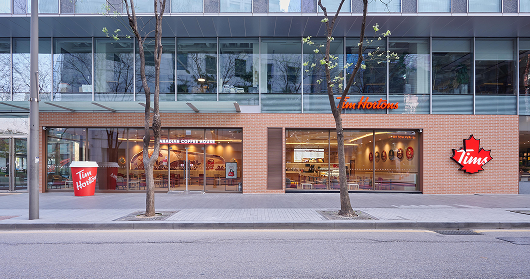
Canadian coffee brand Tim Hortons, operated in Korea by BKR, closed its Cheongna location in Incheon on Sunday, according to industry sources on Friday.
This marks the first closure of a directly operated store since the brand entered Korea, coming just over a year after the location opened in April 2024.
Industry experts attribute the decision to multiple factors, including declining profitability and the fierce competition within the saturated Korean coffee market.
“We are currently looking for a more suitable location within the Incheon area to better deliver the brand’s original Canadian identity and emotional appeal to a broader range of consumers,” a Tim Hortons official said.
Likewise, global coffee brands that have seen success overseas are finding it difficult to gain traction in Korea. Several coffee chains with strong brand loyalty in North America and Japan have recently scaled back or withdrawn their operations in the Korean market.
US coffee brand Blue Bottle Coffee is also facing challenges in maintaining profitability.
Since launching its first Korean store in Seoul’s trendy Seongsu-dong neighborhood in 2019, Blue Bottle has rapidly expanded into key commercial districts. However, the brand now struggles under high fixed costs and intense market saturation.
Blue Bottle Coffee Korea’s revenue rose to 31.1 billion won ($22.9 million) in 2024, a 17 percent increase from 26.4 billion won in 2023. However, operating profit plummeted by 89 percent, reaching just 200 million won. The company also posted a net loss of 1.1 billion won, marking its first annual loss since entering the Korean market.
Industry insiders point to the rapid pace of trend shifts and the unique dynamics of the Korean retail environment as key challenges for foreign coffee brands in Korea.
“Just a decade ago, Korea was often seen as a fallback market for global brands that had lost momentum elsewhere,” an industry official from the food and beverage sector said. “But now, it’s the opposite — if a brand can break through and gain a foothold with Korea’s trend-sensitive consumers, it’s seen as a stepping stone for faster, easier success in other Asian markets.”
Copyright © 코리아헤럴드. 무단전재 및 재배포 금지.