“A bias-free discourse on the Elderly must be fostered”[ESF2025]
Planner of the ‘I thought It Was Love, but it was an Arrhythmia’
‘Aging’, Receiving strong sympathy from all generations
Japan’s system makes senior employment easy
Well-aging: Accepting aging as yourself
[Mi-kyung Kim, Edaily Reporter] Average life expectancy: just over 84 years. Population: 123.76 million. Seniors aged 65 and older: 36.25 million. Japan became the world’s first “super-aged society” in 2005, with more than 20% of its population elderly, about 20 years ahead of Korea. Japan has thus pioneered a variety of approaches to aging, earning its reputation as a “living anthropology textbook.”
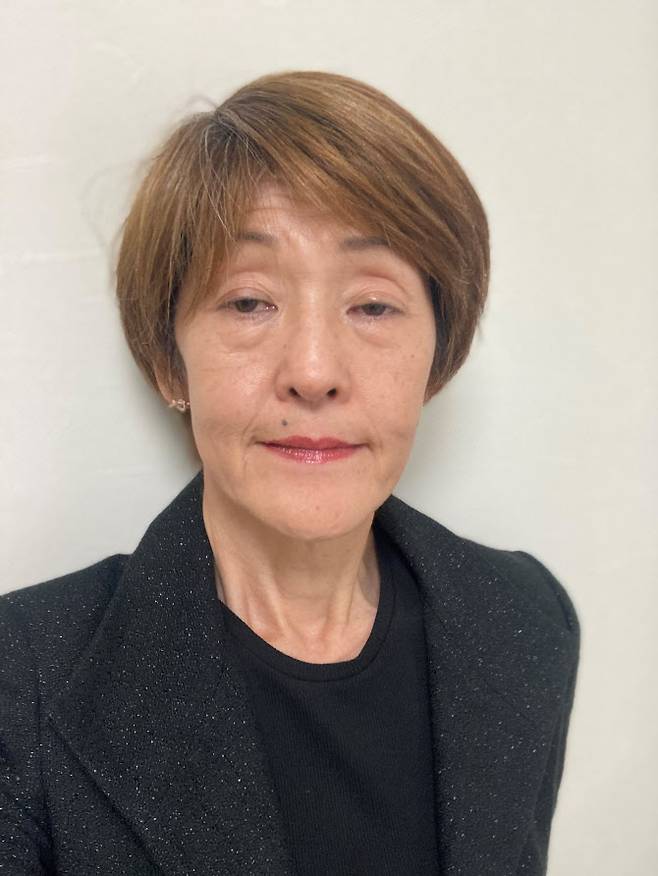
The popularity of ‘I Thought It Was Love, But It Was Arrhythmia,’ a collection of Japan’s witty “Silver Senryu” poems about the realities of old age, is seen in this context. Asai Shiyo, Editor-in-Chief of Popura Publishing Co. who planned the book, recently told Edaily that the book’s cross-generational and cross-border appeal lies in its “empathy” and “wit.” While old age is often seen as lonely or painful, reading these clever poems helps readers accept aging as a natural stage of life, not something to fear.
’I Thought It Was Love, But It Was Arrhythmia‘ is a collection of Senryu (short, satirical poems) that candidly reflect the lives of Japanese seniors. Since its Korean release in January last year, the book has sold more than 50,000 copies. The 88 poems were selected from annual “Silver Senryu” contests run by the Japan National Association of Paid Elderly Homes since 2001.
Senryu are short, 17-syllable poems (5-7-5), known for their humor and satire. The poems cover a wide range of topics, from everyday issues like forgetfulness and hospital visits to social themes such as pensions and caregiving. The unvarnished reality of elderly life brings laughter and comfort, which is why the series has sold over one million copies in Japan alone.
Asai explained, “By turning the often negative subject of ‘aging’ into laughter, the book resonated deeply with readers, offering reassurance that many share the same worries.” While caregiving and frailty can be serious issues, senryu offers warmth and the realization that “I’m not alone,” inspiring readers to “try again tomorrow.”
For younger readers, the poems serve as a window into another generation’s experience. The brevity of the poems makes them accessible, and she notes, “The philosophy and acceptance in seniors’ everyday lives show that aging isn’t all bad. I’m also surprised and pleased that readers in other countries enjoy Silver Senryu.”
Japan’s Super-Aged Society: Variety of Options
The book also depicts Japan’s super-aged society. Poems like “I realize I’m old / when I see idols / celebrating their 60th birthday” and “I want to try telework(remote work), but I’m unemployed” reflect social changes. Japan has even changed terminology, renaming “dementia” as “cognitive impairment” in 2004, to reduce stigma.
According to Asai, government efforts have raised the employment rate among Japanese seniors to 25.2% in 2023, up from 19.2% a decade earlier. “Older adults are expected to play a role in the workforce. The retirement age has been extended to 65, and many find health and purpose in working,” she said.
To keep up with the pace of aging, Asai believes it’s vital to create opportunities for seniors to be active and to support job placement through local governments and companies, beyond just policy changes. “Our publishing house is also planning a variety of books for senior readers who want to learn new things or pursue hobbies in depth,” she added.
What makes for a happy old age? “As we age, we may not perform as well as before, get overtaken by younger generations, and notice more wrinkles. But, like in senryu, accepting those changes with humor and encouraging those around us is the best way to age authentically,” Asai advised.
About Asai Shiyo:
△Editor, Takara-jima Extra Edition Editorial Department, Takara-jima Co., Ltd. (1993~1996), △Editor, Heibonsha Co., Ltd. (1996~2004), △Nonfiction Editorial Manager, Poplar Publishing (2005~present)
김미경 (midory@edaily.co.kr)
Copyright © 이데일리. 무단전재 및 재배포 금지.
- 트럼프-시진핑 90분 통화…“희토류 문제 해결, 中방문 초청 수락”(종합)
- “김건희 믿고 ‘안하무인’”…대통령실 ‘MZ 직원’ 논란, 정체는
- 윤석열, 내란 위자료 청구 시민들에 “소송비 미리 달라”
- 집에서 사라진 '한국인 남편', 3개월 만에 주검으로 [그해 오늘]
- 이재명 정부 출범에 ‘박스피’ 혈 뚫렸다…‘3000피’ 질주할까
- "이건 기적이야" '26조 잭팟' 현실로…원전株 '불기둥'
- "'현충일 폭주족' 꼼짝마"…끝까지 추적해 잡는다
- "채 해병 특검법 통과"…해병 예비역, 경례로 답했다
- “日버블붕괴 직전과 닮았다”…한국 경제 경고 나왔다
- '김민석 끝내기' 두산, KIA 꺾고 4연패 탈출...조성환 대행 첫 승