Hyundai pushes mobility leadership with FISITA presidency, R&D drive
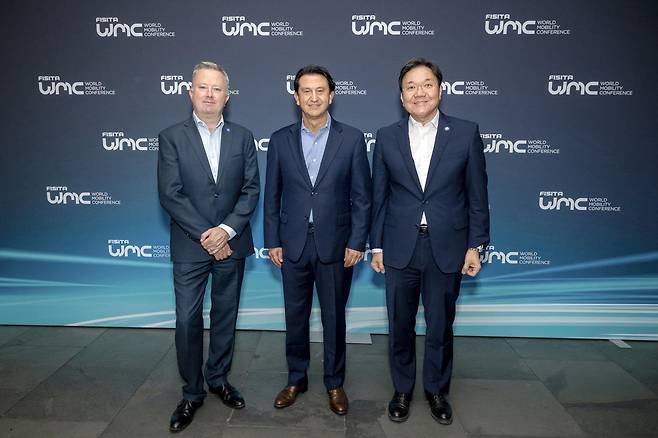
Kim Chang-hwan, head of electrification energy solutions at Hyundai Motor Group, has begun a two-year term as president of the Federation Internationale des Societes d’Ingenieurs des Techniques de l’Automobile (FISITA) this month, becoming the first Korean to lead the global automotive engineering organization.
According to Hyundai Motor on Wednesday, Kim will oversee FISITA, the world’s largest automotive engineering society, comprising 36 countries and approximately 210,000 global auto technology researchers, through 2027.
Alongside Kim, Hyundai Motor Company President and CEO Jose Munoz attended this year’s World Mobility Conference hosted by FISITA, where Hyundai Motor served as the event’s “Prime Partner,” the major sponsor.
“Hyundai Motor Group is pushing the boundaries of mobility technology beyond traditional means of transportation to build a future where people can travel more safely and conveniently,” said Munoz during his keynote speech on Tuesday, the opening day of the three-day conference that runs until Thursday.
Sharing the company’s vision for future mobility, Munoz unveiled the latest technological advancements at Hyundai Motor Group Metaplant America, the group’s third vehicle manufacturing plant in the US. The facility, which began mass production in March, has an annual capacity of 300,000 units. Munoz highlighted the plant’s automated manufacturing systems, as well as its developments in autonomous driving, battery and fuel cell systems, and HTWO hydrogen charging stations across the US.
Following his keynote, Munoz strengthened networks with key executives in the global mobility industry. “As an engineer myself, it is deeply meaningful to share Hyundai’s journey in shaping future mobility with fellow engineers at the FISITA WMC,” he added.
On Wednesday, Hyundai Motor and Kia researchers presented mobility technologies co-developed with European partners. These include studies on virtual performance verification using advanced software tools to simulate real-world conditions and assess vehicles and components; research on the chassis reliability of software-defined vehicles based on prognostics and health management technology; and innovations in bushing, a small rubber or polyurethane component used in a car’s suspension system, aimed at optimizing electric vehicle performance.
Seventeen researchers from Hyundai Motor Group also presented papers on a range of topics, including automotive batteries, advanced vehicle body technologies, thermal management, autonomous driving and electrification design.
At the company’s exhibition booth, Hyundai showcased the all-new Nexo, its flagship hydrogen-powered SUV, along with the vehicle’s fuel cell system.
“As the mobility industry undergoes significant transformation, FISITA plays a pivotal role in shaping the future through global cooperation, innovation and inclusive leadership,” said Kim. “As president, I will strive to ensure that technological advancements contribute to enhancing human lives.”
Hyundai Motor Group has committed to investing a record 16.9 trillion won ($12.3 billion) this year, with 39 percent allocated to research and development. This marks the company’s highest-ever annual investment and a 37 percent increase from the previous year.
Copyright © 코리아헤럴드. 무단전재 및 재배포 금지.