Starlink to bring satellite network service to S. Korea
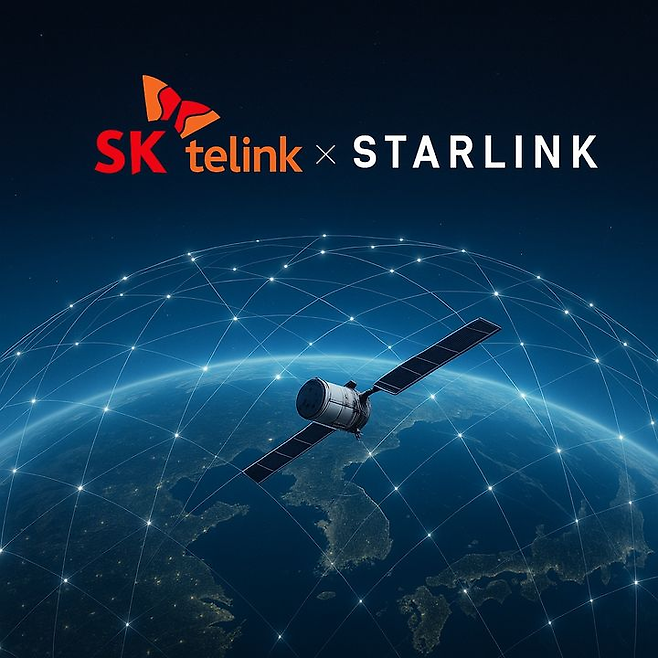
US Space firm SpaceX’s Starlink satellite internet service is set to launch in South Korea following approval from government authorities last week. The rollout will mark the beginning of low Earth orbit, or LEO, satellite networks in the country, offering high-speed connectivity in remote and unreachable areas.
Seoul's Ministry of Science and ICT has approved the California-based company’s cross-border supply agreement, along with similar deals involving Hanwha Systems and KT Sat, which are resellers of the UK-based Eutelsat-OneWeb, another low-orbit service provider.
In Korea, foreign companies are required to sign a supply agreement with domestic telecommunication operators to offer satellite services locally.
Starlink's local partner, SK Telink, said it plans to begin the service as soon as the final regulatory step is cleared — the conformity assessment of antennas it uses to receive satellite signals.
Unlike conventional mobile networks, where smartphones communicate directly with base stations on the ground, current LEO satellite communication services rely on antennas to receive signals from satellites.
The high-speed, low-latency internet service is expected to be particularly helpful for aircraft and maritime vessels, where internet access is limited.
“When low-orbit satellite telecommunication services launch in Korea, high-speed wifi networks will be available in airplanes and vessels," said ICT Minister Yoo Sang-im.
"For sailors on long voyages, the ability to stream video and make video calls will significantly improve life on board."
SK Telink said it will expand its product lineup to include maritime and aviation-specific packages, as well as packages for public institutions.
The company will also collaborate with local governments to build disaster-response communication networks in remote islands, mountainous regions and other areas where telecom infrastructure is difficult to establish, or where conventional networks are vulnerable during emergencies, the company said.
SpaceX launched its subsidiary Starlink Korea LLC here in 2023. Industry experts expect the service could begin as early as next month.
The commercialization of LEO satellite communications is also expected to accelerate the country's transition into the next-generation 6G era, experts say.
The 6G network is expected to significantly increase the number of connected devices per person. The advancement of autonomous vehicles, urban air mobility and virtual reality will require ultra-low latency and ultra-high-speed communication networks.
Satellite connectivity is also expected to supplement terrestrial infrastructure, helping to meet the surging demand for data.
Copyright © 코리아헤럴드. 무단전재 및 재배포 금지.