Korea’s US exports dip 8% on auto tariffs
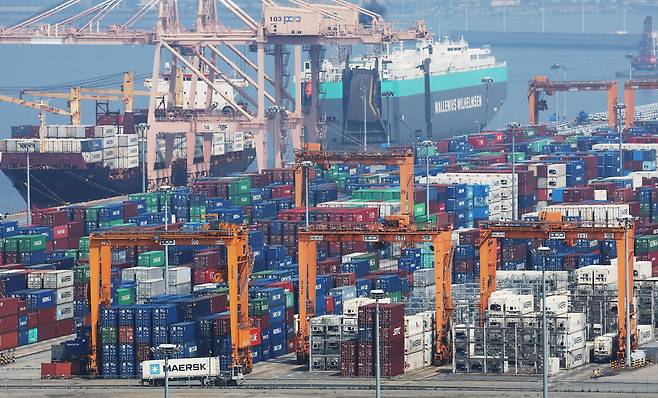
South Korea's exports to the US fell 8.1 percent on-year in May amid the Trump administration's sweeping tariffs, which also contributed to the country’s overall export decline, government data showed Sunday.
According to the Ministry of Trade, Industry and Energy, Korea's outbound shipments stood at $57.2 billion in May, marking the first on-year decline since January. Imports fell 5.3 percent to $50.3 billion, resulting in a trade surplus of $6.94 billion.
Of the country’s 15 major export items, five posted growth, including semiconductors, which recorded the highest monthly export value for May. However, automobiles — another key sector — experienced a decline, which the ministry attributed to the impact of the new US tariffs.
Buoyed by strong demand for high-value-added memory products such as high-bandwidth memory and DDR5 chips, semiconductor exports rose 21.2 percent on-year to $13.8 billion — the highest-ever export value for May.
Exports of smartphones rose 3.9 percent on-year to $1.3 billion, while computer exports increased 2.3 percent to $1.1 billion.
Automobile shipments, on the other hand, fell 4.4 percent to $6.2 billion. The ministry attributed the decline to the 25 percent tariffs Washington has imposed on imported cars and auto parts. Hyundai Motor Group’s operation of its local manufacturing plant in Georgia — a strategic move to minimize the impact of the tariffs — was also cited as a factor.
Despite increased shipments of mobile devices, petrochemicals, petroleum products and secondary batteries, total exports to the US dropped 8.1 percent on-year to $10 billion, weighed down by the slump in auto shipments.
Still, the ministry noted that rising electric vehicle exports to Europe and a surge in used car shipments helped keep total automobile exports above $6 billion — a positive sign.
“As outbound shipments to our two largest markets, the US and China, have declined, the US tariff policies appear to be impacting the global economy and our exports,” Industry Minister Ahn Duk-geun said.
Shipments to China also declined, down 8.4 percent on-year to $10.4 billion, due to reduced exports of semiconductors and petroleum products.
Ahn noted that the decline in global oil prices — to around $60 per barrel in May — also affected Korea’s petrochemical and petroleum product exports, which fell by 20 percent on-year.
“We will come up with mutually beneficial solutions to address the US tariff measures, aiming to minimize damage for Korea’s exporters and maximize national interest,” Ahn said.
He added that the government will move swiftly to implement the budget allocated through the supplementary spending plan, including 150 billion won ($108.4 million) for tariff-related trade insurance for small- and mid-sized firms, and 84.7 billion won for tariff response vouchers.
Copyright © 코리아헤럴드. 무단전재 및 재배포 금지.