N. Korean part of Kumgangsan likely to get UNESCO listing
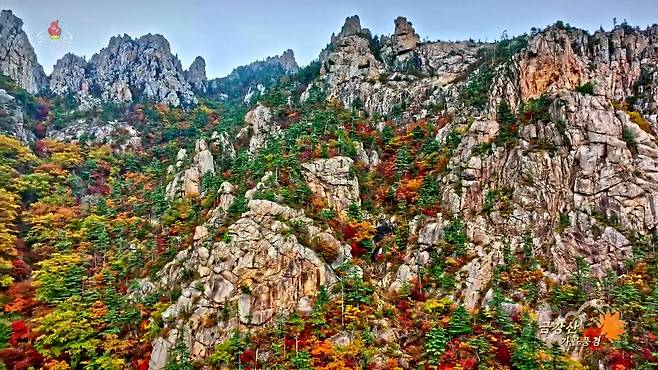
The northern part of Kumgangsan, a vast mountain range along Korea’s eastern coast spanning North and South Korea, is likely to be designated a UNESCO World Heritage Site.
The UN body’s advisers — the International Council on Monuments and Sites (ICOMOS) and International Union for Conservation of Nature (IUCN) — have asked the World Heritage Committee to greenlight their recommendation at an annual meeting to be held in Paris in July.
In the latest update Tuesday, UNESCO disclosed an evaluation by the two bodies, saying “Mount Kumgang is a sacred mountain and bears an exceptional testimony to Korean mountain Buddhism traditions from the 5th century CE to the present.”
North Korea sought Kumgangsan’s listing as a UNESCO World Heritage Site four years ago.
Kumgangsan, which UNESCO officially refers to as “Mt. Kumgang — Diamond Mountain from the Sea,” represents “an exceptionally rich diversity of distinctive near-white granite geomorphology, dramatically set within pristine biodiversity,” according to the agency.
UNESCO said the mountain, renowned for its striking beauty, will be a “cultural landscape” or “mixed site,” which is one of the three labels given to World Heritage Sites, with the other two being cultural and natural sites. North Korea had initially sought to have the mountain named both a cultural and natural site.
A cultural landscape, UNESCO said, is a place “where the interaction between humans and nature has, over time, shaped a unique and distinctive landscape, carrying significant cultural values.” The world body has been designating cultural landscapes since 1992.
While Kumgangsan’s highest peak sits in North Korea, the mountain range stretches south to Gangwon Province in South Korea, raising questions about missed joint listing.
In 2018, “ssireum,” or traditional wrestling, was recognized as UNESCO Intangible Cultural Heritage of Humanity, the first-ever joint designation prompted by the last-minute agreement by the two Koreas to combine their bids.
“The political climate was very different back then,” said a South Korean official familiar with the matter.
“There was a hint of inter-Korean detente lasting, which led to joint bids to UNESCO the same year,” the official added, referring to the 2018 inter-Korean talks that had seemingly eased strained ties.
Another South Korean official cited lack of enthusiasm from Gangwon Province, which should have proposed pursuing a joint bid if it was interested. “Municipalities should express their interest to the government first,” the official noted.
Discussing any kind of joint listing after the Paris meeting in July would be impractical, a third official said, referring to the 21-member World Heritage Committee gathering from July 6-16.
South Korea is also likely to see a new entry approved there.
Prehistoric carvings located at the Bangu Stream in Ulju, Ulsan, have been recommended by ICOMOS for UNESCO status, a preliminary decision unlikely to see major opposition, according to officials at the Korea Heritage Service.
The Petroglyphs along the Bangucheon Stream “manifest the artistry of the people that had lived in the Korean Peninsula,” a work of creative art that focused on rare topics such as whale hunting, the KHS quoted ICOMOS as saying in its decision.
The rock carvings demonstrate the “cultural advancement by the people from southeastern coastlines of the Korean Peninsula,” ICOMOS said in its assessment.
Currently, there are 16 World Heritage Sites in South Korea and two in North Korea.
Copyright © 코리아헤럴드. 무단전재 및 재배포 금지.