Spotlight wanes: Viewership for presidential debates drops sharply
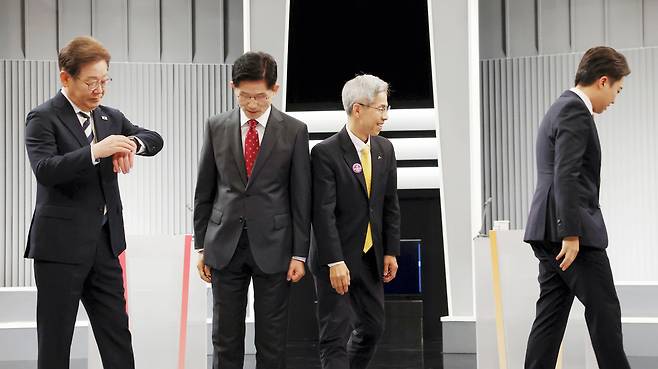
The early presidential election is now less than a week away, with the promise of reshaping the course of domestic politics in the aftermath of the martial law crisis that erupted in December. But the televised debates between the candidates have seen sluggish viewership, as policy proposals and fiery exchanges of words fail to capture the kind of public attention they used to.
Recent data suggests fewer South Koreans sitting through the televised four-way presidential candidate debates that aired live for two hours. Aggregated viewership shares of all TV networks for the two previous live debates failed to exceed 20 percent, according to estimates from Nielsen Korea, an outlier across the decades of South Korea's democratic history.
In the first debate for the June presidential election held on May 18 — simulcast by six South Korean TV networks, including the three major terrestrial broadcasters KBS, MBC and SBS — the viewership rating came to a combined 19.6 percent. The figure was roughly half of that recorded for the first televised debate in 2022 (39 percent) despite it only being aired by KBS, MBC and SBS, according to Nielsen Korea.
Viewership ratings for the second debate on Friday slipped further. The aggregated viewership ratings for Friday's debate — broadcast via seven networks including the three terrestrials — reached 18.4 percent, slightly lower than the second 2022 presidential debate's total of 21.37 percent on Feb. 11. That day, KBS, MBC and SBS chose to broadcast a short-track speedskating competition for the 2022 Winter Olympics in Beijing instead of the presidential debate.
Both live debates this month involved candidates meeting a certain set of criteria suggested by the election authorities: Rep. Lee Jae-myung of the Democratic Party of Korea, Kim Moon-soo of the People Power Party, Rep. Lee Jun-seok of the New Reform Party and Kwon Young-gook of the Democratic Labor Party.
Before this year, presidential debates over the past decade have mostly surpassed 30 percent in TV viewership.
Of all five televised debates in 2022 between four candidates — including then-conservative candidate and now former President Yoon Suk Yeol who was ousted in April, and Lee Jae-myung of the Democratic Party — four had combined viewership shares of over 33 percent, with the exception due to the Winter Games.
The same was true for the 2017 election, which followed former President Park Geun-hye's removal due to a broad corruption scandal. Among all four live televised debates of five eligible candidates, three recorded viewership ratings of 30 percent or higher.
For this year's presidential election, only three televised debates — mandatory ones hosted by the election authorities — were scheduled.
Back in 1997, a whopping 55.7 percent viewership rating was recorded before Kim Dae-jung was elected president.
Now, voters' interest in televised debates appears to be waning, one expert noted. For this year's debate specifically, this phenomenon is attributable to the political crises that followed former President Yoon's self-coup attempt in December, which only deepened the already stark ideological polarization.
"If there are people who already support a specific candidate, they would find it unnecessary to watch the debate," Eom Ki-hong, professor of political science at Kyungpook National University, told The Korea Herald, adding that supporters "would have already made up their minds" before watching a debate.
Eom also pointed out the toll the martial law crisis has taken on the country.
"Other than martial law-related topics, there are not many issues that can be raised at (this year's) debates," he said.
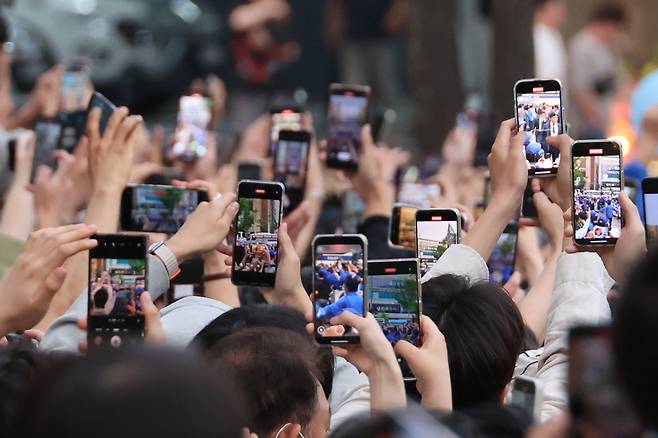
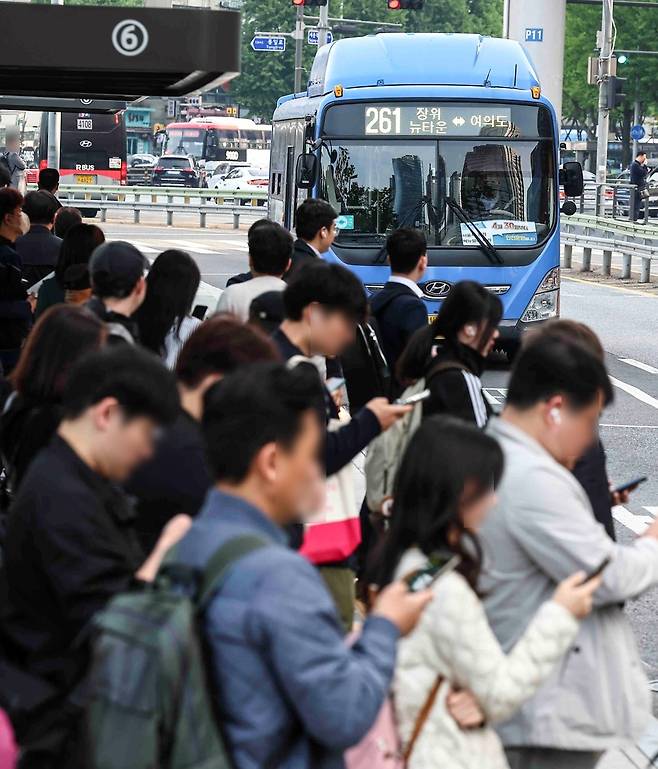
Some other observers point to fundamental changes in the way people consume media, saying low viewership might not be linked to people's indifference to politics.
Rhee June-woong, a professor of media and communication at Seoul National University, said the way viewership ratings are estimated in South Korea does not reflect the way media consumption patterns have shifted with the advent of the digital era.
"The long-term trend is that fewer people are watching TV debates live. Even so, (some of them) would still consume it through short-form video clips or viral internet memes," Rhee said.
"Anyway, the standard viewership ratings for TV are clearly declining. Why? Because fewer people are watching TV in real time."
Hwang Yong-suk, a professor of media and communication at Konkuk University, echoed Rhee, saying, "Looking at the way content in TV debates spreads to people, I can assume that a growing number of eligible voters would have received it via online channels such as YouTube."
"Measuring the influence of TV debates based on real-time TV viewership ratings now has its limits," Hwang added.
Copyright © 코리아헤럴드. 무단전재 및 재배포 금지.