Exclusive: South Korean AI spots North Korean warship capsize in near real time
이 글자크기로 변경됩니다.
(예시) 가장 빠른 뉴스가 있고 다양한 정보, 쌍방향 소통이 숨쉬는 다음뉴스를 만나보세요. 다음뉴스는 국내외 주요이슈와 실시간 속보, 문화생활 및 다양한 분야의 뉴스를 입체적으로 전달하고 있습니다.
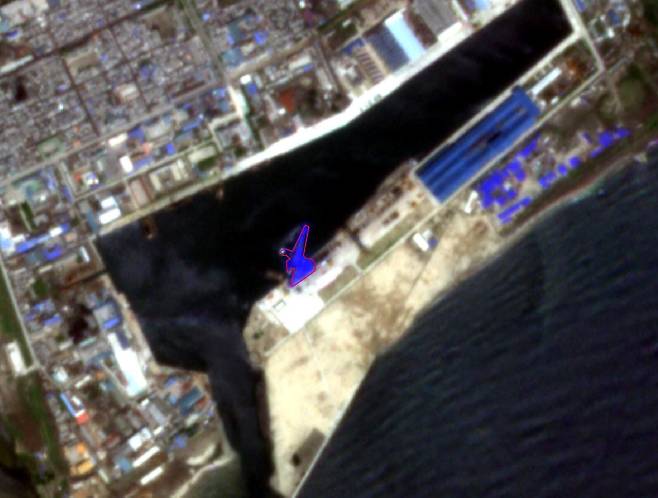
A South Korean aerospace startup used artificial intelligence to detect the apparent capsizing of a North Korean warship within hours of the incident — a striking example of how satellite imagery and automated analysis are accelerating real-time insight into the secretive regime.
TelePIX, a Seoul-based satellite and data analytics firm, released an automated report on May 22 analyzing imagery captured before and after the apparent capsizing of a North Korean warship at a shipyard in Chongjin, a northeastern port city. The report, generated using the company’s proprietary AI system “SatChat,” identified changes near the dock where a newly built warship that appears to have capsized during a launch ceremony the previous day.
“The satellite image taken before the incident showed no anomalies,” TelePIX told ChosunBiz on May 26. “But in the post-incident image, a 105-meter-long and 15-meter-wide object was detected protruding from the dock into the sea — suggesting the vessel had capsized.”
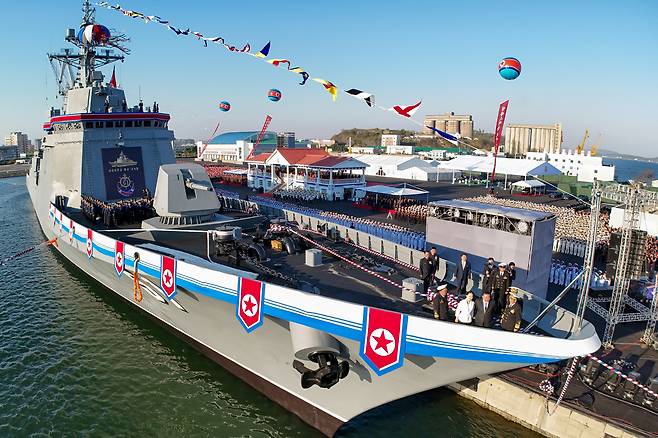
The incident occurred May 21 at the Chongjin Shipyard, when a newly constructed 5,000-ton destroyer reportedly toppled during its launch. What made the mishap particularly notable was the presence of North Korean leader Kim Jong-un, who was said to be attending the ceremony in person. North Korea’s state media confirmed the incident the following day — an unusual move for a regime that rarely acknowledges military mishaps.
South Korea’s Unification Ministry released satellite imagery taken on May 15 showing the warship intact and docked ahead of launch. The U.K.-based Open Source Center also published satellite photos taken by Airbus after the incident. Some analysts speculate that the North may have rushed to announce the accident before foreign media could reveal it through satellite data.
TelePIX, which builds high-resolution cameras for satellites and provides image analysis services, was among the first private firms to independently confirm the mishap. The company’s SatChat platform — powered by a large language model — autonomously compared satellite images taken on May 20 and May 22 by the SuperDove satellite constellation operated by the U.S. firm Planet Labs.
According to the AI-generated report, the northern dock area at Chongjin Shipyard appeared normal in the May 20 image. But by May 22, SatChat detected a large structure overlapping the dock wall by 20 to 30 meters, with an exposed surface area of roughly 1,600 square meters.
The full vessel, including parts visible below the water surface via shadow analysis, was estimated to be about 130 meters long. The ship appeared to be tilted at an angle of 60 to 70 degrees — consistent with South Korean government reports that said the bow had run aground while the stern remained submerged.
The analysis also identified the presence of several rectangular patches in blue and navy tones on the vessel, which appeared to be as tarps or camouflage sheeting used to conceal the warship from view. Satellite imagery further revealed signs of a recovery operation: a large orange structure — likely a crane — appeared near the central pier, and three floating barges were positioned close to the wreck.
Oil slicks roughly 200 meters in length were also detected between the dock and the work vessels. Two white rectangular modules, believed to be temporary command centers or generators, were newly installed on the western pier.
The AI suggested that once the crane is repositioned along a north-south axis, more intensive salvage operations such as raising or cutting the vessel could begin. The size and positioning of the tarps may also provide clues about damage to the ship and the pace of repairs, according to the report.
“The SatChat system allowed us to independently confirm a chain of events — from the failed launch of the 5,000-ton destroyer, to its partial sinking, and the subsequent emergency recovery effort,” a TelePIX spokesperson said. “So far, we have not observed any secondary damage affecting port infrastructure or broader logistics operations.”
Copyright © 조선일보. 무단전재 및 재배포 금지.
- 美대법 판결 변수 생겼지만... “대미투자특별법 내달 9일까지 처리”
- 태진아 “전한길 콘서트 출연 사실 아냐… 법적 대응 준비 중”
- 강풍 타고 400m 번진 고성 산불…소방 “큰 불 잡아”
- 강선우 체포동의안 24일 처리...與 “8일간 본회의” 野 “입법 폭주”
- 김병기, 26·27일 경찰 소환 조사...불법 선거자금 등 13개 의혹
- [단독] 중수청 인력 ‘수사관’으로 일원화…퇴직 공직자 재직 중 범죄도 수사
- “독재자 하메네이에 죽음을” 이란 대학생들 시위 재점화
- “여러분이 믿어주면 더 하겠다” 15주년 에이핑크의 눈물
- “러시아 침공 규탄” “이란 독재타도”...주말 맞아 외국인 집회 잇달아 열려
- 與 “법왜곡죄 등 원안대로 처리…당정청 조율했다”