US troop cuts in Korea back on the table as Pentagon weighs Indo-Pacific shift
이 글자크기로 변경됩니다.
(예시) 가장 빠른 뉴스가 있고 다양한 정보, 쌍방향 소통이 숨쉬는 다음뉴스를 만나보세요. 다음뉴스는 국내외 주요이슈와 실시간 속보, 문화생활 및 다양한 분야의 뉴스를 입체적으로 전달하고 있습니다.
The Trump administration is weighing a plan to pull thousands of U.S. troops out of South Korea and redeploy them elsewhere in the Indo-Pacific, including Guam, according to a Wall Street Journal report citing multiple defense officials. The proposal, still in the early stages of internal discussion, would affect roughly 4,500 of the 28,500 American troops currently stationed on the peninsula.
The move is being considered as part of an informal North Korea policy review and has not yet reached President Donald Trump’s desk, officials said. The White House National Security Council told WSJ it remains committed to “the complete denuclearization of North Korea.” When asked by The Chosun Ilbo, a Pentagon spokesperson said there was “nothing to announce today.”
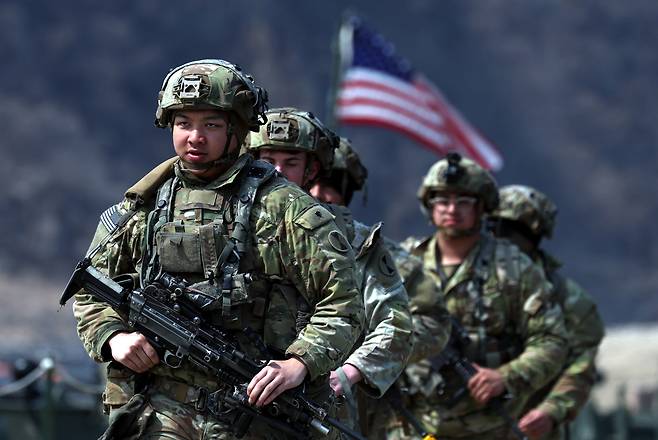
Even a partial U.S. drawdown would send shockwaves through the Indo-Pacific, where countries like Japan, the Philippines, and South Korea rely on American security guarantees amid growing tensions with China and North Korea. The WSJ noted that a decision isn’t expected until the administration clarifies its stance on continued military support for Ukraine.
While the National Defense Authorization Act (NDAA) calls for maintaining the current 28,500-troop presence in South Korea, the language is nonbinding—giving Trump wide latitude to act unilaterally. On the 2024 campaign trail, Trump repeatedly described South Korea as a “wealthy country” and questioned why the U.S. should continue footing the bill for its defense. “We want South Korea to treat us properly,” he said at the time, strongly suggesting that a failure to significantly boost defense cost-sharing could trigger troop cuts.
Inside the Pentagon, the proposal is being framed not as a retreat, but as part of a broader realignment to counter China—particularly in the event of a conflict over Taiwan. Defense Secretary Pete Hegseth has reportedly drafted interim guidance prioritizing homeland defense and Taiwan deterrence, while encouraging regional allies to take more responsibility for local threats, including North Korea.
That shift aligns with the thinking of Pentagon policy chief Elbridge Colby, the Under Secretary of Defense for Policy overseeing the forthcoming National Defense Strategy. Colby has long argued that Seoul should shoulder more of the conventional defense burden against the North. While he opposes a full U.S. withdrawal, he supports repositioning forces to better counter China, with South Korea leading efforts to deter Pyongyang’s artillery and missile threats.
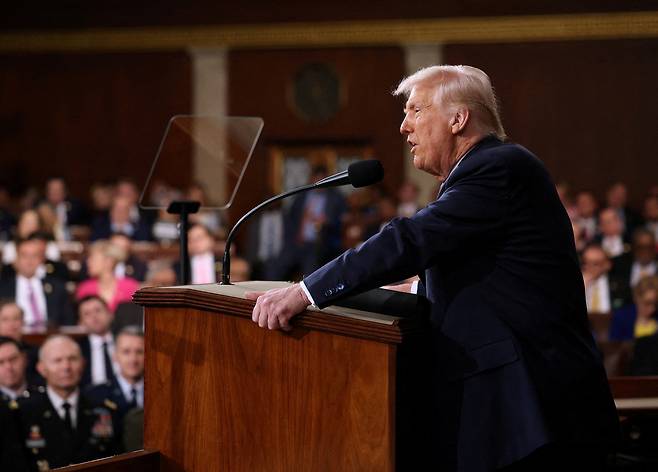
During his first term, Trump floated the idea of cutting troop levels in Korea but was ultimately persuaded otherwise by aides. He also used the threat of reduced military commitments to press Seoul for steep increases in host-nation support payments. The latest report comes just weeks before South Korea’s new administration takes office, setting the stage for a familiar dynamic: Washington linking defense cost-sharing to broader trade pressure.
Last month, Trump mentioned in a call with then-Acting President Han Duck-soo that he had discussed “payments for the massive military protection we provide South Korea.” Sources in Seoul now expect the incoming administration will face U.S. demands on multiple fronts—tariffs, trade, and now potentially troop levels.
Senior commanders in the region have warned against any hasty reduction. Gen. Xavier Brunson, commander of U.S. Forces Korea, told the Senate Armed Services Committee in April that a drawdown “would be problematic,” while Indo-Pacific Command head Adm. Samuel Paparo warned it could embolden Pyongyang.
Still, the WSJ report noted that relocating troops to Guam—closer to potential flashpoints and harder for China to strike—might help address some Pentagon concerns. Guam has increasingly become central to U.S. force posture in the region.
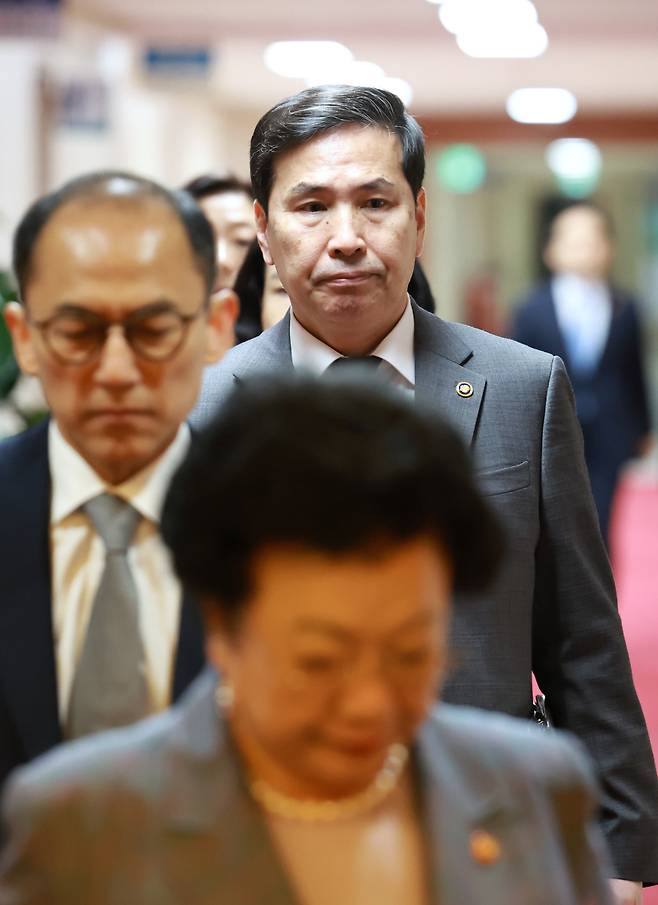
With tensions high and diplomacy between Washington and Pyongyang long stalled, analysts say Trump could again use troop levels as leverage to draw Kim Jong-un back to the negotiating table. During his first term, Trump scaled back joint military drills with South Korea after summits with Kim, citing North Korea’s complaints.
For now, South Korea’s Ministry of National Defense is stressing continuity. “There have been no discussions on troop withdrawals,” it said in a statement. “U.S. forces in Korea have served as a core element of the alliance and a key deterrent against North Korean aggression. We will continue close cooperation with the U.S. to ensure that role continues.”
Copyright © 조선일보. 무단전재 및 재배포 금지.
- 곰피,넓패, 모자반...술상에 ‘부산 봄 바다’가 들어 앉았다
- 구효서의 ‘화양연화’를 들고 갈만한 서울 ‘매화명소 5′
- 낭떠러지 위 유리 다리… ‘절벽 위 공포의 테마파크’
- 국힘, 사법 3법 반대 피켓 시위… 정청래는 외면
- [바로잡습니다] 2월 24일 자 A5면 ‘韓·남미 FTA 공감대… 브라질 닭과 한국 맥주로 치맥’ 기사에
- [알려왔습니다] 본지 1월 15일자 A20면·조선닷컴 사회 ‘오른손이 이끄는 선율… 완벽하지 않아도
- 與 사법폭주에 반발, 법원행정처장 사의
- 정부, 구글에 ‘고정밀 지도’ 반출 허용
- 李, 비거주 1주택 정조준… 분당 아파트 내놨다
- 스마트폰에 자꾸만 손이… 70분 책 펴놓고 28분 읽어