Summer to be hotter, wetter than last year
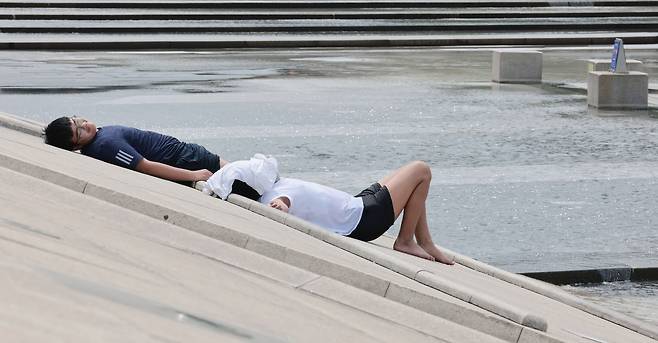
Following a spring of extremes — from snow and hail to temperatures reaching about 30 degrees Celsius — summer is expected to be hotter and rainier than usual.
According to the Korea Meteorological Administration’s 3-month outlook, average nationwide temperatures will be higher than in previous years from May to July.
The forecast predicts a 50 percent chance that May and July temperatures will be higher than in previous years, with a 40 percent prediction for June.
The KMA cited “elevated sea surface temperatures” as the reason for the high temperatures.
As May transitions into June, unusually high sea surface temperatures in the Indian Ocean are expected to generate an anticyclone near the Korean Peninsula, resulting in a high-pressure system that will drive temperatures upward.
In July, as sea surface temperatures in the Indian Ocean continue to increase, the high-pressure system above Korea will strengthen, increasing the likelihood of higher temperatures.
“May is still considered spring, but as the days pass, it is possible for the month to see more summer-like temperatures,” said KMA official Lee Ji-hye. “From June until August, summer will be just as hot or even hotter than summer last year.”
The KMA also anticipates heavier rainfall during the summer monsoon season, which began around the end of June and ended around the end of July in 2024.
“Since nationwide temperatures continue to rise overall, hot air and moisture will continuously linger in the air, which increases the chances of heavy rainfall,” Lee continued.
Like summer last year, which featured prolonged tropical nights, record-breaking heat waves and heavy rainfall, the possibility of Korea seeing a combination of extreme summer weather events at the same time is quite high, according to the KMA’s estimations.
“Though weather is always subject to change, it is evident that we witness unexpected climate changes and weather events every year,” said professor Son Seok-woo from Seoul National University’s School of Earth and Environmental Sciences during a weather seminar hosted for the press by the KMA on May 7.
“Even if something completely unexpected happens this year in terms of climate-related disasters, it will not be surprising.”
Copyright © 코리아헤럴드. 무단전재 및 재배포 금지.