AI-generated images depicting prostitution circulate online
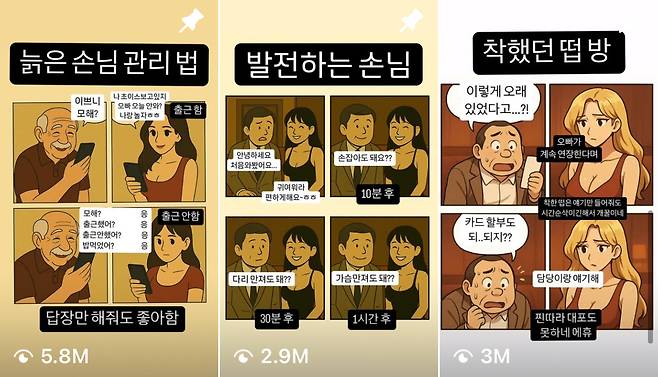
Amid a surge in generative AI use, South Korea has seen a rise in Instagram accounts — allegedly run by sex workers — using ChatGPT-generated images to share stories related to illegal prostitution, prompting criticism toward Meta for failing to take appropriate action despite the accounts’ potential legal violations.
On Instagram, numerous accounts can be found sharing AI-generated images and comics depicting the working environments of sex workers in Korea, where prostitution is prohibited by law.
With account bios reading, “Based on real stories from the girls” and “Touching real-life experiences illustrated with AI,” the accounts show illustrations in a comic-like style.
One illustration found on such an account depicts a woman getting her hair and makeup done at a salon as she waits for a “call,” or a vehicle that picks up "hosts" before driving them to their clients.
Another account, which mainly posts four-panel cartoons of sex workers’ personal lives as well as some happenings at work, depicts women receiving high-priced gifts such as designer bags from their clients as well as their experiences interacting with clients deemed rude or disrespectful. On this account, a cartoon posted as an Instagram Reel titled “How to deal with old customers” had garnered 5.8 million views as of Monday.
Though most of the Instagram accounts were created no earlier than April, many of them have already gained traction, ranging from 5,000 to 9,000 followers.
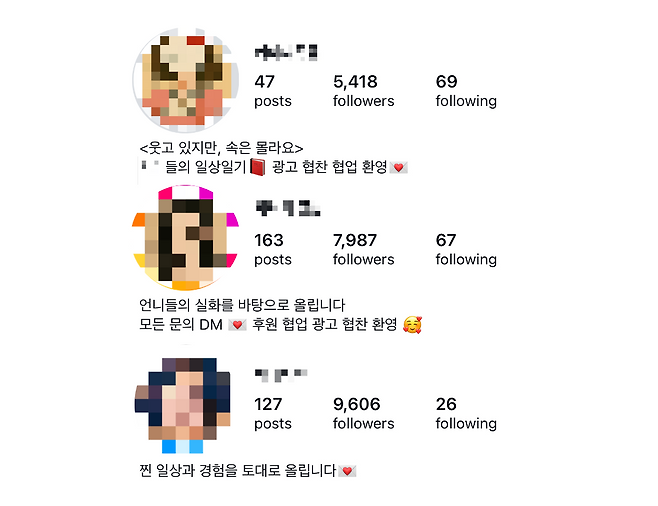
A number of Koreans have voiced discomfort regarding the emergence of such Instagram accounts.
“I see accounts like this way too many times on Instagram. Every time I do, I make sure to report the account, but Instagram doesn’t seem to be doing much about it,” 30-year-old Kim Jin-kyeong told The Korea Herald.
Under South Korean law, promoting prostitution or a business place that provides prostitution as its service is explicitly prohibited, according to the Act on the Punishment of Arrangement of Commercial Sex Acts.
Meta’s community guidelines also prohibit content that facilitates, encourages or coordinates commercial sexual services, even if the content is presented in a narrative or artistic manner.
Lawyer Min Go-eun told The Korea Herald that such accounts could face legal action, though they also “hold some loopholes.”
“As it posts suggestive content that holds potential in romanticizing sex work and also provides means of contact to the individuals behind such accounts, one can say that it holds potential in violating South Korean law,” said Min. “However, there are some loopholes, in which the account owners can claim that they didn’t promote sex work, as (the accounts) don’t explicitly promote sexual services to their followers."
An official from Meta also told The Korea Herald that such accounts still require additional review to determine whether they clearly violate the platform's policies.
“Instagram accounts and posts are reviewed for violations in accordance with our community guidelines and appropriate actions are taken after that,” said the official. “If an account promotes illegal prostitution, Meta will definitely make sure such accounts are removed. However, in cases where the content holds potential of being determined a mere form of expression rather than promotion, it's hard for Meta to take a stance against that, as a form of speech cannot be said to be a violation of our policies.”
Copyright © 코리아헤럴드. 무단전재 및 재배포 금지.